

You want a massive screen and a cinematic experience, but your living room isn’t cavernous. You’ve admired the deep blacks and brilliant highlights of a high-end theater, but worry that ambient light will wash out your image. The solution lies in ultra short throw (UST) projectors, specifically those engineered with a high contrast ratio. This combination allows you to place the projector mere inches from your wall and still enjoy stunning, detailed visuals. In this guide, we assess the leading options for 2026 that deliver exceptional contrast and performance without demanding a dedicated home cinema.
Our selection focuses on models that balance advanced laser technology with user-friendly features, perfect for movie nights, gaming sessions, or even setting up a golf simulator. We’ve examined key specifications, from native resolution and lumen output to specialized gaming modes and installation flexibility. For a broader look at value-focused options, you can explore our related guide on the best value ultra short throw projectors.
| Pick | Product | AI Score | Buy |
|---|---|---|---|
| Prime |
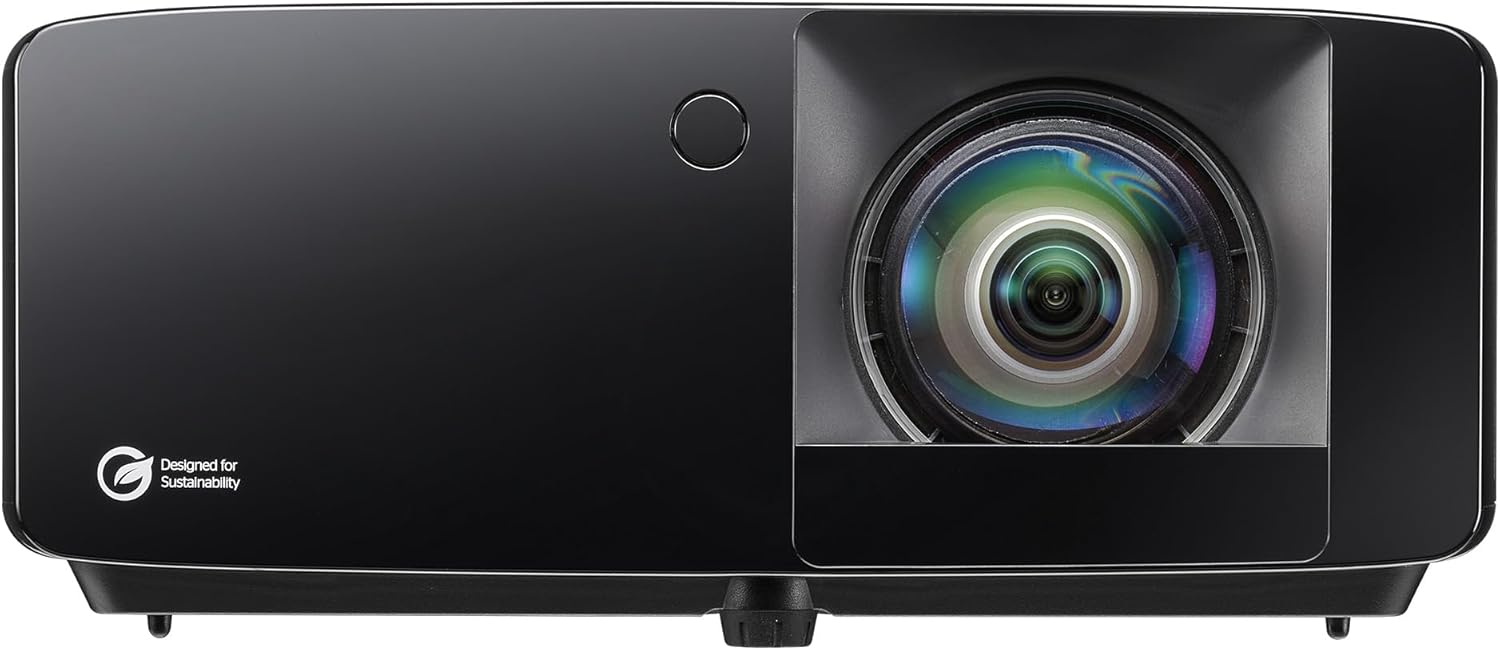 Optoma GT2400HDR Short Throw Laser Projector
|
9.6/10 | Buy on Amazon |
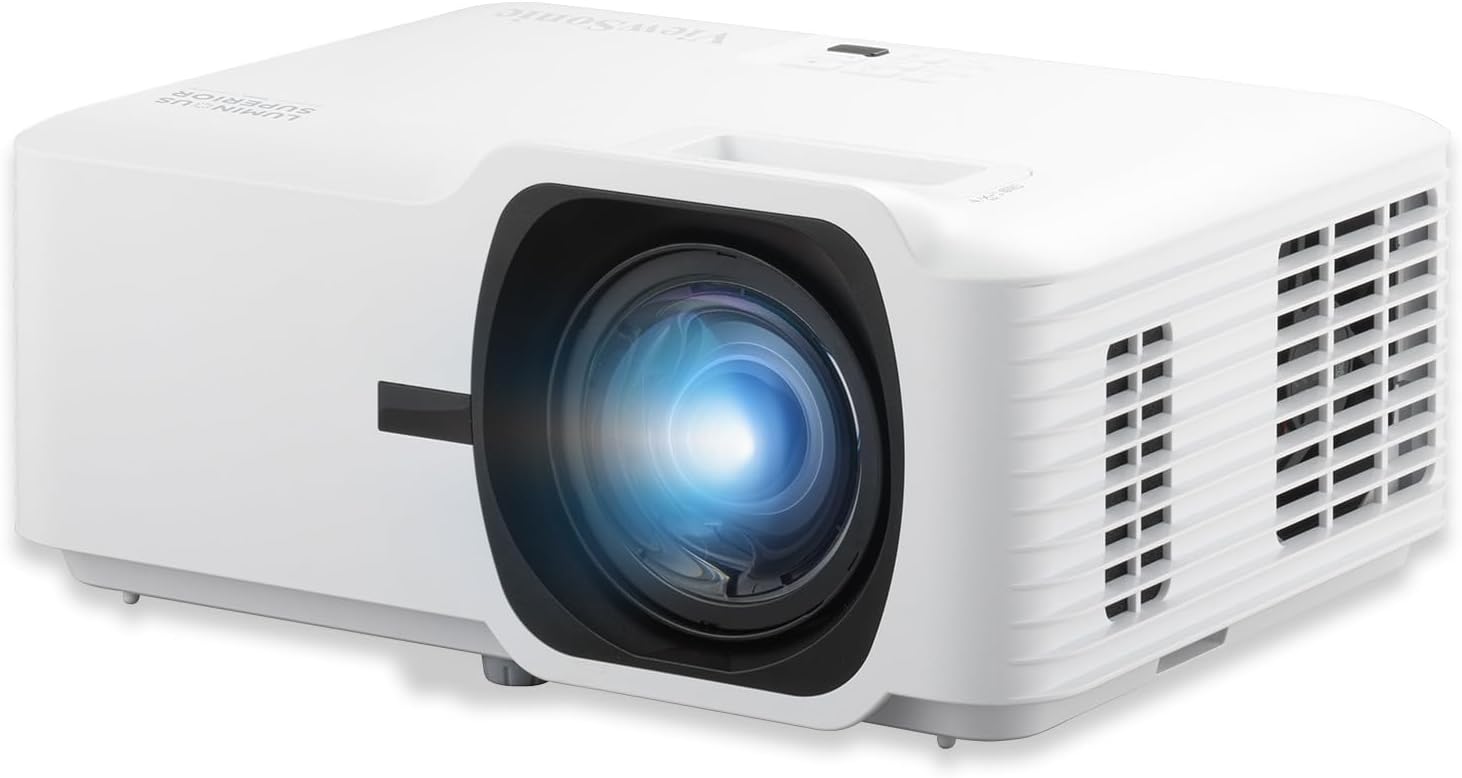 ViewSonic LS711HD 4200 Lumens 1080p Laser
|
9.5/10 | Buy on Amazon | |
| -8% OFF |
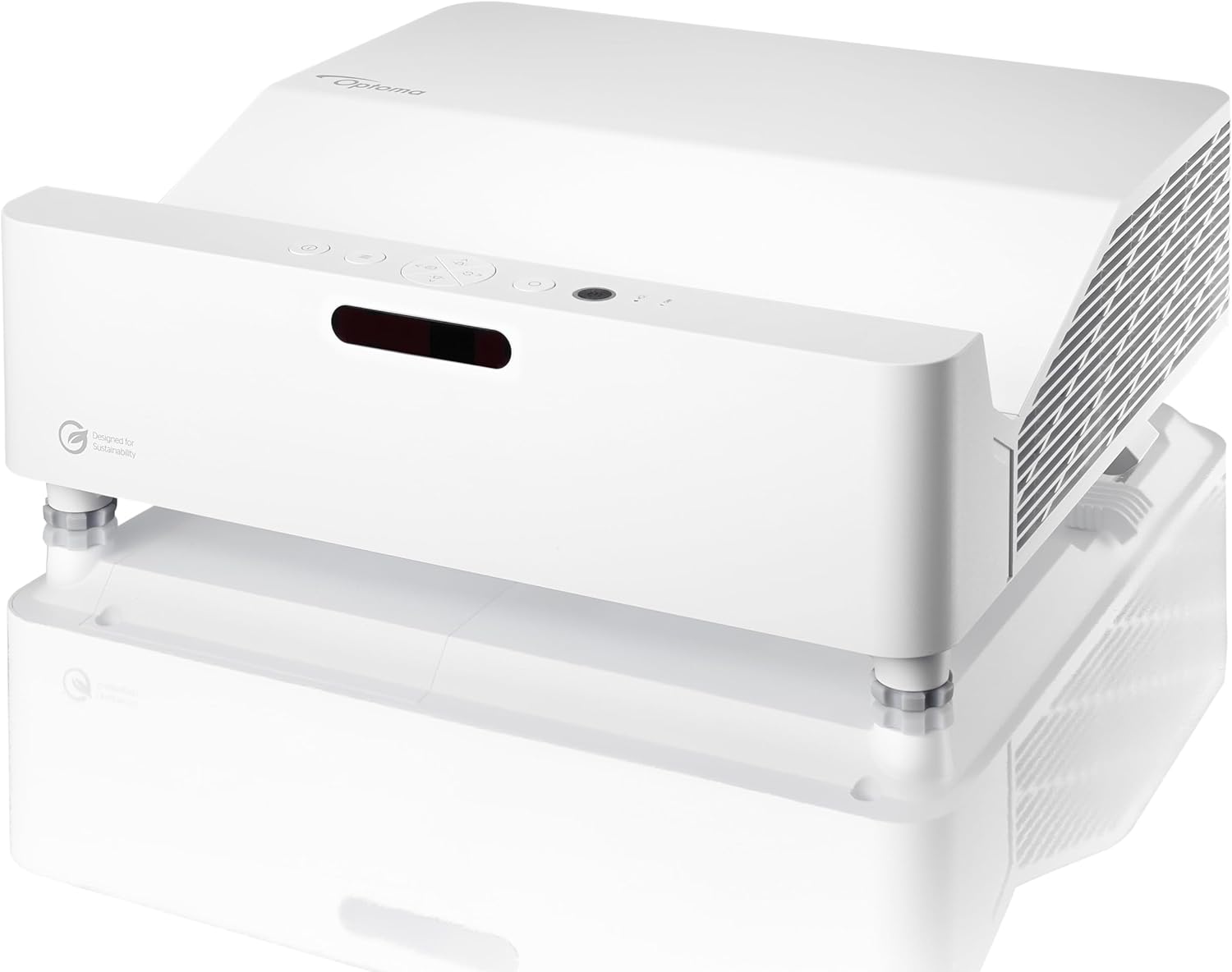 Optoma GT3500HDR Ultra Short Throw Laser
|
9.2/10 | Buy on Amazon |
 Optoma UHZ35ST 4K UHD Laser Projector
|
9.2/10 | Buy on Amazon | |
|
Optoma GT3900UHD True 4K UHD Short Throw Laser
|
N/A | Buy on Amazon |
Pros
- Excellent brightness for a short throw laser projector, usable with some ambient light
- Very low input lag makes it genuinely competitive for gaming, not just marketed as such
- Laser light source eliminates recurring lamp costs and offers instant on/off
- Compact footprint and short throw lens make placement easy in small rooms or golf sim bays
- Strong warranty coverage with 5-year or 12,000-hour light source protection
Cons
- Native resolution is 1080p, not true 4K, despite accepting 4K input signals
- Connectivity leans on HDMI and RCA, lacking newer wireless casting or smart platform integration
- At this price point, buyers expecting native 4K sharpness may be disappointed
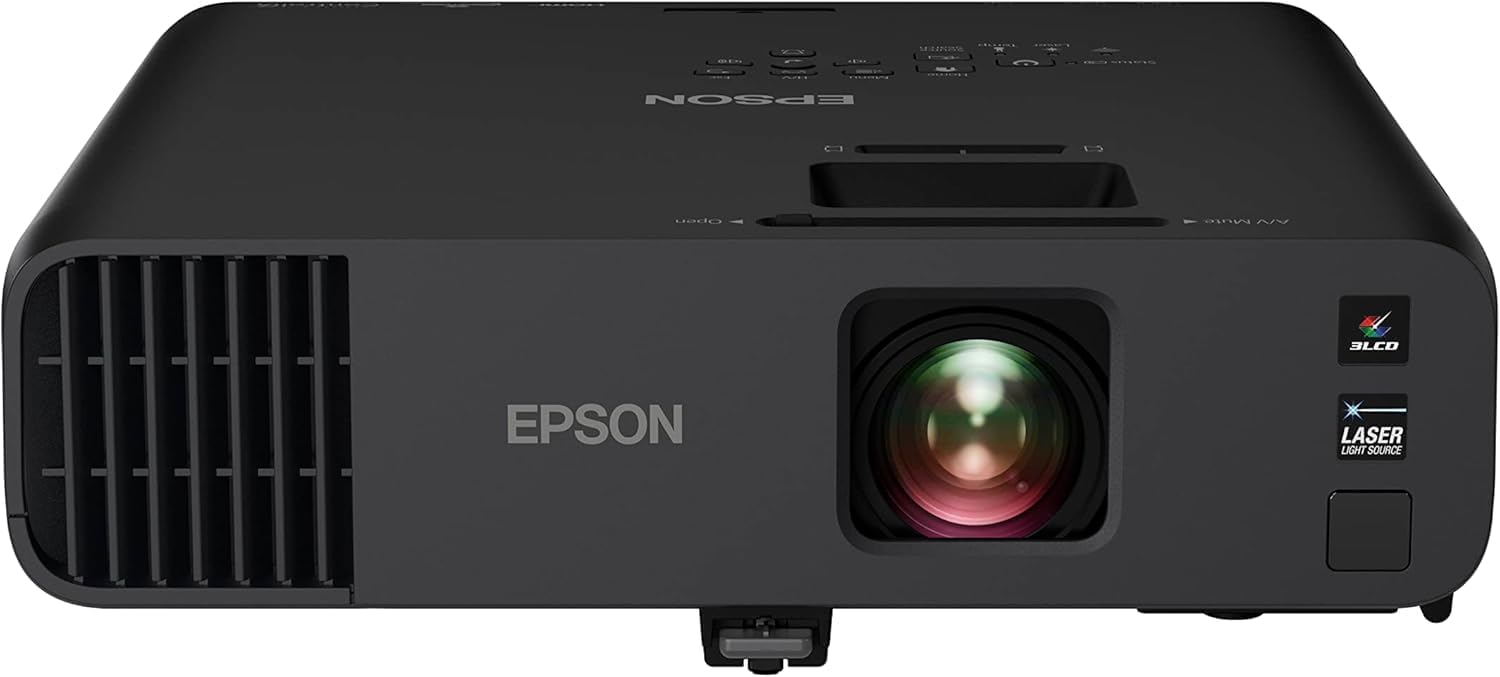
The Optoma GT2400HDR is a short throw laser projector aimed at two very specific buyers: home theater fans working with limited space, and golf simulator enthusiasts who need a big, bright image from a short distance. Its 0.496:1 throw ratio lets it fill a large screen while sitting just a few feet away, making it a practical fit for garages, basements, and media rooms where a traditional long-throw projector wouldn't work.
Brightness is the standout spec here. At 4,200 ISO lumens, the GT2400HDR holds up better than most home projectors when there's some ambient light in the room, which matters for golf sims and daytime viewing. Gamers get a real functional benefit too, with an 8.4ms input lag at 1080p120Hz in Enhanced Gaming Mode, a number that competes with dedicated gaming monitors rather than typical projectors.
Build quality centers around Optoma's DuraCore laser light source, rated for 30,000 hours in eco mode. This translates to years of use without swapping lamps, plus instant on/off and consistent brightness over time. The compact desktop form factor, at just under 9.5 pounds, supports flexible tabletop, wall, or ceiling mounting.
The main tradeoff is resolution. While the projector accepts 4K HDR10 and HLG signals, its native panel is Full HD 1080p, so it's not delivering true 4K sharpness. Connectivity is also fairly basic, relying on dual HDMI and RCA rather than modern wireless streaming options, so users will likely pair it with an external streaming device.
Overall, the GT2400HDR earns its place as a specialized tool rather than an all-purpose projector. It's a smart buy for anyone prioritizing brightness, low latency gaming, and short throw flexibility, particularly golf sim builders and space-constrained home theater setups, but 4K purists may want to look elsewhere.
Pros
- Genuine ultra short throw design saves floor space
- Lamp-free laser engine means no bulb replacement costs for years
- Flexible mounting with 360° projection and portrait mode
- Instant power on/off, no waiting around
- Reviewers confirm crisp, bright image quality, especially for golf simulator use
Cons
- One reviewer noted brightness fell short of expectations in fully lit rooms
- Best image quality still requires dimmed lighting despite the 4,200 lumen rating
- Unit is on the heavier side, which may complicate ceiling mounting
The ViewSonic LS711HD is a laser-powered short throw projector aimed at classrooms, offices, home theaters, and increasingly popular golf simulator setups. Its 0.49 throw ratio lets it throw a 100-inch image from just 3.6 feet away, making it a strong pick for anyone working with limited room depth.
The standout feature here is the laser phosphor light source, rated for 30,000 hours, which eliminates lamp replacement costs and offers instant on/off with no warm-up delay. Reviewers specifically praised its performance in golf simulator setups, noting a bright, clear image and accurate color for greens and blues once properly dialed in with the keystone and 4-corner adjustment tools.
Build quality feels substantial, users describe it as heavy and solidly made, which is reassuring for permanent installs but worth noting if you're planning a ceiling mount. The 360-degree projection and portrait mode add real flexibility for unconventional installations, whether that's a rear-projection event screen or a mounted classroom display.
The main drawback flagged by owners is that the 4,200 lumen brightness, while solid on paper, isn't a substitute for a properly darkened room. In bright ambient light, image quality and contrast take a hit, so this isn't the projector for sunlit rooms without shades.
Overall, the LS711HD is a well-rounded short throw laser projector for buyers who value space-saving installation, low maintenance, and setup flexibility over raw brightness. It's particularly compelling for golf simulator enthusiasts and small classroom or office environments where a big picture in a small footprint matters most.
Native resolution is Full HD 1920x1080, powered by 3rd generation laser phosphor technology rated for 4,200 ANSI lumens and a 3,000,000:1 contrast ratio. The light source is rated for up to 30,000 hours of operation, effectively removing the need for lamp replacements.
Throw distance ranges from 1.2ft to 10.8ft, supporting image sizes from 35 inches up to 300 inches, with the sweet spot being a 100-inch image from 3.6ft. Connectivity includes HDMI, USB 2.0 Type-A, and a 3.5mm audio jack, with H.264 and H.265 video decoding support.
The unit runs on 210 watts (240-watt lamp spec) at 240 volts, weighs in as a desktop form factor projector compatible with ceiling mounts, including the ViewSonic PJ-WMK-305. It ships with a power cord, remote control, and user manual, backed by a three-year parts and labor warranty plus a one-year lamp warranty.
Pros
- Ultra short throw design eliminates shadows and works great in small rooms
- Bright, punchy image quality praised by multiple reviewers even on textured surfaces
- Low input lag makes it genuinely gaming-friendly
- Long-lasting laser light source reduces long-term maintenance costs
- Simple, reliable setup with helpful image adjustment tools
Cons
- No built-in operating system or smart features, and it does not read media files from USB despite having a USB port
- Onboard speaker is only adequate, not a replacement for a proper sound system
- Some buyers received units with broken security seals, raising concerns about new vs. refurbished stock
The Optoma GT3500HDR is an ultra short throw laser projector built for gamers and casual home theater fans who want a big-screen experience without ceiling-mounted hardware. It projects up to a 120-inch image from just over a foot away, making it an easy TV replacement for living rooms and media spaces.
Its standout feature is the Enhanced Gaming Mode, offering 8ms input lag at 1080p 120Hz, a genuinely competitive spec for a home projector at this price point. Reviewers confirm strong brightness and color performance, with one user successfully running it on a 144-inch screen despite the 120-inch official maximum, and another praising its clarity even on a textured wall.
Build quality feels solid and setup is straightforward thanks to digital zoom, keystone correction, and 4-corner adjustment. The airtight optical engine supports 24/7 operation, and the DuraCore laser light source is rated for up to 30,000 hours, so long-term reliability shouldn't be a concern.
The main drawbacks surface in real-world use: the USB-A port is power-only and cannot read media files, which frustrated at least one buyer expecting basic file playback. The built-in 15W speaker is functional but unremarkable, and there have been isolated reports of units arriving with broken security seals, suggesting some quality control inconsistency in fulfillment.
Overall, the GT3500HDR is a strong pick for gamers and movie watchers who prioritize brightness, low input lag, and flexible placement over smart features or native 4K resolution. It delivers a genuinely immersive big-screen experience for the price, provided buyers manage expectations around its 1080p resolution and lack of onboard media playback.
The GT3500HDR features a native resolution of 1920 x 1080 with 4K HDR input compatibility, 3800 ANSI lumens brightness, and a 500,000:1 contrast ratio for sharp, vivid imagery.
Throw distance ranges from 0.66 to 1.31 feet, supporting image sizes between 90 and 120 inches, ideal for ultra short throw setups in compact rooms.
Connectivity includes 2x HDMI 2.0, USB-A for power, 3.5mm audio out, RS232, RJ45, and 3D sync, making it compatible with game consoles, streaming devices, PCs, and more.
It runs on 119 watts total power with a 54-watt laser light source rated for 30,000 hours, backed by a 1-year parts and labor warranty and a 5-year or 12,000-hour light source warranty.
Pros
- Exceptionally sharp, bright 4K image with true blacks and vivid color
- Short throw lens makes it easy to install in compact spaces
- Fast response times ideal for gaming on PS5, Xbox Series X, and PC
- Long-lasting, low-maintenance laser light source with minimal power draw
- Versatile enough for home cinema, sports, and even golf simulators
Cons
- Image sharpness can soften noticeably toward the edges, especially when used as a monitor
- No built-in smart streaming features
- Some users report reliability issues and inconsistent warranty support
The Optoma UHZ35ST is a compact 4K UHD laser projector designed for home theater fans and gamers who want a big-screen experience in a modest-sized room. Its short throw lens can throw a 120-inch image from just over four feet away, making it a strong fit for living rooms, dens, or dedicated gaming setups where space is limited.
Performance-wise, the projector impresses with true 4K resolution, HDR10 and HLG support, and a claimed 500,000:1 contrast ratio that produces deep blacks and vibrant color. Gamers will appreciate the enhanced game mode, which offers input lag as low as 4ms at 1080p240Hz, making fast-paced titles feel responsive on consoles like the PS5 and Xbox Series X.
Build quality leans practical rather than premium, with a compact 8.5 x 10.79 inch footprint and an IPX6 dust resistance rating that adds durability for long-term use. The DuraCore laser light engine is a highlight, promising up to 30,000 hours of operation without the hassle of lamp replacements, and the unit runs notably cooler and more efficiently than lamp-based alternatives.
That said, the short throw design does introduce some trade-offs. Several users note that image sharpness softens toward the edges of the frame, an issue that becomes more apparent when using the projector as a computer monitor rather than for movies or gaming. There are also isolated reports of hardware failures and frustrating warranty experiences, which is worth factoring into any purchase decision.
Overall, the UHZ35ST earns strong praise from most owners for its brightness, color accuracy, and space-saving installation, making it a compelling choice for home theater and gaming setups. Buyers should weigh the excellent picture quality against the lack of smart features and occasional reliability concerns before committing.
The UHZ35ST features native 3840 x 2160 4K UHD resolution paired with 3500 ANSI lumens of brightness, ensuring clear visuals even in rooms with some ambient light. Its DuraCore laser light source is rated for 30,000 hours of maintenance-free use, backed by a 5-year or 12,000-hour light source warranty.
Connectivity includes dual HDMI ports, a USB power connector, and 3.5mm audio output, supporting a wide range of devices such as the PS5, Xbox Series X, Apple TV 4K, and Steam Deck. The projector supports throw distances from 0.4 to 3.3 meters, allowing image sizes between 36 and 300 inches depending on placement.
Weighing 6.6 pounds and consuming just 126 watts, the UHZ35ST is designed for easy tabletop mounting and efficient long-term operation, using only 45% of the power required by comparable lamp-based projectors.
Pros
- True 4K UHD resolution with HDR support for sharp, vibrant visuals
- Short throw lens saves space and suits golf simulator installations
- Bright 4,000 lumen output performs well in rooms with ambient light
- Low input lag and high refresh rate support make it gaming-friendly
- Laser light source eliminates the need for lamp replacements
Cons
- Premium price point compared to standard throw or lamp-based projectors
- Short throw lens placement requires precise setup for optimal image alignment
- No user reviews yet, so real-world reliability and performance feedback is limited
The Optoma GT3900UHD is a True 4K UHD laser projector designed specifically for golf simulators, home theaters, and gaming setups where space is limited. Its short throw lens allows it to sit close to the screen while still producing a large image, making it a practical choice for enthusiasts who want a big-screen experience without dedicating a large room to a traditional long-throw setup.
The standout feature here is the combination of True 4K UHD resolution, HDR compatibility, and 4,000 lumens of brightness. This trio means the projector can produce sharp, colorful images even in rooms that aren't fully darkened, which is a common requirement for golf simulator bays and multi-use entertainment spaces. Gamers will also appreciate the low input lag specs, supporting 1080p at 240Hz and 4K at 60Hz for smooth, responsive gameplay on consoles and PCs.
Build quality centers around Optoma's DuraCore laser light engine, rated for up to 30,000 hours of use. This effectively removes the recurring cost and hassle of lamp replacements, making the projector a lower-maintenance long-term investment compared to bulb-based alternatives. The 0.496:1 short throw ratio is engineered to keep the unit out of the swing path in golf simulator setups, minimizing shadow interference during play.
On the downside, short throw projectors generally demand more careful mounting and calibration to achieve a perfectly aligned image, so setup may take longer than with standard throw models. The price also sits at a premium tier, and since this listing currently has no customer reviews, buyers are relying on spec sheets and brand reputation rather than field-tested feedback.
Overall, the GT3900UHD looks like a well-specced choice for anyone building a golf simulator room, a compact home theater, or a gaming space where a long throw distance simply isn't available. Buyers who prioritize 4K sharpness, brightness in lit rooms, and low-maintenance laser technology should find this projector a compelling fit, provided they're comfortable with the setup precision short throw units require.
Buying Guide: Choosing Your High Contrast UST Projector
Contrast Ratio and HDR Performance
A high contrast ratio is paramount for image depth. It defines the difference between the brightest white and the darkest black a projector can produce. Models like the Optoma GT3500HDR and UHZ35ST boast a 500,000:1 contrast ratio, which is crucial for rendering shadow details in dark movie scenes and making colors pop. Pair this with HDR10 or HLG compatibility, and you get a wider dynamic range, preserving highlights and shadows for a more realistic picture.
For the best results, consider how you’ll use the projector. If your primary goal is a home theater with controlled lighting, prioritize a high native contrast spec. If you plan to watch with some ambient light, a projector with dynamic black technology can help maintain perceived contrast. Our dedicated review of high contrast ultra short throw projectors under $1500 dives deeper into this critical specification.
Brightness and Ambient Light Rejection
Brightness, measured in lumens, determines how well your image holds up in a room with windows or lamps. All the projectors reviewed here offer high brightness, typically between 3500 and 4200 lumens. This ensures vivid, impactful visuals even when you can’t achieve total darkness. The Optoma GT2400HDR and ViewSonic LS711HD, for example, are particularly well-suited for spaces where you cannot completely eliminate ambient light.
Remember, brightness and contrast work together. A very bright image in a dark room can appear washed out if the contrast is low. Look for a model that balances both to suit your typical viewing environment. If your living room is particularly bright, you may want to review our picks for high brightness ultra short throw projectors for living rooms.
Throw Ratio and Placement Flexibility
The throw ratio dictates how far the projector needs to be from the screen to produce a specific image size. An ultra short throw lens, like the 0.496:1 ratio on the Optoma GT3900UHD, lets you project a 100-inch image from just over a foot away. This eliminates shadows from people walking in front of the screen and allows for incredibly flexible placement, such as on a low media console directly below the screen.
Before you buy, measure your available space. Check the projector’s specifications for the exact distance required for your desired screen size. This ensures a perfect fit for your room layout and helps you avoid the common pitfall of a projector that is too close or too far from the wall.
Gaming Performance and Input Lag
For gamers, input lag is a non-negotiable spec. It’s the delay between your controller input and the action appearing on screen. High lag makes games feel unresponsive. Several models here are built with gamers in mind, offering dedicated enhanced game modes. The Optoma UHZ35ST boasts an incredibly low 4ms input lag at 1080p/240Hz, while the GT3500HDR offers 8ms at 1080p/120Hz.
If you’re a serious console or PC gamer, prioritize the model with the lowest input lag for your target resolution and refresh rate. This feature transforms a home theater projector into a versatile entertainment hub capable of delivering a smooth, competitive gaming experience on a massive scale.
Final Thoughts
Selecting the right ultra short throw projector hinges on matching its strengths to your primary use case. For enthusiasts seeking the pinnacle of detail and a true cinematic upgrade, the Optoma UHZ35ST Compact Short Throw Laser stands out with its genuine 4K UHD resolution and exceptional contrast. If your needs are centered around versatile, high-brightness performance for mixed use in a family room, the ViewSonic LS711HD 4200 Lumens 1080p Laster offers remarkable flexibility and ease of setup. Ultimately, each model reviewed provides a compelling path to a large-screen experience with the deep contrast that brings movies, games, and sports to life.
Frequently Asked Questions
What is the main advantage of an ultra short throw projector with a high contrast ratio?
The primary advantage is space efficiency combined with superior image quality. You can place the projector very close to your wall or screen, eliminating obtrusive shadows and cable runs across the room. The high contrast ratio ensures the image has depth, with inky blacks and bright highlights, making it ideal for home theater viewing where picture fidelity is a priority.
Do I need a special screen for a high-contrast UST projector?
While you can project onto a plain white wall, a dedicated ambient light rejecting (ALR) or high-gain screen will significantly enhance performance. An ALR screen helps maintain contrast and color saturation in rooms with some ambient light, while a high-gain screen can boost perceived brightness and contrast in a controlled environment. The right screen maximizes the investment in your projector.
Can I use these projectors for daytime viewing?
Yes, thanks to their high brightness output (3500+ lumens), many of these models are capable of daytime viewing. However, for the best contrast and color accuracy, controlling ambient light is always recommended. For consistently bright rooms, consider pairing the projector with an ALR screen and look for models at the higher end of the brightness spectrum, which are discussed in our guide for living room setups.
How long do the laser light sources in these projectors typically last?
Laser phosphor light sources, like the DuraCore technology used in Optoma models, are rated for exceptionally long life, often up to 30,000 hours. This translates to over a decade of typical use without needing a bulb replacement, offering a virtually maintenance-free experience compared to traditional lamp-based projectors.




Write Your Review
No reviews yet. Be the first to share your experience!