

You’ve invested in a great projector, but the image still feels a bit flat or distorted on your wall. The missing piece for that true cinematic immersion is often a dedicated, professionally tensioned screen. A quality fixed frame screen provides a perfectly flat, wrinkle-free surface that maximizes brightness, contrast, and color accuracy from every seat in the room.
This guide is for home theater enthusiasts and professionals seeking a permanent, high-performance viewing solution. We have assessed eight of the best tensioned fixed frame projector screens available, evaluating their construction, screen material, compatibility, and overall value to help you make an informed decision. For related installation gear, check out our guide to the best ceiling hanging kits for projector screens.
| Pick | Product | AI Score | Buy |
|---|---|---|---|
| -10% OFF |
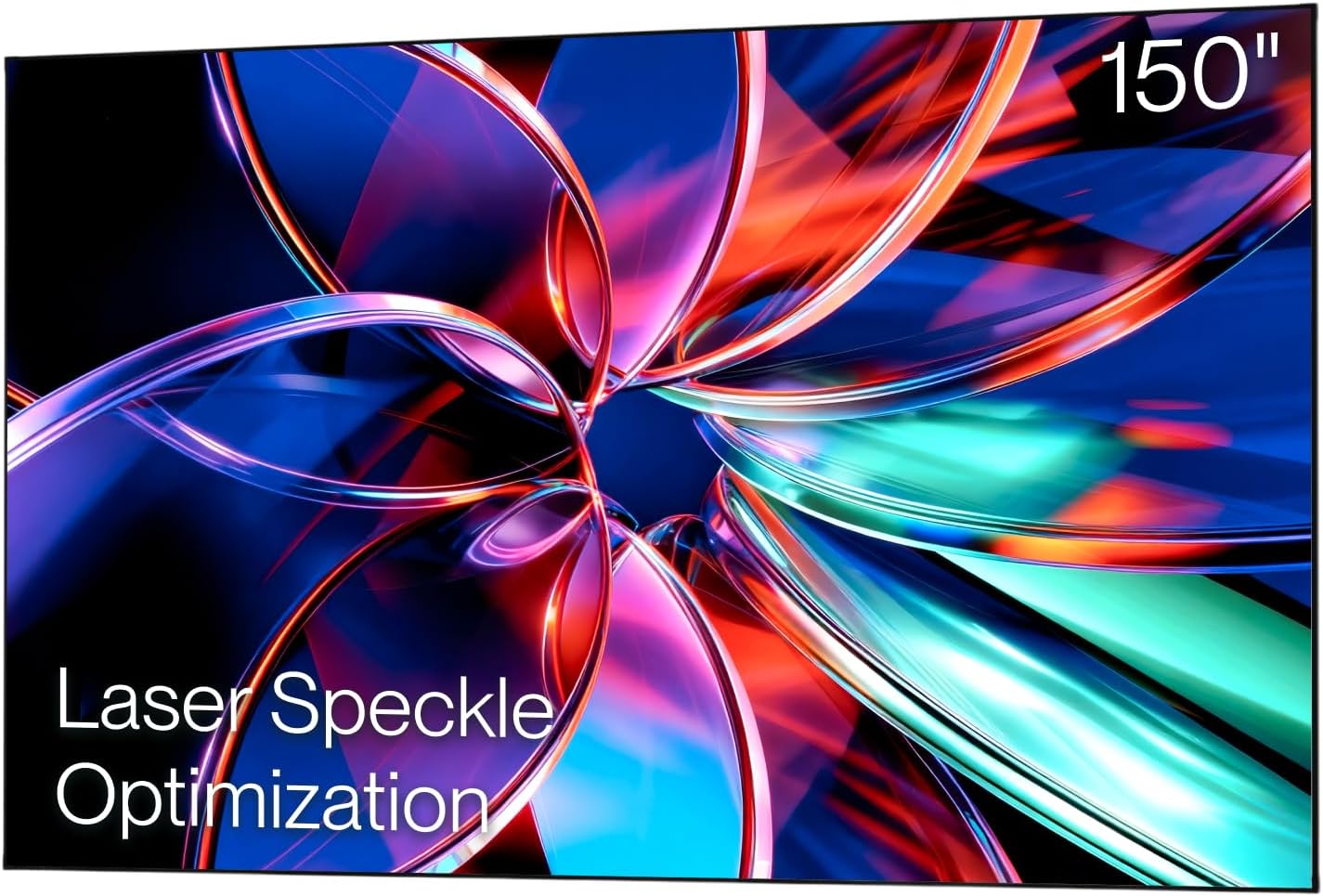 AWOL Valerion 150" PureVision Fixed Frame |
9.5/10 | Buy on Amazon |
 Silver Ticket Products STR Series 120" 16:9 Fixed |
9.7/10 | Buy on Amazon |
Pros
- Reduces laser speckle noticeably compared to standard projector screens
- True 1.0 gain preserves accurate, natural color reproduction
- Wide 170-degree viewing angle suits group viewing and large rooms
- Slim bezel and tensioned frame give a premium, theater-like appearance
- Works with both long throw and UST laser projector setups
Cons
- Premium price point compared to standard fixed frame screens
- Large 150-inch size requires significant wall space and careful installation
- Limited review history makes long-term durability hard to confirm
The AWOL Valerion 150-inch PureVision screen is a fixed frame projection screen purpose-built for owners of premium RGB laser projectors. It targets home theater enthusiasts who already own or plan to own a high-end laser or UST projector and want a screen engineered specifically to complement that light source rather than a generic matte panel.
The standout feature is the PureVision PET matte coating, designed to reduce laser speckle, a common visual artifact with RGB laser projectors that can create a shimmering or grainy texture. Paired with a 1.0 gain surface, the screen aims to preserve the projector's native brightness and color accuracy rather than artificially boosting contrast, which should result in a more natural, true-to-source image across movies, sports, and gaming.
Build quality centers on an aluminum fixed frame with a slim 10mm bezel and a spring-tension structure that keeps the PET material taut and flat, which is critical for maintaining sharp, distortion-free images at large sizes and high resolutions up to 8K. The 170-degree viewing angle also suggests the screen is designed with group viewing in mind, maintaining consistent brightness and color for viewers seated off-center.
Potential drawbacks include the premium price relative to standard fixed frame screens and the sheer size and installation effort required for a 150-inch panel, which demands dedicated wall space and careful mounting. Since this is optimized for laser projectors specifically, buyers using traditional lamp-based projectors may not see the same speckle-reduction benefits.
Overall, this screen is a strong match for serious home theater builders investing in a laser or UST projector setup who want a screen tuned to minimize laser-specific artifacts while keeping color and brightness faithful to the source. Casual buyers or those using standard projectors may not need this level of specialization.
Screen size: 150 inches diagonal, with display dimensions of 132 x 74 inches and overall frame dimensions of 74W x 131.5H inches.
Screen finish is matte PET material with a 1.0 gain rating, supporting resolutions up to 8K and a 170-degree wide viewing angle for consistent image quality across seating positions.
The frame uses an aluminum enclosure with a slim 10mm bezel and spring-tension design for wall or ceiling mounting, and is compatible with both long throw and ultra short throw projector types. The product carries a 1 year manufacturer warranty.
Pros
- Excellent image quality and wide viewing angle praised across many reviews
- Sturdy, well-engineered aluminum frame with premium velvet finish
- Works with a broad range of projector throw types
- Strong customer service reputation according to buyers
- Great value compared to premium competing screen brands
Cons
- Assembly can take an hour or more and is easier with a second person
- Not acoustically transparent, so speakers can't be placed behind the screen
- Some ultra short throw projectors are not compatible with this frame series
The Silver Ticket STR-169120 is a 120-inch, 16:9 fixed-frame projection screen designed for wall mounting in a dedicated home theater or media room. It suits buyers who already have a projector picked out and want a permanent, high-quality screen rather than a portable or retractable option.
The standout feature is the 1.1 gain white surface combined with a 160-degree viewing angle, which reviewers consistently note delivers a crisp, resolution-free image from almost any seat in the room. It handles Full HD, 4K/8K, and Active 3D content, and works well with long, short, and most ultra short throw projectors, making it flexible for different room layouts.
Build quality is a major highlight, with a 2 3/8-inch beveled aluminum frame wrapped in light-absorbing black velvet that gives the picture a clean, theater-like border while minimizing light bounce. The tensioning rod system and adjustable mounting brackets make wall installation manageable, though several reviewers mention it takes about an hour or two and is easier with a helper for the final steps.
On the downside, the screen material is not acoustically transparent, so in-wall or behind-screen speaker setups won't work with this model, and certain ultra short throw projectors may require Silver Ticket's S7 frame series instead. Buyers should also project a test image beforehand to confirm sizing compatibility with their specific projector.
Overall, this screen earns its reputation as a budget-friendly alternative to pricier premium brands without sacrificing picture quality or build integrity. It's a smart choice for home theater enthusiasts who want a large, sharp, professional-looking screen and are comfortable with a DIY wall-mount installation.
How to Choose Your Fixed Frame Screen
Screen Gain and Viewing Angle
Screen gain measures how much light the surface reflects. A 1.0 gain screen provides a neutral, accurate image. Screens like the AWOL Valerion 100″ offer a 1.3 gain for a brighter image, ideal for rooms with some ambient light. Always balance this with the viewing angle, which determines how well the image holds up from the sides. Wider angles, like the 180-degree spec on the Akia Screens model, are crucial for larger seating arrangements.
Frame Construction and Tensioning
A sturdy, well-designed frame is non-negotiable. Look for aluminum construction, like on the Silver Ticket Products STR Series, which resists warping. The frame should incorporate a spring-tension or rod system. This mechanism, present in all models reviewed, pulls the screen material taut, eliminating waves and ripples for a consistently flat surface. Proper tension is key to maintaining image integrity.
Material and Resolution Compatibility
Ensure the screen material is rated for your projector’s output. Most modern screens, including the ShowMaven and VEVOR models, support 4K, 8K, HDR, and active 3D. For laser projectors, specialized materials like the AWOL Valerion 150″ PureVision’s PET matte screen help reduce laser speckle for a cleaner image. A high-quality PVC or vinyl material ensures color vibrancy and is typically easy to clean.
Throw Compatibility and Installation
Verify the screen works with your projector’s throw type: long throw, short throw, or ultra-short throw (UST). Many screens, such as the KHOMO GEAR model, are universally compatible. Others may have specific optimizations. Consider the installation process and your wall space. Most fixed frames are wall-mounted, so having the right wall mounting brackets can simplify setup. Measure your space twice before choosing a size.
Final Thoughts
Selecting the ideal tensioned fixed frame screen elevates your viewing from ordinary to extraordinary. For most home theater builders seeking proven performance and value, the highly-rated Silver Ticket Products STR Series 6 Piece White is a stellar choice. If you’re building a premium setup with a laser projector and want to minimize visual artifacts, the feature-rich AWOL Valerion 150″ PureVision Fixed Frame represents the high end of performance. Whichever you choose, a proper screen is the final, critical component for a stunning home cinema.
Frequently Asked Questions
What is the main advantage of a tensioned fixed frame screen over a pull-down screen?
A tensioned fixed frame provides a permanently flat, rigid surface. This eliminates the waves, curls, or sagging that can occur with pull-down screens over time, ensuring optimal image sharpness and geometry. It’s a set-and-forget solution for a dedicated viewing space. For portable alternatives, explore top portable projectors for travelers in 2026.
Can I use a fixed frame screen with an ultra-short-throw projector?
Yes, but compatibility is crucial. Many screens, like the AWOL Valerion models, are explicitly compatible with UST projectors. However, some tensioned frames may interfere with the extremely low projection angle. Always confirm with the manufacturer that the specific screen model is validated for UST use to avoid image cutoff or shadowing.
How difficult is it to assemble and install a fixed frame screen?
Assembly is generally straightforward. Most kits come with pre-cut aluminum pieces, corner brackets, a tensioning system, and hardware. It often requires two people for handling larger sizes. The process involves assembling the frame on the floor, attaching the screen material with the tensioning rods, and then mounting the entire assembled unit to the wall using the provided brackets.
What screen size should I choose for my room?
A common guideline is that the screen width should be roughly half the distance from the screen to your primary seating row. For a 120-inch diagonal 16:9 screen (about 105 inches wide), your main seats should be around 10 to 14 feet back. Always measure your wall space and use a projector’s throw calculator to ensure your chosen projector can fill the screen from your desired mounting location.


Write Your Review
No reviews yet. Be the first to share your experience!