

You need to command the room during your next quarterly review or client pitch. A dim, fuzzy projection can undermine even the most meticulously prepared slides. Finding a projector that delivers professional clarity without breaking the department budget is a common challenge for modern offices and schools.
This guide is for professionals, educators, and small business owners seeking a reliable presentation tool. We have assessed five leading models that balance brightness, connectivity, and ease of use, all designed to make your presentations shine. For more budget-friendly entertainment options, explore our list of the best projectors under $500 for outdoor entertainment.
| Pick | Product | AI Score | Buy |
|---|---|---|---|
 Optoma W405LVe WXGA Projector, 4200 Lumens
|
9.6/10 | Buy on Amazon | |
 Epson PowerLite X49 3LCD XGA Classroom Projector
|
9.5/10 | Buy on Amazon | |
 ViewSonic PA503W WXGA DLP Projector, 4000 Lumens
|
9.7/10 | Buy on Amazon | |
| -10% OFF |
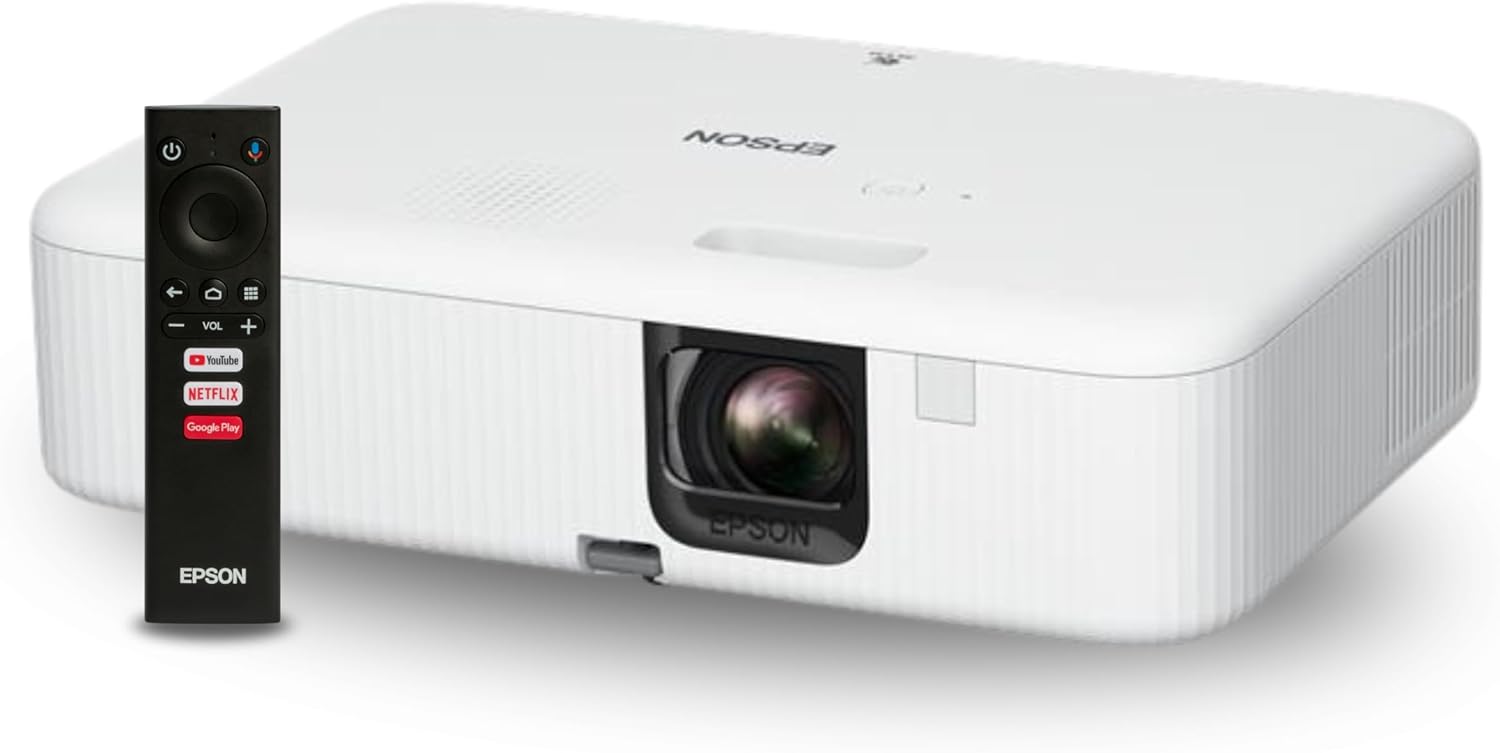 Epson EpiqVision Flex CO-FH02 Full HD 1080p
|
9.7/10 | Buy on Amazon |
 BenQ MW560C WXGA Business Projector, 4000 Lumens
|
9.9/10 | Buy on Amazon |
Pros
- Exceptional brightness at 4,200 lumens handles ambient light in classrooms and offices with ease
- Flexible connectivity with HDMI, VGA, and composite inputs covers a wide range of devices and use cases
- USB power port eliminates the need for a separate adapter when using streaming sticks or HDMI dongles
- Generous keystone correction and zoom range simplify installation in rooms of varying sizes
- Built-in 10W speaker is genuinely useful for most presentation environments, reducing setup complexity
Cons
- WXGA resolution, while solid for presentations, may feel limiting for users who need full HD or 4K image quality
- Only 1.1x optical zoom offers modest flexibility compared to projectors with wider zoom ranges
- With only one verified review at launch, long-term reliability data is still limited
The Optoma W405LVe is a portable WXGA business and classroom projector designed to make presentations as straightforward as possible. Targeting educators, trainers, and corporate presenters, it prioritizes brightness, easy setup, and practical connectivity over cutting-edge resolution or advanced smart features.
The headline specification is its 4,200 ANSI lumen output paired with a 30,000:1 contrast ratio, which together ensure images remain sharp and legible even when overhead lights are on. Native WXGA (1280x800) resolution in a 16:10 aspect ratio is well-suited to slide decks, spreadsheets, and web content, aligning naturally with most laptop displays.
Setup is genuinely hassle-free thanks to a 1.1x manual zoom and plus or minus 40 degree vertical keystone correction, allowing the projector to adapt to different room configurations without moving furniture or calling IT. The inclusion of HDMI, VGA, and composite inputs alongside a USB power port for streaming sticks gives it broad device compatibility right out of the box. The built-in 10W speaker rounds out the package, delivering adequate audio for most meeting rooms and classrooms without requiring external equipment.
On the downside, the 1.1x zoom range is relatively modest, and users working in unusually shaped rooms may still need to adjust placement more than they would with a wider-zoom model. The WXGA resolution, while perfectly adequate for text and presentations, will not satisfy those who need full HD video playback or detailed image work. Prospective buyers should also note that real-world user feedback is still limited given the product's recent launch.
Overall, the Optoma W405LVe earns its place as a dependable, practical projector for everyday professional and educational use. If your priority is brightness, simplicity, and reliable connectivity rather than top-tier resolution, this projector delivers excellent value and a genuinely low-friction experience from day one.
Resolution: Native WXGA (1280x800), 16:10 aspect ratio, suitable for standard laptop and presentation content.
Brightness and Contrast: 4,200 ANSI lumens with a 30,000:1 contrast ratio, ensuring clear visibility in ambient light conditions typical of classrooms and conference rooms.
Connectivity: HDMI input, VGA input, composite video input, and a USB Type-A power port for streaming sticks and HDMI dongles.
Audio: Built-in 10W mono speaker for room-filling sound without external audio equipment.
Setup Features: 1.1x manual optical zoom and plus or minus 40 degree vertical keystone correction for flexible placement. Portable form factor designed for easy transport between rooms.
The Optoma W405LVe is best suited for users who present regularly in environments they do not fully control, such as shared classrooms, rotating conference rooms, or training facilities where ambient light cannot always be dimmed. Its high lumen output is the key differentiator here.
If you primarily show slide presentations, spreadsheets, or web-based content, WXGA resolution is more than sufficient and avoids the cost premium of a 1080p or 4K unit. However, if your workflow involves detailed video production, high-resolution photography review, or cinema-quality playback, you should consider stepping up to a full HD projector instead.
The USB power port is a particularly useful feature for users who rely on streaming sticks such as Amazon Fire Stick or Google Chromecast, as it eliminates the need for a separate wall outlet near the projector. Combined with HDMI and VGA inputs, this projector covers nearly every common connection scenario without adapters.
For buyers comparing options, look at the Optoma EH412 for a full HD upgrade at a higher price point, or consider the BenQ MW560 as an alternative WXGA business projector. The W405LVe stands out in its class for brightness and ease of use, making it a strong first choice for education and corporate environments.
Pros
- Exceptionally bright 3,600-lumen output performs well in ambient light conditions
- Multi-user wireless moderator function is a standout feature for interactive classrooms
- Very long lamp life reduces total cost of ownership over time
- Versatile connectivity options including HDMI and wireless support
- Highly rated by verified users with strong overall satisfaction scores
Cons
- XGA resolution may feel limited compared to newer Full HD or 4K projectors on the market
- At this price point, some competing models offer higher native resolution as standard
- Wireless setup and moderator function may require additional configuration for less tech-savvy users
The Epson PowerLite X49 is a dedicated classroom projector built around Epson's proven 3LCD display technology. Designed primarily for educators, it delivers a bright, colorful image that holds up in typical classroom lighting conditions, making it a practical everyday tool for schools and training environments.
At the heart of this projector is a 3,600-lumen brightness rating paired with native XGA (1024x768) resolution. The 3LCD engine produces accurate color without the rainbow effect sometimes associated with single-chip DLP projectors, and the image quality is consistently praised in user reviews. The wireless moderator function, which allows up to 50 users to connect simultaneously, is a genuinely useful feature that encourages active student participation and collaborative presentations.
Build quality is solid and purposeful. Epson has prioritized durability and low maintenance, evidenced by the impressive 12,000-hour lamp life in Eco-mode. This translates to years of daily classroom use before a lamp replacement is needed, which is a meaningful cost advantage for budget-conscious institutions. The projector's compact dimensions and flexible positioning make installation and repositioning straightforward.
The main drawback is the XGA resolution. While perfectly adequate for text and standard presentations, it may not satisfy users who want to display high-definition video content or detailed graphics with full clarity. Additionally, setting up the wireless and moderator features may require some initial technical effort, which could be a minor hurdle in less IT-supported environments.
Overall, the Epson PowerLite X49 earns its strong reputation as a classroom workhorse. Its combination of high brightness, multi-user wireless support, and low running costs make it a compelling investment for schools and training facilities. For institutions prioritizing reliability and collaboration over cutting-edge resolution, this projector delivers excellent value.
The Epson PowerLite X49 uses 3LCD projection technology with a native XGA resolution of 1024x768, providing a 4:3 aspect ratio well-suited to traditional presentation formats and educational materials.
Brightness is rated at 3,600 lumens for both white and color output, which is notably high for a classroom projector in this category. Connectivity includes HDMI and wireless support, enabling seamless integration with a wide range of modern devices including laptops, tablets, and smartphones.
The projector measures approximately 3.4 x 11.6 x 10.2 inches and is designed for flexible classroom placement. Lamp life reaches up to 12,000 hours in Eco-mode, dramatically lowering the frequency and cost of lamp replacements compared to standard projectors.
If you are purchasing a projector for a classroom or training room, the Epson PowerLite X49 is best suited for environments where brightness and multi-user connectivity are top priorities. Its 3,600-lumen output makes it one of the brighter options in its class, handling ambient light far better than lower-lumen alternatives.
Consider the XGA resolution carefully. For standard slideshows, documents, and web-based content, XGA is perfectly adequate. However, if your use case involves frequent playback of HD video or highly detailed visual content, you may want to explore Full HD (1080p) projector options, though these typically come at a higher price point.
The built-in wireless moderator function is a genuine differentiator for collaborative teaching environments. If your classroom relies on student device participation or BYOD (Bring Your Own Device) policies, this feature alone can justify the purchase. For straightforward single-source presentations, a simpler and less expensive projector may suffice.
Pros
- High brightness suitable for classrooms and offices with ambient light
- Low input latency and 120Hz refresh rate for smooth fast-moving content
- Large projection range from 80 to 150 inches
- Easy image adjustment with optical zoom and vertical keystone
- Strong rating from over a thousand reviewers reflects reliable performance
Cons
- WXGA 1280x800 resolution is not native Full HD, which may limit sharpness for detailed content
- Lamp-based projector means bulb replacement costs over time
- Limited zoom range (1.1x optical) offers less placement flexibility compared to higher-end models
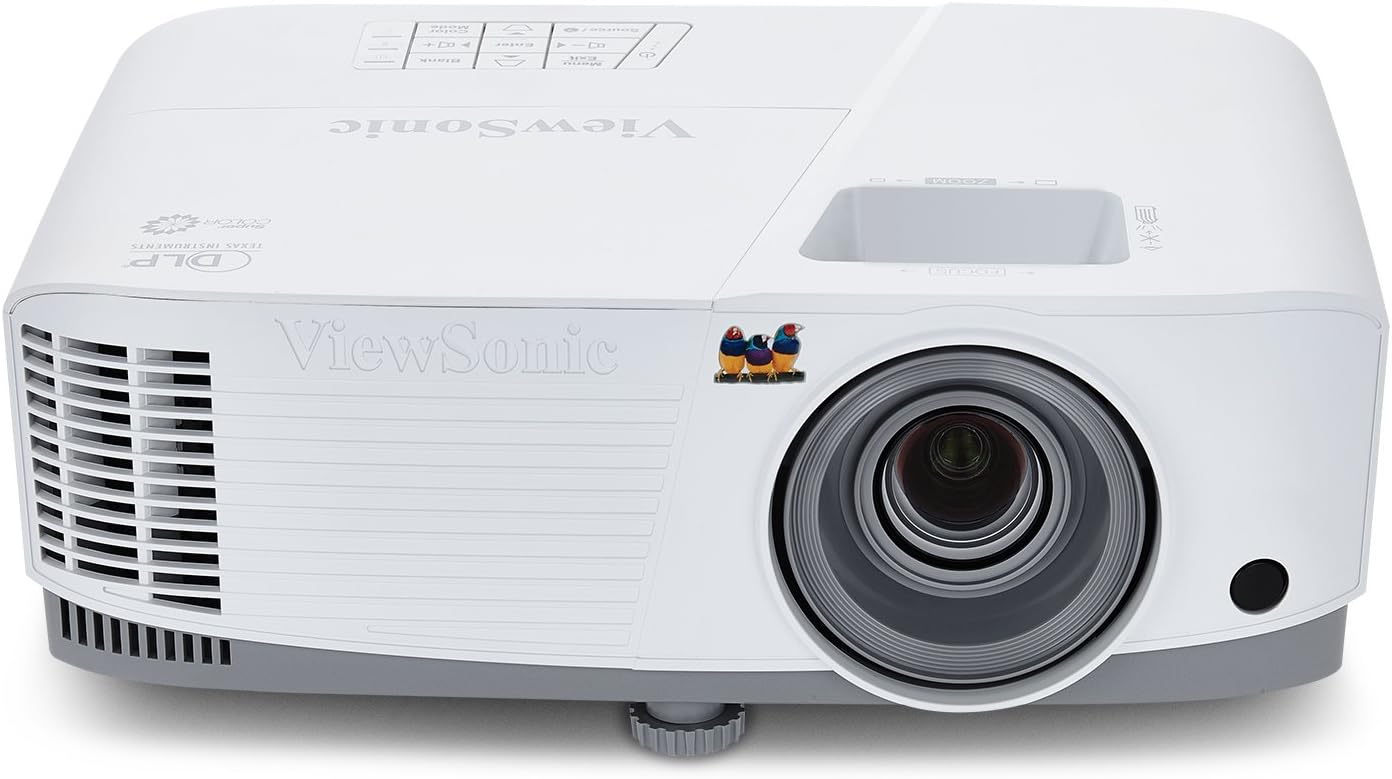
The ViewSonic PA503W is a WXGA DLP projector designed primarily for classrooms and business presentations, though its fast refresh rate also makes it appealing to casual gamers. With 4,000 ANSI lumens of brightness, it's built to perform well even in rooms with some ambient light, making it a practical choice for offices, training rooms, and lecture halls.
What really sets this projector apart is its 120Hz refresh rate combined with a 16ms input latency, features you don't typically see in budget business projectors. This means presentations with video, animations, or even light gaming sessions look smooth and responsive rather than choppy or delayed. SuperColor technology further enhances the experience by producing a wide color gamut, so charts, images, and video content appear vibrant rather than washed out.
In terms of design, the PA503W is straightforward and functional rather than flashy. It supports ceiling mounting with ViewSonic's own PJ-WMK-007 mount, and setup is simplified through 1.1x optical zoom, 0.8x-2.0x digital zoom, and vertical keystone correction. It can throw a 100-inch image from just 11 feet away, and scales up to 150 inches for larger venues, giving it solid flexibility for different room sizes.
The main tradeoff is resolution: at 1280x800, this is a WXGA projector, not Full HD, so extremely fine text or detailed graphics won't be as crisp as on higher-resolution models. It also relies on a traditional lamp rather than LED or laser, meaning users will eventually need to budget for bulb replacement. The relatively modest optical zoom range also means placement needs to be planned more carefully than with projectors offering longer zoom ranges.
Overall, the ViewSonic PA503W is a dependable, well-rounded projector for anyone needing a bright, large-screen display for presentations, teaching, or meetings. Its combination of brightness, low latency, and easy setup make it a strong value pick, especially for schools and small businesses that don't require 4K-level detail.
Pros
- Bright, colorful 1080p image that holds up well even with some ambient light
- Android TV built in, so no extra streaming device is needed
- Lightweight and portable, ideal for backyard movies or travel presentations
- Simple setup with auto keystone correction
- Removable streaming stick adds flexibility for use with other TVs
Cons
- Only has HDMI and USB ports, so external soundbars often require extra adapters or splitters
- Bluetooth audio only works through the Android TV stick, not when using other input sources
- A few users reported reliability issues, including the unit failing after about a year of use
The Epson EpiqVision Flex CO-FH02 is a portable Full HD projector aimed at home entertainment, casual gaming, and mobile presentations. It's built for people who want a big-screen experience without permanently mounting a projector, think backyard movie nights, dorm rooms, or traveling professionals who need to pitch on the go.
Its standout feature is the combination of 3-chip 3LCD technology and 3,000 lumens of both color and white brightness. This means images stay accurate and vivid even with some ambient light in the room, a common weak spot for cheaper single-chip projectors that struggle with washed-out color or visible rainbow artifacts. Reviewers consistently praise the picture quality, calling it bright, clear, and impressive for the price point.
Built-in Android TV is a major convenience, letting you stream Netflix, Disney+, Hulu, and more directly without hooking up a laptop or separate streaming stick. The included remote supports Google Assistant voice search, and the streaming dongle is removable, so you can borrow it for hotel TVs in a pinch. That said, audio handling is a bit limited: Bluetooth only works through the streaming stick, and with only HDMI and USB ports, connecting an external soundbar to other sources often requires a splitter.
Physically, the projector is compact and light at 5.7 pounds, easily fitting in a backpack, and setup is straightforward thanks to automatic vertical keystone correction. On the downside, a small number of users reported durability concerns, including one unit failing after roughly a year of regular use, so buyers should keep an eye on warranty coverage.
Overall, the CO-FH02 is a strong value pick for anyone wanting a bright, color-accurate, streaming-ready projector that's easy to move around. It's best suited for casual viewers and presenters rather than dedicated home theater purists who need advanced audio integration or 4K resolution.
Native resolution is 1920 x 1080 Full HD, with a maximum image size of up to 300 inches and a minimum image size of 34 inches, giving flexibility for both small rooms and large outdoor setups.
The lamp is rated for 30,000 hours of operating life, and the throw distance ranges from about 2.11 feet to 34.1 feet, making it adaptable to different room sizes and placement options.
Connectivity includes HDMI and USB inputs, along with built-in Wi-Fi and Bluetooth through the Android TV media player. The unit weighs 5.7 pounds and measures 12.5 x 8.3 x 3.4 inches, keeping it genuinely portable.
Pros
- Bright 4000-lumen output works well in offices and classrooms without full blackout
- High contrast ratio delivers clear text and detailed imagery for presentations
- Quick setup with auto keystone correction and adjustable foot
- Energy-saving SmartEco mode reduces lamp power consumption
- Long 3-year warranty adds extra value and reliability
Cons
- Native WXGA resolution (1280x800 equivalent) is lower than true Full HD, limiting fine detail on modern content
- Built-in speaker is likely basic and may need external audio for larger rooms
- Limited connectivity options with only HDMI and VGA, no wireless casting mentioned
The BenQ MW560C is a business-focused projector designed for meeting rooms, classrooms, and training spaces. It targets users who need a reliable, easy-to-use display solution for presentations rather than movie enthusiasts or gamers seeking cinematic visuals.
Its standout feature is the 4000 ANSI lumen brightness paired with a 20000:1 contrast ratio, which together produce vivid, readable images even in rooms with ambient light. The Data Review Mode is a thoughtful touch for spreadsheet-heavy presentations, sharpening small text and numbers that often get lost on lesser projectors.
Setup is straightforward thanks to the auto vertical keystone correction and retractable foot, letting users align the image quickly without fiddling with menus. The desktop form factor and tabletop mount design keep things simple, though the reliance on just HDMI and VGA ports means no built-in wireless streaming for modern devices.
On the downside, the WXGA native resolution falls short of Full HD, so extremely detailed graphics or high-res video won't look as sharp as on newer competitors. The built-in speaker is a convenient inclusion but likely won't fill larger rooms without external audio support.
Overall, the BenQ MW560C is a solid, no-frills choice for businesses and schools that prioritize brightness and clarity for everyday presentations over high-end multimedia performance. The 3-year warranty and SmartEco efficiency add long-term value, making it a practical pick for budget-conscious buyers.
Display Type: DLP, Native Resolution 1920x1080 (WXGA), Max Resolution 1980x1080
Brightness: 4000 ANSI Lumens, Contrast Ratio 20000:1
Connectivity: HDMI, VGA, Built-in Speaker
Throw Distance: 4 to 8.2 feet, Max Image Size 300 inches
Warranty: 3-Year Manufacturer's Warranty
How to Choose the Right Office Projector
Brightness and Image Clarity
Ambient light from windows or overhead fixtures is the enemy of a clear presentation. Look for a high lumen rating, typically measured in ANSI lumens. A projector with at least 3,000 lumens ensures your spreadsheets and text remain legible even in well-lit conference rooms.
Resolution is equally critical. While Full HD (1080p) is excellent for detailed graphics, WXGA (1280×800) is a native 16:10 format perfectly suited for laptops and presentation software, making it a highly practical choice for business use.
Connectivity and Setup Flexibility
Your projector should connect seamlessly to any device your team uses. Essential ports include HDMI for modern laptops and VGA for legacy equipment. Some models offer USB power to run streaming sticks, adding media versatility.
Look for features that simplify setup, like optical zoom and vertical keystone correction. These allow you to adjust the image size and square it off without physically moving the projector, a major time-saver in different rooms. For setups in challenging spaces, our guide on the best projectors under $500 for bright rooms offers further insights.
Portability and Built-in Audio
<!–If you move between meeting spaces, a compact, lightweight design is invaluable. A built-in speaker that is actually powerful enough for a medium-sized room eliminates the hassle of external audio setup for most presentations.
Consider the lamp life as well. A longer-rated lamp life reduces long-term maintenance costs and ensures your projector remains reliable for years of daily use. For portable solutions in other scenarios, see our picks for the best projectors under $500 for RV camping.
Final Thoughts
Selecting the ideal projector hinges on your specific environment and needs. For a brilliantly bright, straightforward solution in traditional meeting rooms and classrooms, the Optoma W405LVe – WXGA, 4200 ANSI Lumens is a standout choice. If your work involves versatile streaming and high-definition content in addition to presentations, the smart, portable Epson EpiqVision Flex CO-FH02 Full HD 1080p offers exceptional flexibility. Both deliver professional performance that elevates any presentation.
Frequently Asked Questions
Is WXGA or 1080p better for office PowerPoint presentations?
For pure data, spreadsheets, and text-based slides, WXGA (1280×800) is an excellent match for most business laptops and provides sharp clarity. Full HD 1080p is superior if you regularly display high-resolution photographs, detailed engineering drawings, or video content within your presentations.
Can I use these projectors in a room with the lights on?
Yes, the models featured all have high brightness ratings specifically for this purpose. A projector with 3,500 lumens or more can handle moderate ambient light effectively. For particularly bright environments, our review of the best projectors under $500 for large rooms covers models with strong light output.
What is keystone correction and why is it important?
Keystone correction digitally adjusts the image to correct for distortion that occurs when the projector is not perfectly aligned perpendicular to the screen. Vertical keystone is essential for quick setup on uneven surfaces or when ceiling mounting isn’t an option, ensuring a perfectly rectangular image.
How long do projector lamps typically last?
Lamp life varies by model and usage mode but generally ranges from 5,000 to over 12,000 hours in economy settings. Using an Eco or SmartEco mode can significantly extend lamp life, making it a valuable feature for frequent use as assessed in our evaluations for 2026.


Write Your Review
No reviews yet. Be the first to share your experience!