

You’ve invested in a crisp, clear projector image, but are you missing half the experience? Flat, tinny sound from built-in TV speakers or a basic soundbar can’t match the visual spectacle. A dedicated projector soundbar transforms movie nights and gaming sessions, filling your room with the rich, immersive audio your content deserves.
This guide is for anyone ready to elevate their home theater audio without complex wiring or a massive budget. We have assessed six standout soundbars that deliver cinematic sound, clear dialogue, and seamless connectivity, all perfectly suited to pair with your projector setup. For more budget-friendly options, explore our list of the best projector soundbars under $200.
| Pick | Product | AI Score | Buy |
|---|---|---|---|
| -38% OFF |
 TCL S65K S Series 5.1 Dolby Atmos Soundbar
|
9.8/10 | Buy on Amazon |
| Prime |
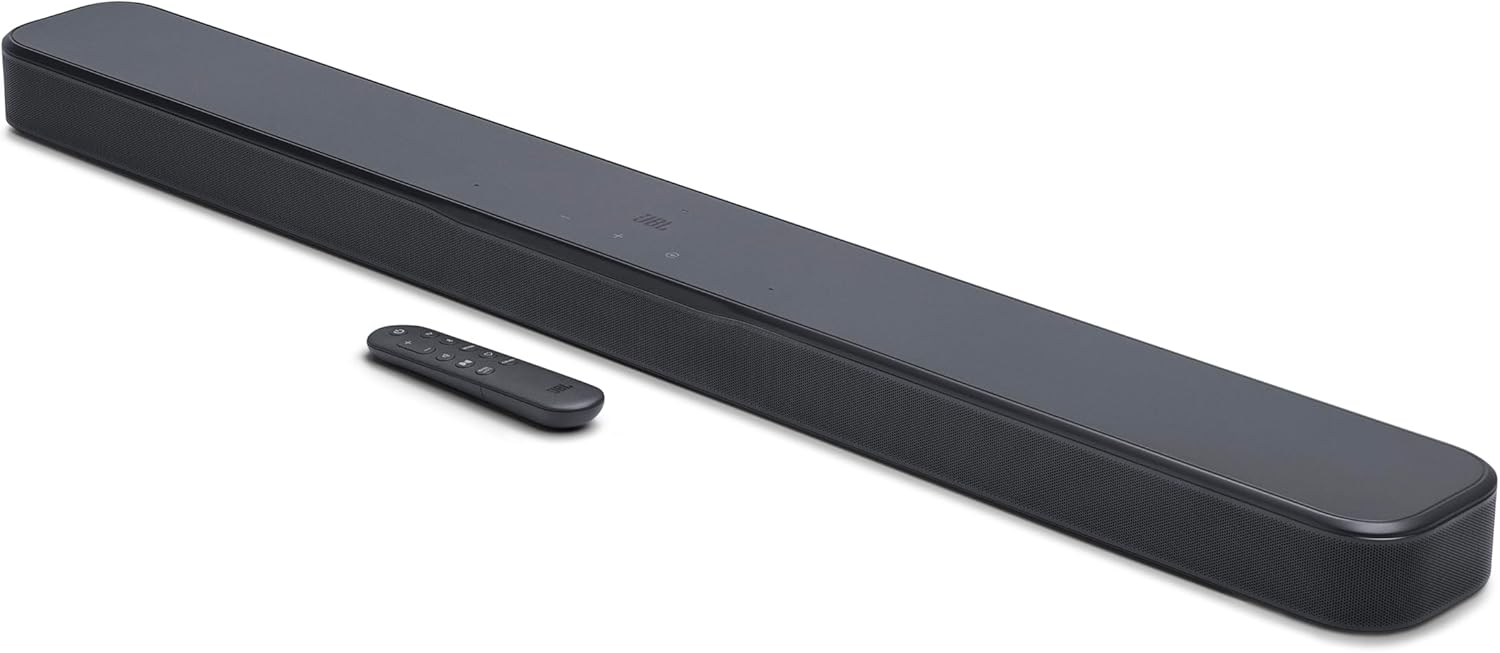 JBL Bar 300MK2 5.0-Channel Soundbar with Dolby
|
9.8/10 | Buy on Amazon |
| Prime |
 Samsung HW-S60D 5.0ch All-in-One Soundbar
|
9.6/10 | Buy on Amazon |
| -14% OFF |
 ULTIMEA Skywave F40 5.1.2ch Dolby Atmos Soundbar
|
9.6/10 | Buy on Amazon |
 LG S40TR 4.1 ch Home Theater Soundbar
|
9.6/10 | Buy on Amazon | |
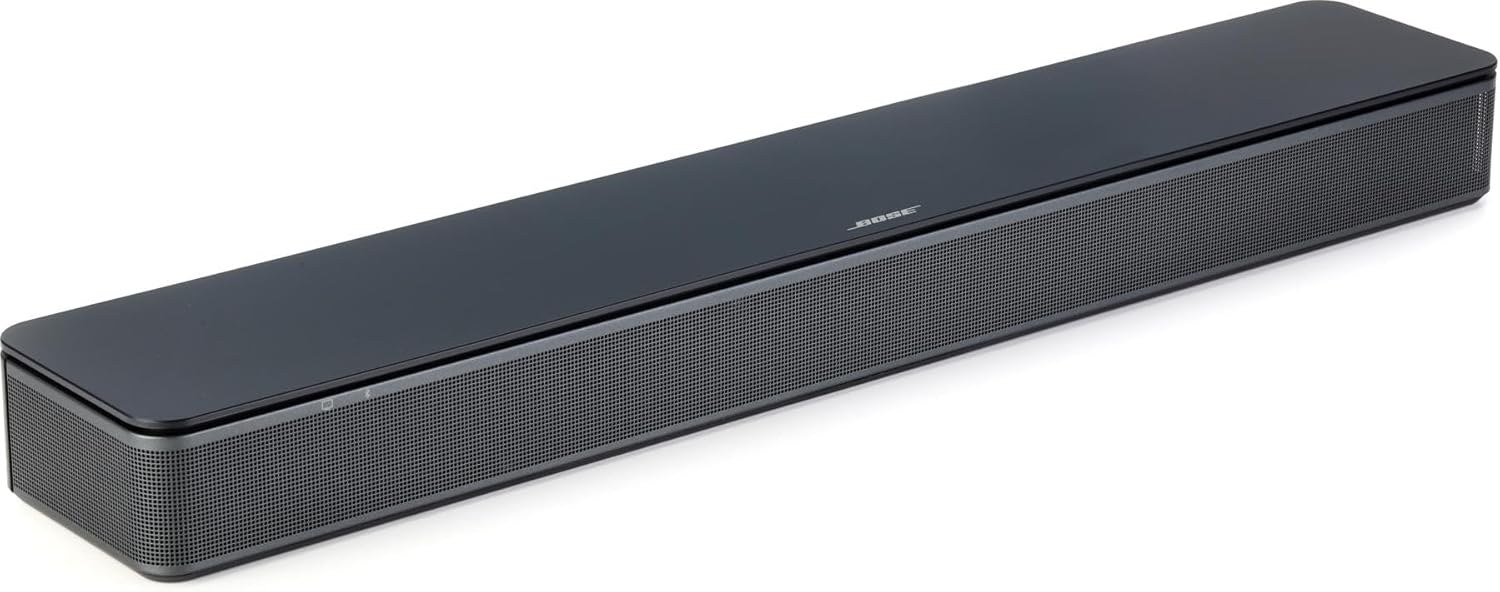 Bose TV Speaker - Compact Soundbar with Bluetooth
|
9.6/10 | Buy on Amazon |
Pros
- Complete 5.1 wireless system included, no need to buy separate surround speakers
- 630 watts of total output power for a genuinely powerful, room-filling sound
- Dolby Atmos and DTS:X support at a budget-friendly price point
- AI room calibration simplifies getting balanced sound in different spaces
- High 4.7/5 customer rating suggests strong satisfaction among early buyers
Cons
- Limited number of reviews available makes long-term reliability hard to judge
- Wi-Fi and app-based features may require extra setup time compared to plug-and-play soundbars
- Wall mounting hardware and placement of wireless surrounds may need extra planning in smaller rooms
The TCL S65K is a 5.1 channel soundbar system designed for buyers who want a genuine home theater upgrade without juggling multiple brands or complicated wiring. It pairs a soundbar with a wireless subwoofer and wireless surround speakers, making it well suited for movie lovers, gamers, and casual streamers who want immersive sound with minimal setup hassle.
Standout features include Dolby Atmos and DTS:X support, which add height and depth to the audio, plus TCL's AI Sonic Auto Room Calibration that adjusts the sound profile based on your room's acoustics. The built-in center channel and tweeter help dialogue stay clear even during chaotic action sequences, while the 6.5-inch wireless subwoofer with Bass Boost adds noticeable low-end punch during movies and music.
Setup is straightforward thanks to single-cable HDMI connection to your TV, and the wireless surround speakers give more placement flexibility than wired systems. Build quality appears solid for the price tier, and the inclusion of Wi-Fi and Bluetooth connectivity adds convenience for streaming music directly from a phone or tablet.
The main drawback is the limited review history, so it's harder to gauge long-term durability or how the AI calibration performs across many different room shapes. Buyers should also expect a bit more setup time than a basic 2.1 soundbar due to the additional wireless components.
Overall, the TCL S65K offers an impressive feature set for its price, combining true surround sound, smart calibration, and strong bass performance. It's a compelling choice for anyone upgrading from TV speakers who wants a noticeably richer, more immersive audio experience without spending on a premium home theater brand.
Pros
- Strong bass performance without needing a separate subwoofer
- Dolby Atmos and MultiBeam 3.0 provide genuinely immersive, wide surround sound
- Simple single-HDMI setup with 4K Dolby Vision passthrough
- Room calibration technology adapts sound to your actual space
- Wide streaming compatibility across major music services and voice assistants
Cons
- No dedicated subwoofer or rear speakers included, which may limit ultimate bass depth and true rear-channel separation
- 5.0 channel configuration means virtual rather than discrete surround imaging
- Wall-mount hardware included but larger 37-inch width may not suit very small TV setups
The JBL Bar 300MK2 is an all-in-one 5.0-channel soundbar designed for people who want a noticeable upgrade over their TV's built-in speakers without committing to a multi-piece home theater system. It's especially well suited to those in apartments or smaller living rooms who still want cinematic sound and streaming flexibility from a single, compact unit.
In real-world use, the standout features are Dolby Atmos and MultiBeam 3.0, which work together to throw sound outward and upward for a surprisingly wide soundstage given the soundbar's single-unit design. PureVoice 2.0 also earns its keep, automatically lifting dialogue so conversations stay clear even during loud action sequences or at lower volumes late at night.
Build quality benefits from a metal enclosure and a sleek 37-inch black profile that mounts easily to a wall or sits neatly on a media console, and the included calibration process helps the bar adapt its audio output to the specific acoustics of your room. Connectivity is generous too, spanning HDMI eARC, Wi-Fi, Bluetooth, optical, and USB, plus support for AirPlay, Spotify Connect, and Tidal.
The main tradeoff is the absence of a physical subwoofer or rear satellite speakers, so while the built-in bass ports do an admirable job, bass-heavy content and true discrete rear-channel effects won't match what a full multi-box surround system can deliver. This is a smart compromise for simplicity, not a drawback for those seeking maximum performance at any cost.
Overall, the JBL Bar 300MK2 is a well-rounded, easy-to-install soundbar that punches above its single-unit form factor thanks to Dolby Atmos, MultiBeam 3.0, and smart room calibration. It's an excellent choice for casual movie watchers, gamers, and music streamers who want big, clear sound without the hassle of managing multiple speakers.
Pros
- Truly cable-free Dolby Atmos setup simplifies installation
- Compact, all-in-one design that doesn't require a separate rear speaker kit
- Smart features like SpaceFit Sound Pro and Adaptive Sound improve everyday listening
- Wide smart home compatibility with Alexa, Chromecast, and AirPlay 2
- Wall-mountable with included wallmount kit for flexible placement
Cons
- Q-Symphony and wireless Atmos features only work with select 2020-2024 Samsung TVs, limiting cross-brand flexibility
- Rated output is modest at 2 watts per speaker specification, which may not satisfy home theater purists seeking maximum volume
- No dedicated external subwoofer or rear speakers included, so true multi-room surround immersion is limited
The Samsung HW-S60D is a 5.0-channel all-in-one soundbar aimed at users who want upgraded TV audio without dealing with a tangle of wires or multiple speaker units. It's particularly well suited for owners of newer Samsung TVs who can take advantage of exclusive features like Q-Symphony and wireless Dolby Atmos.
This soundbar packs 5 audio channels and built-in 8-inch subwoofers into a slim 26.3-inch wide chassis, making it easy to place on a media console or mount on a wall using the included kit.
Connectivity is fully wireless, supporting Bluetooth and Wi-Fi, and the unit ships with an HDMI cable, power adapter, remote control, and wallmount hardware, so there's little extra to buy at setup.
Smart features round out the spec sheet nicely: built-in Alexa, Chromecast support, and AirPlay 2 give owners multiple ways to stream and control audio, while Game Mode Pro automatically kicks in for supported gaming consoles like the Xbox Series X and PS5.
Pros
- Immersive Dolby Atmos height effects that genuinely simulate overhead sound
- Easy setup with clear instructions and intuitive app control
- Strong bass output and clear dialog via VoiceMX technology
- Modern, upscale design that looks great below any TV
- Reliable Bluetooth 5.4 connectivity and HDMI eARC for lossless audio
Cons
- No DTS compatibility, limiting format support for some content
- Rear surround speakers are relatively small and can experience minor audio delay
- May need a larger or dedicated subwoofer for very large or open-concept rooms
The ULTIMEA Skywave F40 is a 5.1.2-channel surround sound system built for TV owners and gamers who want a genuine home-theater experience without installing in-ceiling speakers. It pairs a soundbar, two wireless rear surround speakers, and a wired subwoofer to create a layered, multidimensional audio field that fills mid-to-large rooms.
The standout feature is its Dolby Atmos implementation. Up-firing drivers with neodymium magnets and 18-core voice coils bounce sound off the ceiling, giving effects like rain or helicopters a genuine sense of height. Combined with SurroundX technology, the system builds a convincing 360-degree soundstage, though it's worth noting DTS content isn't supported.
Build quality feels premium for the price, with a metal enclosure and clean, modern styling that several reviewers praised as looking more expensive than it is. Setup is straightforward thanks to the Ultimea app, which also unlocks deep customization through a 10-band EQ, 121 sound presets, and OTA updates.
The main drawbacks are the compact rear surround speakers, which some users found underwhelming in size and occasionally slightly out of sync, and the subwoofer, which performs well for its size but may need reinforcement in very large or open floor plans. HDMI eARC and CEC integration, however, make day-to-day operation nearly seamless with modern TVs.
Overall, the Skywave F40 delivers an impressive, app-tunable Atmos experience that punches above its price point. It's a strong pick for anyone upgrading from an older wired system or basic soundbar, especially gamers and movie fans who want noticeable height and surround effects without a complex installation.
The Skywave F40 features a 5.1.2-channel configuration with a soundbar, two surround speakers, and a 5.25-inch wired subwoofer, delivering up to 400 watts of total output power.
Connectivity includes HDMI eARC, Optical, Bluetooth 5.4, and AUX, supporting lossless audio transmission up to 37Mbps with CEC synchronization for automatic TV control.
The system supports Dolby Atmos but not DTS, and includes a 40Hz frequency response with a 96dB signal-to-noise ratio for clean, detailed sound reproduction.
Mounting is flexible with both tabletop and wall-mount options included, backed by a 2-year limited warranty and full app-based control via iOS and Android devices.
Pros
- Big, immersive sound upgrade over built-in TV speakers at a reasonable price
- Wireless subwoofer and rear speakers simplify setup compared to traditional receiver-based systems
- Clear dialogue enhancement makes movies and shows easier to follow
- Simple pairing process with helpful companion app for fine-tuning
- One-remote control convenience when paired with compatible LG TVs
Cons
- One rear speaker still requires a wired connection to the other and AC power, so it's not fully wireless
- WOW Orchestra and one-remote features only work with select LG TV models
- Setup instructions are reportedly unclear about rear speaker power requirements
The LG S40TR is a 4.1 channel home theater soundbar system designed for people who want a noticeable upgrade from their TV's built-in speakers without investing in a full AV receiver setup. It includes a wireless subwoofer and wireless rear surround speakers, making it a solid fit for small to mid-sized living rooms where true surround sound has traditionally been complicated to install.
In real-world use, reviewers consistently praise the immersive audio experience, especially during movies when switched to Cinema mode. The Clear Voice Plus feature stands out for keeping dialogue crisp and understandable, while the Smart Up-Mixer broadens the soundstage even with standard 2-channel content. The wireless subwoofer adds noticeable bass depth without becoming overpowering, striking a good balance for both movies and music.
Design-wise, the soundbar features LG's Crest design with a metal grill front that looks sleek on a media console while also keeping dust out. Build quality feels solid for the price point, and the WOW Interface allows owners with compatible LG TVs to control soundbar settings directly from their TV remote, adding a layer of convenience many competitors don't offer.
The main drawback is that the system isn't entirely wireless. One rear speaker needs a cable running to the other rear speaker, and one of them requires a separate AC power connection. Several reviewers also noted that the included instructions don't clearly explain this setup step, which can cause initial confusion.
Overall, the LG S40TR delivers strong value for anyone seeking a meaningful surround sound upgrade without the hassle of a traditional receiver setup. It's particularly well suited for casual movie watchers and TV viewers, though LG TV owners will get extra convenience from the one-remote WOW Interface functionality.
Pros
- Exceptional dialogue clarity, repeatedly praised by reviewers as best-in-class
- Compact, unobtrusive design that fits small spaces like bedrooms and offices
- Genuinely simple setup with plug-and-play connectivity
- Solid build quality with surprisingly full sound for its size
- Reliable Bluetooth streaming for music and podcasts
Cons
- Power cable is short and positioned off-center, limiting placement flexibility
- No bundled HDMI cable included, only optical, so eARC users need to buy one separately
- Bass is limited without an additional subwoofer purchase
The Bose TV Speaker is a compact, all-in-one soundbar designed for people who struggle to hear dialogue clearly on their TV. It's best suited for casual to serious TV watchers who want noticeably better sound without committing to a full surround system, and for anyone with a small living room, bedroom, or office setup where space is limited.
The standout feature is dialogue clarity. Two angled full-range drivers combined with a center tweeter and a dedicated dialogue mode make speech stand out even when background music or sound effects are present, a common frustration reviewers cite with cheaper soundbars. Bluetooth streaming and HDMI-CEC integration add convenience, letting you control volume with your existing TV remote and stream music from your phone effortlessly.
Build quality feels solid and premium despite the small footprint, just over two inches tall and about 23 inches wide. The single-cable setup, using either the included optical cable or an optional HDMI-ARC connection, makes installation genuinely quick, which multiple reviewers confirmed took only minutes.
On the downside, the power cable is shorter than ideal and placed off-center, which can complicate cable management depending on your TV stand. There's no HDMI cable included, and bass output is understandably modest without pairing it with Bose's optional Bass Module 500 or 700.
Overall, the Bose TV Speaker delivers on its core promise: clearer, more natural TV sound in a compact, easy-to-use package. It's an excellent choice for anyone prioritizing speech clarity and simplicity over room-shaking bass or surround sound theatrics.
Dimensions: 2.21" H x 23.38" W x 4.02" D, weighing just a few pounds for easy placement or wall mounting.
Connectivity: Bluetooth 4.2, HDMI-ARC, Optical in, and AUX in, supporting up to three connected devices simultaneously.
Audio: Stereo output with two full-range drivers, a center tweeter, and built-in Dolby decoding, delivering up to 35 watts of output power.
Expandability: Compatible with the Bose Bass Module 500 and 700 for added bass, connected via a separate cable.
How to Choose Your Projector Soundbar
Audio Format and Channel Configuration
The channel configuration defines your soundscape. A 2.1 system offers a solid left-right stereo image with a subwoofer for bass. For true immersion, look for 5.1 or higher with Dolby Atmos or DTS:X. These formats add height and surround channels, making audio feel three-dimensional. This is crucial for projector setups where you want sound to match the scale of the image.
Consider if you want a single soundbar unit or a system with separate wireless rear speakers. Rear speakers dramatically enhance the sense of being inside the action, perfect for larger rooms. Our review of the best speakers for ultra short throw projectors discusses similar spatial audio considerations.
Connectivity and Ease of Setup
Your soundbar needs to connect to both your projector and your media sources. HDMI eARC is the gold standard, transmitting high-quality, uncompressed audio and allowing single remote control. Optical audio is a reliable fallback. Bluetooth is essential for wireless music streaming from phones or tablets.
Wireless subwoofers and rear speakers eliminate cable clutter, a significant benefit for projector rooms. Look for features like automatic room calibration, which adjusts the sound to your specific space, ensuring optimal performance regardless of your room’s acoustics. Simple, clean setup lets you focus on enjoying the show.
Sound Quality and Special Features
Beyond basic specs, focus on technologies that enhance real-world listening. Dedicated dialogue enhancement modes are invaluable for making speech crystal clear over background music and effects. A robust subwoofer delivers the deep bass that makes action scenes feel visceral.
Specialized sound modes for movies, music, and gaming tailor the audio profile for different content. Some models offer advanced app control for fine-tuning equalizer settings and updating firmware. These features let you customize the audio to your personal preference and the content you watch most.
Final Thoughts
Choosing the right soundbar completes your projector’s potential, wrapping you in a cinematic audio bubble. For those seeking an all-in-one powerhouse with impressive virtual surround, the JBL Bar 300MK2-5.0 Channel All-in-one soundbar is a compelling choice. If your priority is a full, true surround sound experience with physical rear speakers, the TCL S65K S Series 5.1 Channel Soundbar System offers exceptional value and immersion. Your perfect match depends on your room size and how deeply you want to dive into the sound.
Frequently Asked Questions
Do I need a separate subwoofer with my projector soundbar?
It depends on your preference for bass. Many all-in-one soundbars have built-in bass ports that provide adequate punch for most users. However, for the deep, room-shaking low frequencies in action movies and music, a dedicated wireless subwoofer, like those included in many 5.1 systems, delivers a more impactful and authentic theater experience. Consider your space and how important that physical bass feeling is to you.
What is the difference between Dolby Atmos and standard surround sound?
Standard 5.1 surround sound places audio channels around you (left, right, center, rear left, rear right). Dolby Atmos adds height channels. This allows sounds to be precisely positioned as moving objects in a three-dimensional space, such as rain falling from above or a helicopter flying overhead. It creates a more immersive, lifelike soundscape that matches modern film and gaming audio mixes.
How do I connect a soundbar to my projector?
The best connection is typically via an HDMI cable using the Audio Return Channel (ARC or eARC) port, if your projector has one. This carries high-quality audio and allows control with one remote. If your projector lacks HDMI ARC, use an optical audio cable (Toslink). Some users with older equipment may need an HDMI audio extractor. For simpler setups, check our guide on budget-friendly soundbars under $100 that often emphasize straightforward connectivity.
Can I use any soundbar with a projector, or are some models better suited?
While any soundbar can work, models with strong forward-facing speakers and clear dialogue enhancement are ideal, as projector screens are often farther away than TVs. Soundbars with multiple HDMI inputs are also beneficial for connecting various media devices directly to the soundbar, which then outputs video to the projector via a single HDMI cable, simplifying your setup.





Write Your Review
No reviews yet. Be the first to share your experience!