

Struggling to fit a projector into your dedicated media room because of an off-center ceiling mount or an awkwardly placed shelf? You’re not alone. Traditional projectors demand perfect alignment with the screen, turning installation into a frustrating geometry puzzle. This guide is specifically for home cinema enthusiasts who want a flawless, theater-like image without compromising on room layout or aesthetics. We’ve evaluated the top models that include lens shift functionality, a critical feature for flexible placement, to help you build your ultimate movie sanctuary. For more on optimizing your cinema space, explore our guide on the best cinema room projectors with optical zoom.
| Pick | Product | AI Score | Buy |
|---|---|---|---|
 Pemoon Smart 4K Projector with Google TV Stick |
9.8/10 | Buy on Amazon | |
 Valerion VisionMaster Max 4K Triple Laser |
9.8/10 | Buy on Amazon | |
| -23% OFF |
 HAPPRUN 3000 ANSI Lumens Outdoor Projector |
9.7/10 | Buy on Amazon |
| -5% OFF |
 Epson Pro EX9270 Wireless 1080p 3LCD Business |
9.7/10 | Buy on Amazon |
| Prime |
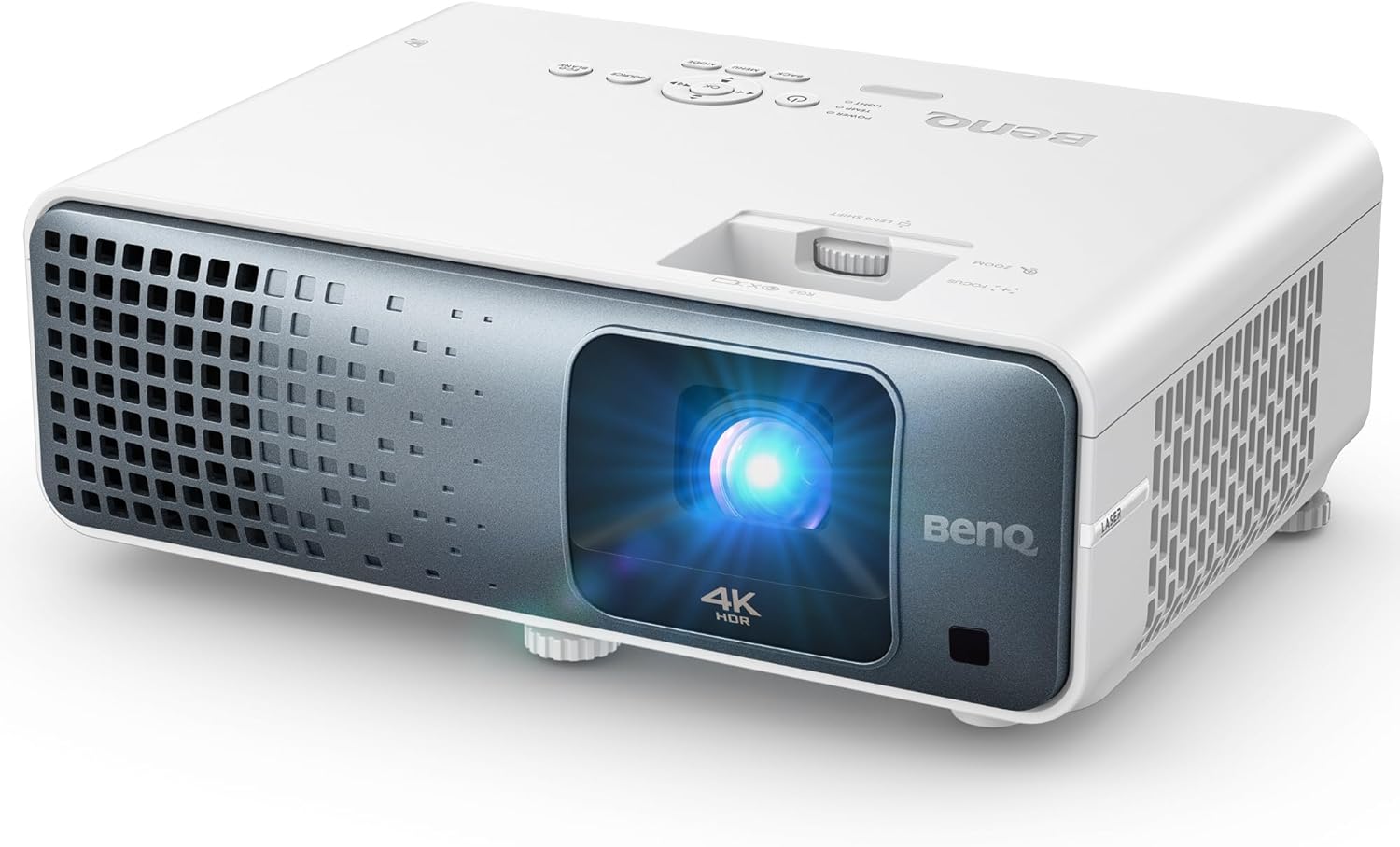 BenQ TK710 4K HDR Laser Projector 3200 Lumens |
9.7/10 | Buy on Amazon |
 Epson Home Cinema 4010 4K PRO-UHD 3-Chip 3LCD |
9.7/10 | Buy on Amazon | |
| Prime |
 Epson Home Cinema 3800 4K PRO-UHD 3-Chip 3LCD |
9.6/10 | Buy on Amazon |
 ViewSonic LS740HD 5500 Lumen 1080P Full HD Laser |
9.6/10 | Buy on Amazon | |
| -11% OFF |
 JMGO N3 Ultimate 4K Triple Laser Projector |
9.6/10 | Buy on Amazon |
 XGIMI HORIZON 20 Pro 4K RGB Triple Laser |
9.5/10 | Buy on Amazon |
Pros
- Google TV integration eliminates the need for a separate streaming device
- Bright 3000 ANSI Lumens output with solid color accuracy for a native 1080P/4K-supported picture
- Auto focus, auto keystone, and auto lens cover simplify setup and protect the lens long-term
- Flexible mounting via rotating stand and standard 1/4-20 screw holes for tripods or brackets
- Strong after-sales support with extended warranty and replacement coverage
Cons
- Native resolution is 1080P rather than true 4K, which may disappoint users expecting native Ultra HD detail
- Built-in speakers likely require external Bluetooth speakers for optimal audio in larger rooms
- Performance in bright outdoor daylight may still be limited despite the 3000 ANSI Lumens rating
The Pemoon Smart 4K Projector is designed for casual home theater enthusiasts and outdoor movie fans who want an all-in-one streaming solution without extra hardware. By bundling a Google TV Stick directly into the package, it removes the hassle of connecting a separate streaming device, letting users jump straight into Netflix, YouTube, and thousands of other apps.
Performance-wise, the 3000 ANSI Lumens rating combined with HDR support and 4K decoding produces a notably bright and colorful image for its price range, even though the native resolution is 1080P. The AI auto focus and auto keystone correction stand out in real-world use, automatically squaring and sharpening the image within seconds, a feature that is often clunky or missing entirely on competing budget projectors.
Build quality benefits from thoughtful engineering touches like the magnetic auto lens cover, which shields the optics from dust and pet hair, and the 360-degree rotating stand that makes switching between ceiling, desktop, and outdoor setups simple without tools. These design choices suggest Pemoon prioritized everyday usability and durability over flashy but impractical extras.
On the downside, buyers expecting a true native 4K panel should note this is a 1080P projector with 4K signal support, and the built-in speakers may not satisfy those wanting theater-grade audio without pairing an external Bluetooth speaker. Outdoor daytime use may also still be constrained by ambient light despite the brightness spec.
Overall, this projector is a strong pick for anyone wanting a straightforward, smart-enabled home theater setup with minimal fuss. The combination of Google TV integration, auto-calibration features, and solid after-sales support makes it especially appealing for first-time projector buyers or those upgrading from a bare-bones unit.
The Pemoon projector offers a native display resolution of 1920 x 1080 with support for 4K content decoding, paired with a brightness output of 3000 ANSI Lumens and built-in HDR for enhanced contrast and color depth.
Connectivity includes WiFi 6 for fast, stable streaming, Bluetooth 5.2 for audio and controller pairing, and HDMI for wired input options. The device also supports multi-device screen mirroring from iOS, Android, and laptop sources.
Physical features include a magnetic auto lens cover, a 360-degree rotating stand, and standard 1/4-20 screw holes compatible with tripods, ceiling brackets, and wall mounts for flexible installation.
Pros
- Exceptional black levels and contrast for a DLP laser projector at this price point
- Effective rainbow effect reduction praised repeatedly by real users
- Easy setup with auto focus, auto keystone, and wide zoom/lens shift range
- Bright, accurate colors that hold up well even with some ambient light
- Built-in streaming apps and smart home compatibility remove need for extra hardware
Cons
- No manual laser convergence adjustment, which can cause slight fringing at close viewing distances
- Some users report a faint high-pitched noise from the Anti-RBE system
- At this price, it competes with premium projectors and dedicated theater setups requiring careful budget consideration
The Valerion VisionMaster Max is a flagship 4K triple-laser projector aimed at home theater purists, gamers, and anyone building a dedicated cinema room. With native 4K resolution, 3500 ISO lumens, and support for Dolby Vision, IMAX Enhanced, and HDR10+, it's designed to compete with far pricier reference-level projectors rather than budget home entertainment units.
Its standout feature is the NoirScene Dark Field Engine, combining an EBL black-level algorithm with a precision IRIS aperture to produce a claimed 50,000:1 contrast ratio. Real-world reviewers consistently praise the depth and richness of blacks, along with the projector's Anti-RBE technology, which reduces the rainbow artifacts common to DLP projectors by 99.99%, a major relief for sensitive viewers during sports and fast-motion scenes.
Setup and design earn high marks too. Auto focus, auto keystone correction, ±105% vertical lens shift, and a 0.9-1.5:1 zoom range make it adaptable to nearly any room, from a 40-inch apartment setup to a 300-inch dedicated theater wall. Built quality feels premium, and the built-in Google TV, Dolby Atmos decoding, and smart home integrations (Alexa, HomeKit, Google Home) mean it functions as a full entertainment hub without extra boxes.
On the downside, a few users note the lack of manual laser convergence adjustment, which can cause minor color fringing up close, and a subtle high-pitched noise tied to the Anti-RBE system that sensitive ears may pick up. These are minor nitpicks rather than dealbreakers given the overall picture quality.
Overall, the VisionMaster Max delivers genuinely impressive black levels, color accuracy, and flexibility that punch well above typical consumer projectors. It's an excellent choice for home theater enthusiasts and gamers who want true cinema-grade visuals and don't mind investing in a premium setup.
Pros
- All-in-one solution with integrated Google TV eliminates clutter and setup complexity
- Exceptional brightness level performs well in daylight and ambient light conditions
- Smart auto focus and keystone save time and frustration during setup
- Comprehensive connectivity options work with nearly all modern devices and gaming consoles
- Dual 10W speakers provide surprisingly good audio for a projector without external speakers
Cons
- 3000 ANSI lumens is adequate but not class-leading for bright outdoor daytime use
- Native resolution not specified, which may indicate non-native 4K processing rather than true 4K output
- No mention of cooling system noise levels, which can be distracting during quiet scenes
The HAPPRUN 3000 is an all-in-one outdoor and indoor projector designed for homeowners who want a complete entertainment solution without the hassle of external streaming devices. Built-in Google TV with access to 1,000+ apps means you power it on and start watching immediately, making it ideal for casual users who prioritize convenience over complexity.
The standout feature is its combination of 3000 ANSI lumens brightness with 4K support and HDR10+ processing. This brightness level handles well-lit rooms and outdoor settings effectively, while the 20,000:1 contrast ratio and 95% color gamut deliver impressive picture quality. The auto focus and 6D auto keystone system works as advertised, automatically correcting image alignment from any mounting position within seconds, which is genuinely useful for non-technical users.
Build quality appears solid with dual 10W Dolby Audio speakers integrated into the chassis, eliminating the need for separate audio equipment in most scenarios. The projector supports up to a 300 inch screen, offering true theater-scale entertainment. WiFi 6 and Bluetooth 5.2 connectivity provide modern wireless performance, while HDMI, USB, and 3.5mm ports ensure compatibility with gaming consoles, computers, and phones.
The main limitation is that native resolution specifications are absent from the marketing materials, suggesting this may be a 1080p native projector with 4K decoding rather than true native 4K output. Additionally, potential buyers should verify noise levels during operation, as cooling systems on projectors can be audible during quiet film scenes.
Overall, the HAPPRUN 3000 represents solid value for users seeking an easy-to-use projector with built-in streaming, respectable brightness, and comprehensive connectivity. It excels as a plug-and-play solution for backyard movie nights and living room entertainment where convenience matters more than professional-grade specifications.
Display and Image Quality: 3000 ANSI lumens, 4K supported, 20,000:1 contrast ratio, 95% color gamut, HDR10+, screen size 40 to 300 inches, 4:3 and 16:9 aspect ratios, 50-100% zoom function
Smart Features: Built-in Google TV with 1,000+ apps including Netflix, Prime Video, YouTube, Hulu, Disney+, Google Voice Assistant control
Audio: Dual 10W speakers, Dolby Audio support
Connectivity: WiFi 6, Bluetooth 5.2, HDMI, USB, 3.5mm audio jack
Adjustment Features: Auto focus, 6D auto keystone correction
Compatibility: Works with TV sticks, Roku, Chromecast, laptops, PCs, iOS/Android phones, PS5, PS4, Nintendo Switch
Best For: Homeowners wanting an all-in-one projector with built-in streaming, casual users who prioritize ease of setup, those planning backyard movie nights or living room entertainment systems, and anyone seeking to eliminate extra devices and cables.
Consider This Projector If: You value convenience and plug-and-play functionality, you have a well-lit space and need good brightness, you want integrated audio without external speakers, and you appreciate automatic image alignment features.
Look Elsewhere If: You need true native 4K resolution for professional use, you require maximum brightness for bright outdoor daytime viewing, you prefer projectors without integrated smart platforms, or you need the quietest possible operation for silent environments.
Key Questions to Ask: What is the native resolution of this projector? How loud is the cooling system during operation? What is the warranty coverage? Can you test it in your specific lighting conditions before purchase?
Pros
- Exceptional 4,100-lumen brightness performs reliably in well-lit offices and conference rooms without needing to dim the lights
- Wireless AirPlay and Miracast compatibility covers both Apple and Windows ecosystems for seamless, cable-free sharing
- 3-Chip 3LCD engine produces accurate, vivid colors with no rainbow effect, a clear advantage over single-chip DLP alternatives
- Strong 16W speaker removes the need for a separate audio setup, saving time and reducing clutter
- Flexible 1.6x optical zoom and multi-point correction make installation straightforward in rooms of varying sizes and layouts
Cons
- Lamp-based light source requires eventual bulb replacement, adding a long-term maintenance cost compared to laser projector alternatives
- At nearly 7 pounds and priced at a premium tier, it may be more than casual home users or budget-conscious buyers need
- Wireless streaming performance depends on network speed, and some advanced features like AirPlay require a minimum 25 Mbps connection
The Epson Pro EX9270 is a Full HD wireless business projector designed specifically for modern hybrid workplaces and professional conference environments. With support for images up to 300 inches and robust wireless connectivity, it targets business users, educators, and teams who need a reliable, high-performance large-format display without the limitations of a fixed flat panel.
The projector's standout feature is its 4,100-lumen dual brightness rating, covering both color and white output, which means presentations, spreadsheets, and video calls remain sharp and vivid even when room lights stay on. The true 3-Chip 3LCD engine processes 100% of the RGB color signal on every frame, eliminating the rainbow effect common in single-chip projectors and ensuring consistent color accuracy across all content types.
Wireless versatility is a genuine strength here. Apple AirPlay allows iPhone, iPad, and Mac users to stream or mirror content instantly, while Miracast handles Windows PC screen casting without any additional dongles. The dual HDMI ports and USB power output further extend compatibility to popular streaming sticks like Roku, Fire TV, and Chromecast, making this projector a true plug-and-play hub for mixed-device meeting rooms.
On the practical side, the 1.6x optical zoom combined with horizontal and vertical keystone correction and four-corner adjustment gives installers real flexibility, reducing the need for precise ceiling mounts or fixed room configurations. The built-in 16W speaker is notably powerful for a projector in this class, capable of filling a medium-sized conference room without requiring external audio equipment. The unit weighs 6.8 pounds, making it portable enough to move between rooms when needed.
The primary drawback is the lamp-based light source, which will eventually need replacement and adds an ongoing cost not present in laser models. The price point also places it firmly in the professional segment, making it harder to justify for light or personal use. Overall, the Epson Pro EX9270 is a well-rounded, feature-rich projector that delivers on brightness, color quality, and connectivity, making it a compelling investment for businesses that prioritize presentation quality and flexible collaboration.
Resolution: Full HD 1080p | Brightness: 4,100 lumens color (IDMS) and 4,100 lumens white (ISO) | Technology: 3-Chip 3LCD | Light Source: Lamp
Wireless: Apple AirPlay, Miracast | Input Ports: 2x HDMI, USB power output (5V, 2A) | Built-In Speaker: 16W | Optical Zoom: 1.6x
Max Image Size: 300 inches | Keystone Correction: Horizontal, vertical, and four-corner adjustment | Dimensions: 12.2 x 11.5 x 4.1 inches | Weight: 6.8 lbs
Warranty: 1-year limited projector warranty, 90-day limited lamp warranty | Streaming Device Compatibility: Amazon Fire TV, Apple TV, Roku, Chromecast
If you are evaluating the Epson Pro EX9270 against other business projectors, the most important factors to consider are brightness, wireless capability, and total cost of ownership. At 4,100 lumens, this model handles ambient light well, but if your meeting rooms are exceptionally bright or you need the projector to last many years without maintenance, stepping up to a laser model like the Epson EB-PQ series may be worth the higher upfront cost.
For teams that rely heavily on Apple devices, the built-in AirPlay support is a significant convenience advantage over projectors that require a separate Apple TV or adapter. Windows-centric teams will appreciate Miracast for the same reason. If your workflow involves both ecosystems, this projector covers both natively, which is relatively uncommon at this price tier.
Consider the room size and throw distance before purchasing. The 1.6x optical zoom provides meaningful flexibility, but you should verify that your intended installation distance falls within the projector's throw ratio range to achieve the image size you need. For very large auditoriums or permanent fixed installations, a higher-lumen or short-throw model may be more appropriate.
Finally, factor in lamp replacement costs when comparing this projector to laser alternatives. Replacement lamps typically cost between $100 and $200 and are needed after several thousand hours of use. For organizations that use a projector daily for extended periods, a laser light source offers a lower total cost over time, while occasional or moderate users will find the lamp-based EX9270 a cost-effective choice.
Pros
- Exceptional brightness at 3200 lumens allows use in rooms that are not fully darkened
- Dual-purpose design excels at both cinematic movie watching and high-refresh-rate gaming
- Laser light source ensures consistent color performance and eliminates costly lamp replacements
- Flexible installation thanks to 1.3x zoom and vertical lens shift with 3D keystone correction
- eARC connectivity future-proofs the setup for premium audio systems
Cons
- Premium price point places it out of reach for budget-conscious buyers
- 240Hz refresh rate is limited to 1080p resolution, not full 4K, which may disappoint some users
- No built-in smart TV platform mentioned, which may require an external streaming device for app access
The BenQ TK710 is a 4K HDR laser projector designed to serve double duty as a premium home theater display and a high-performance gaming projector. Priced at the upper end of the consumer market, it targets enthusiasts who refuse to compromise between cinematic quality and gaming responsiveness. Whether you are setting up a dedicated home cinema or a versatile living room entertainment hub, the TK710 is built to handle both with confidence.
The headline feature is its 3200 ANSI lumen laser light source, which sets it apart from many competitors that struggle in anything but a pitch-dark room. Colors remain vibrant and contrast stays strong even with lights on, backed by 95% Rec.709 color coverage and HDR10 plus HLG support. The Dynamic Function actively adjusts the light source in real time to optimize contrast scene by scene, adding a layer of picture intelligence that benefits both film and gaming content.
For gamers, the TK710 delivers some of the most impressive specs in its class. At 1080p, it achieves a 240Hz refresh rate with just 4ms input lag, making fast-paced competitive titles feel genuinely responsive on a massive screen. At native 4K 60Hz, input lag drops to 16ms, which is well within the acceptable range for console gaming on PS5 and Xbox Series X. The eARC port adds audio flexibility, allowing lossless audio formats to pass through to a connected soundbar or AV receiver without extra cables.
On the installation side, the 1.3x optical zoom and vertical lens shift give users meaningful flexibility in placing the projector without resorting to digital correction that degrades image quality. The 3D keystone adjustment further assists in rooms where perfect alignment is not possible. One limitation worth noting is that the 240Hz high-refresh mode is capped at 1080p rather than 4K, so users expecting native 4K at ultra-high frame rates will need to manage expectations accordingly.
Overall, the BenQ TK710 is a compelling and well-rounded projector for buyers who want the best of both worlds. It earns its price through a durable laser light source, versatile connectivity including eARC, and genuinely impressive gaming performance. If you are serious about upgrading your home entertainment setup and need a projector that handles movie nights and gaming sessions with equal skill, the TK710 deserves serious consideration.
Resolution: True 4K UHD (3840 x 2160) with HDR10 and HLG support for rich, high-dynamic-range visuals across movies, sports, and gaming content.
Brightness and Light Source: 3200 ANSI lumens powered by a long-life laser light source. Laser technology delivers consistent brightness and color accuracy over thousands of hours without bulb replacements.
Gaming Performance: 4ms input lag at 1080p 240Hz for competitive gaming. 16ms input lag at 4K 60Hz for console gaming on PS5, Xbox Series X, and PC. Dedicated HDR Game Modes enhance in-game visuals.
Color Coverage: 95% Rec.709 color gamut coverage ensures accurate, cinema-grade color reproduction for both film and gaming content.
Connectivity: eARC support for high-quality audio passthrough. Compatible with major gaming consoles and streaming devices. Throw distance of approximately 6 feet for a 120-inch image at 10 feet.
Installation Flexibility: 1.3x optical zoom, vertical lens shift, and 3D keystone correction for versatile room placement. Backed by a 3-year manufacturer warranty for added peace of mind.
Who should buy the BenQ TK710? This projector is ideal for home theater enthusiasts who also game regularly and want a single display solution that excels at both. It is particularly well-suited for living rooms where full light control is not always possible, thanks to its 3200 lumen output.
Gaming Considerations: If you primarily play competitive titles at high frame rates, the 240Hz mode at 1080p will feel smooth and responsive on a large screen. Console gamers on PS5 or Xbox Series X will benefit most from the 4K 60Hz mode with 16ms lag, which is imperceptible during normal gameplay. PC gamers with high-refresh monitors will appreciate the flexibility to scale up to a big-screen format.
Home Theater Use: For movie watching, the laser light source and HDR10 support produce excellent contrast and color depth. The 95% Rec.709 coverage means skin tones, landscapes, and cinematic color grading look accurate and natural. Pairing this projector with a quality 4K screen and a good soundbar or AV receiver via eARC will deliver a genuinely cinematic experience.
Installation Tips: The 1.3x zoom and vertical lens shift make the TK710 easier to install than many fixed-lens projectors. At 120 inches, you only need about 6 feet of throw distance, making it suitable for smaller rooms. Plan your cable management around the eARC port if you intend to use an external audio system, as this will simplify your setup considerably.
Budget Note: At this price tier, buyers should also consider whether they need a built-in smart TV platform or are comfortable using an external streaming stick. Confirming smart platform availability before purchase will help avoid any surprises after setup.
Pros
- Outstanding, vibrant picture quality praised consistently across reviews
- Bright enough for both dark room and moderately lit environments
- Extensive lens shift and zoom options simplify setup for various room layouts
- Solid, sturdy build quality that feels durable for long-term use
- Strong upscaling performance for DVD, Blu-ray, and streaming content
Cons
- Large and heavy (24.3 lbs), making DIY ceiling mounting difficult without professional help
- No built-in speakers or Bluetooth, requiring a separate AV receiver for sound
- Uses older HDMI 1.4 rather than HDMI 2.0, limiting some future-proofing versus higher-tier models
The Epson Home Cinema 4010 is a 4K PRO-UHD home theater projector aimed at serious movie and gaming enthusiasts who want a large-screen cinematic experience at home. It uses true 3-chip 3LCD technology, advanced pixel-shifting, and full 10-bit HDR processing to produce a highly detailed, color-accurate image that rivals dedicated theater setups.
In real-world use, reviewers consistently praise the vibrancy and brightness of the image, with 2400 lumens of color and white brightness making it usable even outside of fully dark rooms. The 100% DCI-P3 color coverage and 12-bit digital processing translate into smooth gradients and lifelike colors, particularly noticeable when paired with 4K Blu-ray or HDR streaming content.
Build quality is robust, but that comes with a tradeoff: this is a big, heavy projector at over 24 pounds, and several owners note that ceiling mounting is best left to a professional installer. The 3-axis motorized lens with memory presets does help offset this by making fine-tuning image position and focus much easier once installed.
On the downside, the 4010 skips built-in speakers and Bluetooth, so a separate AV receiver is mandatory for audio, and it relies on the older HDMI 1.4 standard rather than HDMI 2.0, which caps some future compatibility. It also lacks the realtime HDR adjustment and HLG support found in higher-tier Epson models like the 5050UB.
Overall, the Home Cinema 4010 delivers an impressive, professional-level home theater image with excellent color accuracy and brightness for its price tier. It's an excellent choice for anyone building a dedicated theater room who already has an AV receiver and is comfortable with professional installation.
Pros
- Matched 3,000-lumen color and white brightness is class-leading for a 3LCD projector in this price range
- True 3-chip design ensures consistent, accurate color without the rainbow effect common in single-chip DLP projectors
- HDMI 2.0 at 18 Gbps supports 4K HDR at 60Hz, making it future-proof for next-gen gaming and streaming
- Full 10-bit HDR and HLG support faithfully handles a wide range of modern content formats
- Flexible lens shift and precision glass optics simplify installation and deliver sharp focus across the entire image
Cons
- The 100,000:1 contrast ratio, while respectable, falls short of higher-end Epson models that reach 1,000,000:1, which may affect deep black performance in dark room setups
- 4K PRO-UHD uses pixel-shifting rather than a native 4K panel, so pixel-peepers may notice a difference compared to true native 4K projectors
- At this price point, buyers should budget separately for a quality screen and audio system to fully realize the projector's capabilities
The Epson Home Cinema 3800 is a premium home theater projector aimed at enthusiasts who want a large-screen 4K HDR experience without stepping into the ultra-high-end projector market. It is well-suited for dedicated media rooms, living room setups, and serious 4K gamers who demand accurate color and smooth motion from a big-screen display.
The standout feature of the 3800 is its true 3-chip 3LCD design, which processes 100% of the RGB color signal simultaneously on three separate LCD panels. This approach eliminates the rainbow effect associated with single-chip DLP projectors and ensures that color brightness matches white brightness at a full 3,000 lumens, a specification that many competing projectors fail to achieve. Combined with full 10-bit HDR and HLG support, the image quality in HDR content is detailed, vibrant, and faithful to the source material.
For gamers, the inclusion of full 18 Gbps HDMI 2.0 connectivity is a significant advantage, enabling 4K HDR input at a full 60Hz refresh rate from current-generation consoles and streaming sticks. The real-time 12-bit analog-to-digital video processing further smooths out tonal transitions and reduces compression artifacts, resulting in a clean and cinematic picture. The Epson Precision Lens adds edge-to-edge focus clarity and offers both vertical and horizontal lens shift for flexible room placement.
On the downside, the 3800 uses pixel-shifting technology rather than a native 4K imaging chip, which means the resolution enhancement is processed rather than true native 4K. The contrast ratio of 100,000:1 is solid for most viewing environments but is outclassed by pricier Epson models offering 1,000,000:1 contrast, which could matter in a fully darkened dedicated theater room. The built-in 10W speakers and aptX Bluetooth are convenient for casual use, but a dedicated sound system is recommended to match the visual performance.
Overall, the Epson Home Cinema 3800 delivers an impressive combination of brightness, color accuracy, HDR performance, and gaming readiness in a single package. It is a compelling choice for buyers who want a versatile, high-performance 4K projector that excels across movies, sports, and gaming without the complexity of a full commercial-grade installation.
Resolution: 4K PRO-UHD with pixel-shifting technology across three high-definition LCD chips for enhanced detail and clarity.
Brightness: 3,000 lumens color brightness and 3,000 lumens white brightness, providing a bright and consistent image across various room conditions.
Contrast Ratio: Up to 100,000:1 for rich black detail and strong shadow performance in most home theater environments.
HDR Support: Full 10-bit HDR processing with HLG support, accepting 100% of the HDR source signal for accurate highlight and shadow reproduction.
Connectivity: HDMI 2.0 at 18 Gbps supporting 4K HDR at 60Hz, compatible with virtually all color formats, depths, and color spaces from modern source devices.
Audio: Dual rear-firing 10W stereo speakers with aptX Bluetooth for wireless connection to external sound systems.
3D Support: Active 3D compatible with high-performance active 3D glasses for an immersive 3D viewing experience.
Optics: Epson Precision Lens with multi-element glass construction, offering precision vertical and horizontal lens shift adjustment for flexible installation.
If you are considering the Epson Home Cinema 3800, the most important question is whether your room environment suits a projector setup. Projectors perform best in rooms where ambient light can be controlled, and while the 3800's 3,000-lumen output handles moderate light well, a dedicated darkened room will deliver the most impressive results.
For 4K gaming, this projector is one of the better options in its class thanks to HDMI 2.0 support at 18 Gbps, enabling 4K HDR at 60fps. If you own a current-generation console or a high-end streaming device, you will be able to take full advantage of the projector's capabilities without any signal bottlenecks.
Buyers should also consider screen size and throw distance. The 3800 is designed for large-screen home theater use, typically projecting images from 100 to 150 inches diagonally. Make sure to calculate the throw ratio for your specific room dimensions before purchasing, and consider investing in a dedicated projection screen for the best image quality.
If deep blacks and ultra-high contrast are your top priority, it may be worth considering a step-up Epson model with a higher contrast ratio. However, for most buyers watching content in a typical living room or media room, the 100,000:1 contrast ratio of the 3800 will be more than sufficient and will be hard to distinguish from higher-spec models in real-world conditions.
Finally, while the built-in speakers are a convenient bonus, pairing this projector with a soundbar or a full surround sound system will transform the experience. Budget for audio alongside the projector to get the most out of your home theater investment.
Pros
- Exceptional brightness at 5,500 lumens handles ambient light in classrooms, boardrooms, and large venues with ease
- Laser light source eliminates lamp replacement costs and hassle, making long-term ownership highly economical
- Flexible installation options including ceiling mount, 360-degree rotation, and optical zoom suit a wide range of environments
- Dedicated Golf Mode adds unique value for home simulator setups, setting it apart from standard commercial projectors
- Comprehensive connectivity with LAN control via Crestron, AMX, PJ Link, and Extron simplifies large-scale AV integration
Cons
- At over $1,000, the price point may be a stretch for casual home users who do not need commercial-grade brightness or durability
- The 1.1 to 1.5 throw ratio is not ultra-short throw, so smaller rooms may require careful placement planning
- Wireless casting requires a separately purchased ViewShare kit, which adds to the total cost of a fully wireless setup
The ViewSonic LS740HD is a Full HD 1080p laser projector designed primarily for professional and semi-professional environments such as classrooms, auditoriums, boardrooms, and large home theaters. With 5,500 ANSI lumens of brightness and a laser phosphor light source, it targets users who need reliable, high-quality projection without the ongoing cost of lamp replacements. It also appeals to home golf simulator enthusiasts thanks to its dedicated Golf Mode.
Performance is where the LS740HD truly shines. The 5,500-lumen output ensures images remain crisp and vivid even in rooms with significant ambient light, a common challenge in educational and corporate settings. The Texas Instruments 0.65-inch DMD chip delivers a high native contrast ratio, adding visual depth and legibility to presentations, videos, and simulations. DLP technology further ensures accurate color reproduction and eliminates the screen-door effect common in older projection systems.
Installation flexibility is a major strength of this projector. The 1.3x optical zoom, combined with horizontal and vertical keystone correction and 4-corner adjustment, makes it straightforward to achieve a perfectly shaped image in almost any room configuration. The 360-degree projection capability and portrait mode open up creative use cases like projection mapping and floor displays, making it a versatile tool for events and staging professionals.
On the downside, the price is firmly in the commercial tier, which may deter budget-conscious buyers. The throw ratio of 1.1 to 1.5 means it is not suited for very short projection distances, and users in compact spaces should measure carefully before purchasing. Wireless content sharing, while supported, requires an additional accessory purchase, which feels like an oversight at this price level.
Overall, the ViewSonic LS740HD is a well-rounded, high-performance laser projector that delivers exceptional value for commercial, educational, and enthusiast applications. Its combination of brightness, maintenance-free operation, installation flexibility, and unique Golf Mode make it one of the more compelling options in its class. For anyone needing a dependable large-venue or simulation projector, it is a highly recommended investment.
Resolution: Full HD 1920x1080p (1080p) native resolution for sharp, detailed imagery across all content types.
Brightness and Contrast: 5,500 ANSI lumens with a high native contrast ratio achieved through a Texas Instruments 0.65-inch DMD chip, ensuring deep blacks and bright whites simultaneously.
Light Source: 3rd-generation laser phosphor technology rated for up to 30,000 hours of use, delivering consistent brightness over its lifespan without lamp replacements.
Throw and Zoom: 1.1 to 1.5 throw ratio with 1.3x optical zoom and 0.8x to 2.0x digital zoom. Projects a 100-inch image from approximately 8.2 feet, with a maximum screen size of 300 inches.
Adjustment and Installation: Features H/V keystone correction, 4-corner adjustment, 360-degree projection, portrait mode, and ceiling mount compatibility. Compatible with ViewSonic mount PJ-WMK-007.
Connectivity and Control: Supports Crestron, AMX, PJ Link, ATEN, and Extron for centralized LAN control. USB firmware update support and optional ViewShare Wireless Screen Casting Kit compatibility.
Durability: IP6X-rated sealed filter-free design for dust resistance. Rated for 24/7 continuous commercial operation.
Who Should Buy the LS740HD? This projector is best suited for IT managers, AV integrators, educators, and serious home theater or golf simulator enthusiasts who need a high-brightness, low-maintenance solution. If you regularly present in large rooms with uncontrolled lighting, the 5,500-lumen output is a significant advantage over consumer-grade projectors.
Room Size and Throw Distance: Before purchasing, measure your available projection distance. The LS740HD requires roughly 8.2 feet to display a 100-inch image and up to about 12.3 feet for a 150-inch image. It is not an ultra-short-throw projector, so very small rooms may not be ideal. For large classrooms, conference rooms, or dedicated home theater spaces, it fits perfectly.
Golf Simulator Compatibility: If your primary use case is a home golf simulator, the LS740HD is one of the few projectors in its class with a dedicated Golf Mode that supports major simulator software platforms. Pair it with a quality impact screen and simulator software for a premium indoor golf experience.
Commercial and 24/7 Use: For businesses or institutions that need a projector running all day, the industrial-grade design and laser light source make the LS740HD a cost-effective long-term investment. The absence of consumable lamps reduces operational costs significantly over time.
Budget Consideration: At its price point, the LS740HD competes with other commercial laser projectors. If you only need occasional home use at moderate brightness, a lower-cost consumer projector may suffice. However, for demanding environments where reliability and brightness are non-negotiable, the LS740HD justifies its cost.
Pros
- Exceptional brightness for daytime and ambient-light viewing
- Highly flexible installation thanks to lens shift, zoom, and motorized gimbal
- Strong built-in audio that rivals standalone soundbars
- Excellent gaming performance with low latency and high refresh rate
- Fast, lag-free Google TV interface with plenty of RAM and storage
Cons
- Fan noise can be noticeable, even occasionally kicking on during sleep mode
- Some Google TV apps don't fully support 4K Dolby Vision, requiring an external streaming device
- Rainbow effect and minor light bleed reported by some users, typical of laser/DLP projectors
The JMGO N3 Ultimate is a premium 4K triple laser projector aimed at home theater enthusiasts, gamers, and anyone who wants a flexible, high-brightness alternative to a traditional TV setup. Its combination of portability and professional-grade optics makes it equally suited for a dedicated media room or a casual living space setup.
What truly sets this projector apart is its 5800 ISO Lumen output from the triple laser engine, which keeps images bright and colorful even with some ambient light in the room, a common weak point for projectors in this class. Reviewers consistently praise the color accuracy, Dolby Vision performance, and deep black levels, while gamers benefit from the 240Hz refresh rate and 1ms input lag that make fast-paced titles feel responsive on PS5, Xbox, or PC.
Physically, the N3 Ultimate impresses with its four-way lens shift, wide optical zoom range, and a 360-degree motorized AI gimbal, giving users true physical image placement rather than digital cropping. Setup is further simplified by real-time auto keystone and focus correction, making it easy to get a clean picture even in awkward room layouts.
On the downside, some users have reported fan noise during standby mode and a visible rainbow effect typical of single-chip DLP laser projectors. Additionally, while it runs on Google TV with native Netflix and Chromecast, a few third-party apps don't yet support full 4K Dolby Vision playback, so pairing it with an external streaming device may be necessary for the best results.
Overall, the JMGO N3 Ultimate delivers an impressive blend of brightness, color accuracy, and gaming performance that outperforms many pricier competitors. It's a strong choice for anyone wanting a versatile, big-screen home cinema experience, provided they can look past a few minor quirks in noise and app compatibility.
Pros
- Bright enough to replace a TV for daytime viewing
- Excellent color and contrast performance praised by cinema enthusiasts
- Strong gaming features including 240Hz and low input lag
- Flexible placement thanks to lens shift, zoom, and obstacle avoidance
- Premium built-in audio from Harman Kardon
Cons
- Auto keystone correction can be unreliable, requiring manual adjustment
- Some users report software bugs, including HDMI ARC audio dropouts and streaming quality restrictions
- Triple laser rainbow effect may be noticeable to sensitive eyes, especially in menus
The XGIMI HORIZON 20 Pro is a 4K RGB triple laser projector aimed at home theater enthusiasts and gamers who want a big-screen experience without sacrificing daytime usability. With 4100 ISO lumens of brightness, it stands out as one of the few projectors capable of holding its own against ambient light, making it a genuine TV replacement for many living rooms.
Where this projector really shines is color and contrast. The X-Master RGB triple laser engine combined with a 20,000:1 contrast ratio produces vibrant, lifelike visuals that reviewers describe as spectacular, even those who consider themselves longtime projector purists. Gamers will also appreciate the 240Hz refresh rate, 1ms response time, and support for VRR and ALLM, which together create a fluid, low-latency experience suited for fast-paced titles.
Build quality and setup flexibility are strong points as well. Flexible lens shift and optical zoom allow the projector to be placed off-center or at odd angles while still producing a clean, distortion-free image, and several users mention successfully hiding the unit in creative spots without compromising picture quality.
That said, the experience isn't flawless. The automatic keystone correction has been reported as unreliable, and the built-in Google TV software has drawn criticism for HDMI ARC audio dropouts and inconsistent streaming quality with certain services. A small percentage of viewers may also notice a rainbow effect from the laser system, particularly in menus, though most say it fades from notice once content starts playing.
Overall, the HORIZON 20 Pro delivers premium image quality, strong gaming performance, and real daytime usability that few projectors in this class can match. It's a compelling choice for movie lovers and gamers willing to work through some initial software quirks in exchange for a genuinely cinematic experience at home.
The HORIZON 20 Pro features native 4K UHD resolution (3840 x 2160) powered by DLP display technology and the MT9679 chipset with 4GB of RAM for smooth navigation and app performance.
Brightness is rated at 4100 ISO lumens with a 20,000:1 contrast ratio, supported by HDR10+, Dolby Vision, and IMAX Enhanced certification for a wide range of premium content formats.
Throw distance ranges from 1.06 to 5.31 meters, supporting image sizes from 40 to 300 inches, with 15cm of vertical keystone correction and flexible lens shift for versatile placement options.
Connectivity includes Bluetooth, HDMI, USB, and Wi-Fi, while built-in Harman Kardon speakers and Google TV integration round out a complete smart home theater package backed by a 2-year warranty.
How to Choose Your Movie Room Projector
Understanding Lens Shift Range and Flexibility
Lens shift is the non-negotiable feature for a permanent cinema room installation. It allows you to physically move the projected image vertically and, on better models, horizontally without tilting the projector. This prevents keystone distortion, which degrades image quality. Look for the percentage of shift offered. A model like the Epson Home Cinema 4010 offers extensive vertical and horizontal adjustment, providing incredible placement freedom for ceiling mounts or media cabinets.
Consider whether the shift is manual or motorized. Motorized lens shift, found in premium models, allows for precise adjustments via remote control and can often be saved into memory presets. This is invaluable if you use an automated screen or have multiple seating configurations. For a deeper dive into projectors built for dedicated spaces, see our recommendations for movie room projectors with zoom lens capabilities.
Image Quality: Resolution, Brightness, and Contrast
Your projector’s core mission is to deliver a stunning picture. Native 4K resolution is the gold standard for sharpness, providing incredible detail on large screens. Paired with high dynamic range (HDR10, HDR10+, or Dolby Vision), it ensures vibrant colors and deep blacks. Brightness, measured in lumens, must be sufficient for your screen size and ambient light control. A model like the Valerion VisionMaster Max 4K Laser Projector delivers exceptional brightness and contrast for a truly cinematic experience.
Contrast ratio dictates how deep the blacks appear and how much shadow detail you can see. Technologies like dynamic irises and laser light sources, as seen in the BenQ TK710, help achieve superior contrast. Remember, a projector with excellent contrast will make colors pop and deliver a more immersive, three-dimensional image, crucial for movie nights.
Light Source Technology and Longevity
The light source determines brightness, color accuracy, and maintenance needs. Traditional lamp-based projectors, like some Epson models, offer excellent color performance but require periodic lamp replacements. Laser light sources, used in the XGIMI HORIZON 20 Pro, provide longer lifespans, often exceeding 20,000 hours, and maintain consistent brightness over time.
Laser projectors also offer instant on/off functionality and better performance in dedicated, light-controlled rooms. For a cinema room meant for daily use, a laser model can be a worthwhile investment for its reliability and reduced long-term upkeep. If projector noise is a concern in your quiet theater, our list of quiet movie room projectors is essential reading.
Connectivity and Smart Features
A modern movie room projector should seamlessly integrate into your home ecosystem. Ensure it has multiple HDMI ports, preferably supporting the latest standards like HDMI 2.1 for high-frame-rate gaming. Built-in smart platforms, such as Google TV on the HAPPRUN 3000 ANSI Lumens Outdoor Projector, provide direct access to streaming apps without an external device.
Consider audio connectivity as well. While built-in speakers are often insufficient for a true theater, features like eARC support allow you to send high-quality audio to a separate sound system easily. Wireless connectivity like Wi-Fi 6 and Bluetooth 5.2 are also beneficial for stable streaming and connecting peripherals. For projectors that combine smart features with long-term value, check out our picks for models with long lamp life.
Final Thoughts
Selecting the right projector with lens shift transforms your movie room from a compromised setup to a professional-grade home cinema. For enthusiasts seeking the ultimate in placement flexibility and image fidelity, the Valerion VisionMaster Max 4K Laser Projector stands out with its exceptional contrast and robust lens shift range. If you desire a more versatile, all-in-one entertainment hub that simplifies setup with smart features, the Smart 4K Projector [Bundled with Google TV Stick] offers impressive automation and value, making it easier than ever to enjoy a big-screen experience.
Frequently Asked Questions
What is the main benefit of lens shift in a projector?
Lens shift allows you to position the projector off-center from the screen without causing image distortion (keystoning). You can mount it higher on a ceiling or place it on a side table and still project a perfectly rectangular, aligned image onto your screen, offering tremendous installation flexibility for dedicated cinema rooms.
Is lens shift the same as keystone correction?
No, they are fundamentally different. Lens shift is a physical, optical adjustment that moves the lens element, preserving the full image resolution and quality. Keystone correction is a digital process that skews the image to make it rectangular, which can reduce sharpness and introduce artifacts. Lens shift is always the preferred method for a quality setup.
Can I use a projector with lens shift in a room with ambient light?
While lens shift helps with placement, combating ambient light depends primarily on the projector’s brightness (lumens) and contrast ratio. For rooms with some uncontrolled light, prioritize a high-brightness laser model like the BenQ TK710. For the best results, always pair your projector with proper light control or an ambient light rejecting (ALR) screen.
Are projectors with lens shift good for gaming?
Absolutely. Many modern projectors with lens shift, such as the JMGO N3 Ultimate, also feature high refresh rates and low input lag specifically for gaming. The lens shift allows for optimal placement to achieve a large, immersive gaming screen without sacrificing responsiveness or visual performance, creating an unparalleled experience for console and PC gamers in 2026.



Write Your Review
No reviews yet. Be the first to share your experience!