

Your meeting room projector is the centerpiece of every presentation, video call, and collaborative session. A dim, fuzzy image can derail momentum and obscure critical data, while a bright, sharp display commands attention and enhances understanding. Laser projectors have become the professional standard, offering superior reliability, consistent brightness, and minimal maintenance compared to traditional lamp models.
This guide is designed for business professionals, IT managers, and anyone responsible for outfitting a professional meeting space. We have assessed nine of the top laser projectors on the market, focusing on performance in ambient light, installation flexibility, and connectivity for modern workflows. For those considering a different form factor, our review of the best short-throw meeting room projectors offers a focused comparison.
| Pick | Product | AI Score | Buy |
|---|---|---|---|
| -17% OFF |
 Optoma ZH551 1080p Full HD Laser Projector
|
9.9/10 | Buy on Amazon |
| -5% OFF |
 Panasonic PT-VMZ51S WUXGA LCD Laser Projector
|
9.7/10 | Buy on Amazon |
 Panasonic PT-VMZ61 WUXGA 3LCD Laser Projector
|
9.8/10 | Buy on Amazon | |
| -7% OFF |
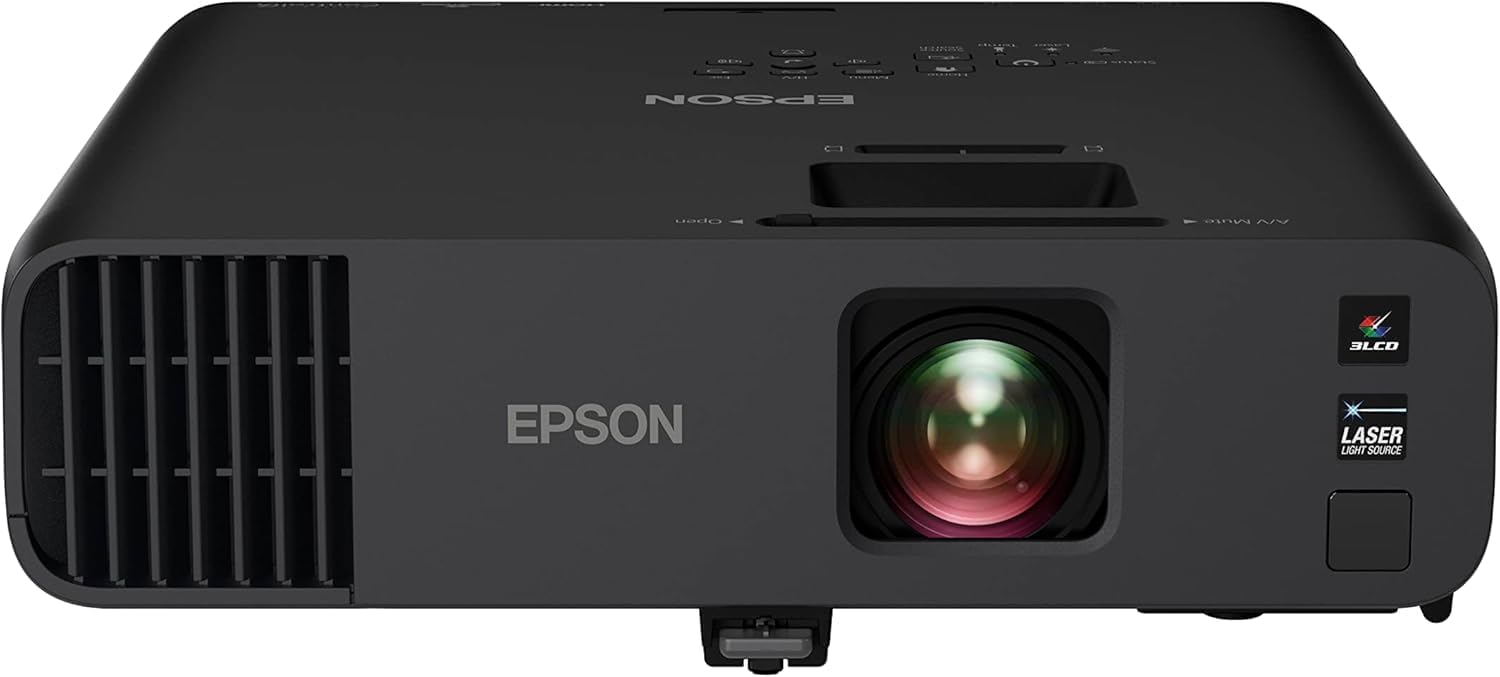 Epson Pro EX11000 Full HD 1080p Wireless Laser
|
9.6/10 | Buy on Amazon |
| -16% OFF |
 Optoma GT2000HDR Short Throw Full HD Laser
|
9.9/10 | Buy on Amazon |
| -9% OFF |
 ViewSonic LS740HD 5500 Lumen 1080P Full HD Laser
|
9.8/10 | Buy on Amazon |
 XGIMI HORIZON 20 4K RGB Triple Laser Projector
|
9.9/10 | Buy on Amazon | |
| -14% OFF |
 ViewSonic LS901-4K 4K UHD Laser Projector
|
9.9/10 | Buy on Amazon |
 ViewSonic LSD600W 6000-Lumen WXGA Laser Projector
|
9.9/10 | Buy on Amazon |
Pros
- Very bright 5,600 lumen output ideal for lit rooms
- Long-life laser eliminates frequent lamp replacement costs
- Dust-resistant IP6X rating suited for schools and industrial settings
- Wireless screen sharing and remote fleet management simplify IT admin
- Flexible installation with zoom, portrait, and 360 degree projection
Cons
- Some Miracast connections may require additional hardware for certain devices
- At 11 pounds, it's heavier than compact portable projectors, so less ideal for travel
- Premium price point positions it for institutional/business budgets rather than casual home use
The Optoma ZH551 is a Full HD laser projector built specifically for classrooms, boardrooms, and other professional spaces where ambient light and reliability are constant concerns. With 5,600 lumens of brightness, it's aimed at users who need a 'fit-and-forget' display solution rather than a home theater experience.
The standout feature here is the DuraCore laser engine, rated for up to 30,000 hours of maintenance-free use, which drastically reduces the total cost of ownership compared to lamp-based projectors. Combined with IP6X dust resistance, this makes the ZH551 a strong candidate for schools, warehouses, or any environment where dust and long duty cycles are a factor.
Build quality reflects its business-first design: a compact tabletop unit weighing 11 pounds, with flexible mounting options including wall, floor, and 360-degree/portrait orientation. The 1.6x zoom and wide throw distance range (3.3 to 30.5 feet) give installers real flexibility when fitting it into existing rooms.
On the connectivity side, built-in Miracast wireless screen sharing is a welcome convenience for presenters, though some devices may need additional dongles to work smoothly. IT departments will also appreciate Optoma Management Suite (OMSC), which allows remote monitoring and scheduling across multiple units, a feature that matters more for fleet deployments than single-unit buyers.
Overall, the ZH551 is a purpose-built tool for institutions and businesses that need bright, low-maintenance, and manageable projection at scale. It's not designed to compete with home theater projectors, but for its intended audience, dust resistance, laser longevity, and remote management make it a smart long-term investment.
Native resolution is 1920 x 1080 (Full HD), with a maximum image size of 144.96 inches and a minimum image size of 28 inches, giving flexibility for both small huddle rooms and larger classrooms.
Connectivity includes HDMI, USB, Ethernet, and built-in Miracast wireless sharing, supporting laptops, smartphones, and gaming consoles. Video encoding support covers H.264 and H.265 formats.
The projector carries a 3,000,000:1 contrast ratio and a light source life of up to 30,000 hours, backed by a 3-year manufacturer warranty. It measures 8.5 x 10.8 x 4.5 inches and weighs 11 pounds, supporting tabletop, wall, and floor mounting.
Pros
- Extremely bright output performs well even in ambient light
- Sharp, clear image quality confirmed by real user feedback in simulator and presentation setups
- Lightweight and compact for its class, easing transport and installation
- Long-lasting laser light source reduces bulb replacement costs
- Flexible lens correction and keystone adjustment simplify tricky installations
Cons
- No Digital Link (HDBaseT) support, which may limit long-distance cable runs in some installs
- Native light source life listed at 2000 hours in specs, which seems inconsistent with the advertised 24,000-hour ECO rating and should be confirmed before purchase
- Limited customer review volume makes it harder to gauge long-term reliability
The Panasonic PT-VMZ51S is a WUXGA LCD laser projector built for environments where ambient light is a challenge, think classrooms, boardrooms, or dedicated simulator rooms. With 5200 lumens of brightness and native 1920x1200 resolution, it targets users who need consistently sharp, visible images without dimming the lights.
What stands out most is the combination of brightness and contrast: a 3,000,000:1 ratio gives the image real depth, with reviewers specifically praising how clear and sharp visuals appear in real-world use, including a golf simulator setup where the picture reportedly looked as if users were 'actually on the course.' The laser light engine also promises up to 24,000 hours in ECO mode, which should minimize maintenance over the projector's lifespan.
Design-wise, Panasonic kept this unit compact and lightweight at just 6.5 kg, positioning it as one of the smallest and lightest in its class. The 1.6x zoom lens, wide keystone correction range, and 6-point screen correction give installers real flexibility, including the ability to project from corners or off-center angles without warping the image.
On the downside, this model skips Digital Link (HDBaseT) support, which could be a limitation for setups requiring long cable runs without signal loss. There's also a discrepancy in the listed light source life between the spec sheet (2000 hours) and the marketed ECO mode rating (24,000 hours) that buyers should clarify with the seller before purchase.
Overall, the PT-VMZ51S is a strong choice for anyone needing a bright, sharp, and flexible projector for business, education, or specialty setups like simulators. It's not the cheapest option, but the brightness, resolution, and installation flexibility justify the investment for demanding lit-room environments.
The PT-VMZ51S features a native WUXGA resolution of 1920x1200 with an LCD display panel and a laser light source rated for extended operational life. Brightness is rated at 5200 ANSI lumens, with a contrast ratio of 3,000,000:1 for enhanced depth and clarity.
Connectivity includes dual HDMI inputs with CEC command support and 4K signal compatibility, along with USB, LAN, VGA, and serial ports for flexible integration with laptops, gaming consoles, tablets, and smartphones.
Physically, the projector weighs 6.5 kg (14.33 lbs) and is designed as a portable, tabletop-mountable unit. It supports H.264 and H.265 video encoding and includes remote control operation alongside physical button controls.
Pros
- Very high brightness (6,200 lumens) suited for large or well-lit rooms
- Long-lasting laser light source eliminates lamp replacement costs
- Sharp WUXGA resolution with strong contrast for detailed visuals
- Flexible mounting and wireless connectivity ease setup
- Compact, lightweight design for portability
Cons
- Premium price point may be steep for smaller classrooms or home use
- Limited native connectivity options beyond HDMI, USB, and VGA compared to some rivals
- Very few customer reviews available to confirm long-term reliability
The Panasonic PT-VMZ61 is a 3LCD laser projector aimed squarely at classrooms, corporate meeting rooms, and conference spaces that need dependable, high-output image quality. With 6,200 lumens and WUXGA resolution, it's designed for environments where ambient light and large screen sizes would challenge lower-brightness projectors.
The standout feature here is the laser light source, rated for 20,000 hours of maintenance-free operation. That means no lamp swaps, less downtime, and a lower total cost of ownership over the projector's lifespan, a major selling point for IT departments and facilities managers who manage multiple units.
Image quality benefits from 3LCD technology, which avoids the color breakup sometimes seen in single-chip DLP projectors, and the 3,000,000:1 dynamic contrast ratio combined with Daylight View Basic helps maintain clarity even in bright rooms. Connectivity is practical rather than cutting-edge, covering HDMI, USB, VGA, and wireless options for smartphones and laptops.
Build quality leans toward function over flash: a compact, lightweight white chassis that supports both ceiling and tabletop mounting, making it adaptable to different room layouts. The tradeoff is a higher upfront price and a relatively thin connectivity suite compared to some competitors in this class.
Overall, the PT-VMZ61 is a strong choice for schools and businesses prioritizing brightness, reliability, and low maintenance over cutting-edge features or budget pricing. It's less suited for casual home theater use, where cheaper, dimmer projectors would suffice.
Resolution: WUXGA (1920 x 1200) native, delivering sharp text and detailed imagery for professional and educational content.
Brightness: 6,200 lumens with high 3,000,000:1 dynamic contrast ratio, suitable for large venues and rooms with ambient light.
Light Source: Laser, rated for up to 20,000 hours of maintenance-free operation, eliminating the need for lamp replacements.
Connectivity: HDMI, USB, and VGA ports plus wireless capability for smartphone and app-based control, with a maximum throw distance of 17 feet.
Design: Compact desktop form factor with tabletop mounting, 4.33 inch vertical keystone correction, and button or remote control operation.
Pros
- Exceptional 4,600-lumen brightness performs confidently in well-lit rooms without washing out the image
- Laser light source eliminates ongoing lamp replacement costs and downtime over a 20,000-hour lifespan
- 3-Chip 3LCD technology provides superior color accuracy and eliminates the color-wheel rainbow effect common in DLP projectors
- Versatile connectivity with dual HDMI, USB power, Miracast, RJ-45, and RS-232 suits virtually any business setup
- Large 300-inch projection capability makes it ideal for big conference rooms and auditorium-style presentations
Cons
- At nearly 9.5 lbs and a premium price point, this projector is better suited as a semi-permanent installation than a portable travel unit
- Wireless functionality is limited to Miracast only, lacking native Apple AirPlay support found on some competing models
- The higher price compared to lamp-based alternatives may be difficult to justify for light or infrequent users
The Epson Pro EX11000 is a professional-grade Full HD laser projector built specifically for the modern workplace. Designed for conference rooms, training spaces, and large-group presentations, it delivers a 300-inch 1080p image with 4,600 lumens of color and white brightness, making it one of the brightest business projectors in its class. It is best suited for organizations that need reliable, high-quality projection on a daily basis.
The standout feature of this projector is its 20,000-hour laser light source, which effectively eliminates the recurring cost and hassle of lamp replacements. Paired with Epson's 3-Chip 3LCD technology, every frame is rendered using 100% of the RGB color signal, resulting in accurate, vibrant colors without the distracting rainbow effect associated with single-chip DLP projectors. In real-world use, the brightness holds up impressively well even with ambient lighting left on, which is a critical advantage in busy office environments.
Connectivity is a genuine strength of the EX11000. Two HDMI ports, a USB power port for streaming sticks, Miracast wireless mirroring, RJ-45, RS-232, and legacy inputs like RCA and D-Sub make this one of the most versatile projectors available in its category. The built-in 16W speaker is notably powerful for a projector, reducing the need for external audio equipment during meetings and video conferences.
On the downside, the EX11000 is a relatively heavy unit at 9.5 lbs, which makes it less practical for users who need to carry a projector between locations regularly. Apple AirPlay is absent, which may frustrate teams that rely heavily on iOS and macOS devices for wireless sharing. The premium price point also means it requires a clear business case to justify over more affordable lamp-based alternatives.
Overall, the Epson Pro EX11000 is a compelling investment for businesses that prioritize image quality, long-term reliability, and versatile connectivity. Its laser technology, exceptional brightness, and rich feature set make it a top-tier choice for organizations ready to upgrade their presentation infrastructure for the long haul.
Resolution: Full HD 1080p | Brightness: 4,600 lumens color and white (IDMS/ISO rated) | Light Source: Laser, up to 20,000 hours | Technology: 3-Chip 3LCD
Connectivity: 2x HDMI, RCA, D-Sub, RS-232, RJ-45, USB Power (5V-2A) | Wireless: Miracast | Optical Zoom: 1.0x to 1.6x | Vertical Correction: Auto
Built-In Speaker: 16W | Max Screen Size: 300 inches | Dimensions: 12.8 x 11.8 x 4.1 inches | Weight: 9.5 lbs | Warranty: 1-Year Limited
If you are evaluating the Epson Pro EX11000 against other business projectors, the most important factor to consider is your room size and lighting conditions. This projector's 4,600-lumen output is specifically designed for medium to large conference rooms where the lights stay on, giving it a clear edge over lower-lumen competitors in the same lineup.
For organizations planning a long-term installation, the laser light source is a major financial consideration. While the upfront cost is higher than lamp-based models, eliminating bulb replacements over a 20,000-hour lifespan can result in significant savings and reduced IT overhead over time. It is an especially smart choice for high-frequency users such as corporate training centers, universities, or boardrooms.
If wireless connectivity is a priority, confirm that your devices support Miracast before purchasing, as this projector does not include Apple AirPlay. Teams that rely primarily on iPhones and MacBooks may want to consider a streaming stick such as an Apple TV connected via HDMI as a simple workaround. For everyone else, the combination of dual HDMI, USB power for streaming devices, and Miracast covers virtually every modern use case with ease.
Pros
- Short throw lens enables big 120-inch images in tight spaces without complicated mounting
- 30,000-hour laser light source eliminates costly bulb replacements over the projector's lifetime
- Impressively low input lag of 8ms at 1080p120Hz makes it genuinely competitive for gaming
- 4K HDR compatibility with HDR10 and HLG ensures future-ready performance with modern source devices
- Compact, energy-efficient build makes it easy to integrate into any living room or game room setup
Cons
- At 3,500 lumens, brightness may fall short in rooms with significant ambient light compared to higher-lumen alternatives
- Native resolution is 1080p only, so 4K content is downscaled rather than displayed natively
- No built-in smart TV platform means you must rely on an external streaming device or gaming console
The Optoma GT2000HDR is a short throw laser projector designed for home theater and gaming use in small to medium-sized rooms. It produces a 120-inch image from just 4 feet 4 inches away, making it one of the most space-efficient projectors in its price range. It is well suited for apartment dwellers, basement setups, and anyone who wants a cinematic experience without dedicating a large room to it.
The DuraCore laser light source is one of the GT2000HDR's most compelling features, rated for up to 30,000 hours of maintenance-free operation. Combined with an IPX6 dust resistance rating, this projector is built for long-term reliability without the recurring cost of lamp replacements. The 3,500-lumen output is solid for a darkened room, though it can struggle against strong ambient light.
For gamers, the Enhanced Gaming Mode is a genuine highlight, dropping input lag to as low as 8ms at 1080p120Hz. This is competitive performance that rivals many dedicated gaming monitors. The 4K HDR input support, with HDR10 and HLG compatibility, adds rich color depth and a 300,000:1 contrast ratio that makes both games and films look visually impressive.
On the design side, the projector is remarkably compact, measuring just 8.5 by 10.79 inches, smaller than a standard sheet of paper. Its energy-efficient operation uses roughly 45% less power than lamp-based competitors, which is a meaningful long-term saving. The inclusion of both HDMI 1.4 and HDMI 2.0 ports ensures compatibility with a wide range of devices including consoles and streaming sticks.
The main limitations are the native 1080p resolution (4K content is downscaled), the absence of built-in smart features, and brightness that may not satisfy users in bright environments. Overall, the GT2000HDR is a strong, well-rounded projector that delivers excellent value for home theater fans and gamers who prioritize short throw convenience and laser longevity.
Resolution: Full HD 1080p (1920x1080). Supports 4K HDR input via HDMI 2.0 with HDCP 2.2, downscaled to 1080p for display.
Brightness and Contrast: 3,500 lumens brightness with a 300,000:1 dynamic contrast ratio powered by Dynamic Black technology. HDR10 and HLG formats are both supported.
Light Source and Durability: DuraCore Laser rated for up to 30,000 hours of maintenance-free use. IPX6 dust resistance rating for enhanced longevity in real-world environments.
Throw Distance and Size: Projects a 120-inch image from just 4 feet 4 inches. Physical dimensions are 8.5 by 10.79 inches, making it one of the most compact projectors in its category.
Gaming Performance: Enhanced Gaming Mode with input lag of 17ms at 4K60Hz input to 1080p60Hz, 16ms at 1080p60Hz, and 8ms at 1080p120Hz. Connectivity includes HDMI 1.4, HDMI 2.0, and USB ports. Keystone correction of plus or minus 30 degrees vertical.
If you are shopping for a short throw projector, the key question is how much space you have and what you primarily plan to use it for. The GT2000HDR is ideal if you want a large image in a room under 15 feet deep, and it excels equally in gaming and movie watching scenarios.
Compare it to the Optoma GT2100HDR if brightness is a priority. The GT2100HDR offers 4,000 lumens versus 3,500 lumens on this model, which makes a noticeable difference in moderately lit rooms. However, the GT2000HDR comes in at a significantly lower price, making it the smarter choice for dedicated home theater spaces where you can control the lighting.
For gamers specifically, the 8ms input lag at 1080p120Hz is among the best available in a projector at this price point. If you own a PlayStation 5, Xbox Series X, or a capable gaming PC, this projector will keep up with fast-paced titles without noticeable lag or ghosting.
Keep in mind that this projector does not include a built-in streaming platform, so you will need a Roku, Fire TV Stick, Apple TV, or similar device connected via HDMI. Budget an additional amount for that if you do not already own one. A proper projector screen will also enhance image quality significantly over a painted wall.
Overall, the GT2000HDR represents strong value for buyers who want laser reliability, short throw flexibility, and gaming-grade responsiveness in a compact, energy-efficient package.
Pros
- Exceptional brightness at 5,500 lumens handles ambient light in classrooms, boardrooms, and large venues with ease
- Laser light source eliminates lamp replacement costs and hassle, making long-term ownership highly economical
- Flexible installation options including ceiling mount, 360-degree rotation, and optical zoom suit a wide range of environments
- Dedicated Golf Mode adds unique value for home simulator setups, setting it apart from standard commercial projectors
- Comprehensive connectivity with LAN control via Crestron, AMX, PJ Link, and Extron simplifies large-scale AV integration
Cons
- At over $1,000, the price point may be a stretch for casual home users who do not need commercial-grade brightness or durability
- The 1.1 to 1.5 throw ratio is not ultra-short throw, so smaller rooms may require careful placement planning
- Wireless casting requires a separately purchased ViewShare kit, which adds to the total cost of a fully wireless setup
The ViewSonic LS740HD is a Full HD 1080p laser projector designed primarily for professional and semi-professional environments such as classrooms, auditoriums, boardrooms, and large home theaters. With 5,500 ANSI lumens of brightness and a laser phosphor light source, it targets users who need reliable, high-quality projection without the ongoing cost of lamp replacements. It also appeals to home golf simulator enthusiasts thanks to its dedicated Golf Mode.
Performance is where the LS740HD truly shines. The 5,500-lumen output ensures images remain crisp and vivid even in rooms with significant ambient light, a common challenge in educational and corporate settings. The Texas Instruments 0.65-inch DMD chip delivers a high native contrast ratio, adding visual depth and legibility to presentations, videos, and simulations. DLP technology further ensures accurate color reproduction and eliminates the screen-door effect common in older projection systems.
Installation flexibility is a major strength of this projector. The 1.3x optical zoom, combined with horizontal and vertical keystone correction and 4-corner adjustment, makes it straightforward to achieve a perfectly shaped image in almost any room configuration. The 360-degree projection capability and portrait mode open up creative use cases like projection mapping and floor displays, making it a versatile tool for events and staging professionals.
On the downside, the price is firmly in the commercial tier, which may deter budget-conscious buyers. The throw ratio of 1.1 to 1.5 means it is not suited for very short projection distances, and users in compact spaces should measure carefully before purchasing. Wireless content sharing, while supported, requires an additional accessory purchase, which feels like an oversight at this price level.
Overall, the ViewSonic LS740HD is a well-rounded, high-performance laser projector that delivers exceptional value for commercial, educational, and enthusiast applications. Its combination of brightness, maintenance-free operation, installation flexibility, and unique Golf Mode make it one of the more compelling options in its class. For anyone needing a dependable large-venue or simulation projector, it is a highly recommended investment.
Resolution: Full HD 1920x1080p (1080p) native resolution for sharp, detailed imagery across all content types.
Brightness and Contrast: 5,500 ANSI lumens with a high native contrast ratio achieved through a Texas Instruments 0.65-inch DMD chip, ensuring deep blacks and bright whites simultaneously.
Light Source: 3rd-generation laser phosphor technology rated for up to 30,000 hours of use, delivering consistent brightness over its lifespan without lamp replacements.
Throw and Zoom: 1.1 to 1.5 throw ratio with 1.3x optical zoom and 0.8x to 2.0x digital zoom. Projects a 100-inch image from approximately 8.2 feet, with a maximum screen size of 300 inches.
Adjustment and Installation: Features H/V keystone correction, 4-corner adjustment, 360-degree projection, portrait mode, and ceiling mount compatibility. Compatible with ViewSonic mount PJ-WMK-007.
Connectivity and Control: Supports Crestron, AMX, PJ Link, ATEN, and Extron for centralized LAN control. USB firmware update support and optional ViewShare Wireless Screen Casting Kit compatibility.
Durability: IP6X-rated sealed filter-free design for dust resistance. Rated for 24/7 continuous commercial operation.
Who Should Buy the LS740HD? This projector is best suited for IT managers, AV integrators, educators, and serious home theater or golf simulator enthusiasts who need a high-brightness, low-maintenance solution. If you regularly present in large rooms with uncontrolled lighting, the 5,500-lumen output is a significant advantage over consumer-grade projectors.
Room Size and Throw Distance: Before purchasing, measure your available projection distance. The LS740HD requires roughly 8.2 feet to display a 100-inch image and up to about 12.3 feet for a 150-inch image. It is not an ultra-short-throw projector, so very small rooms may not be ideal. For large classrooms, conference rooms, or dedicated home theater spaces, it fits perfectly.
Golf Simulator Compatibility: If your primary use case is a home golf simulator, the LS740HD is one of the few projectors in its class with a dedicated Golf Mode that supports major simulator software platforms. Pair it with a quality impact screen and simulator software for a premium indoor golf experience.
Commercial and 24/7 Use: For businesses or institutions that need a projector running all day, the industrial-grade design and laser light source make the LS740HD a cost-effective long-term investment. The absence of consumable lamps reduces operational costs significantly over time.
Budget Consideration: At its price point, the LS740HD competes with other commercial laser projectors. If you only need occasional home use at moderate brightness, a lower-cost consumer projector may suffice. However, for demanding environments where reliability and brightness are non-negotiable, the LS740HD justifies its cost.
Pros
- Exceptional brightness and contrast from the X-Master RGB triple laser engine suits both dark and ambient-light environments
- All-in-one design with Google TV, Harman Kardon audio, and an integrated stand reduces setup complexity significantly
- Industry-leading gaming specs including 240Hz, 1ms response, VRR, and ALLM make it a rare projector for competitive and casual gaming
- Multiple HDR certifications including Dolby Vision and IMAX Enhanced ensure the highest fidelity across streaming and physical media
- Optical zoom and lens shift provide flexible placement options without image degradation
Cons
- The premium price point places it out of reach for budget-conscious buyers seeking a casual big-screen solution
- As a newly listed product with no user reviews yet, real-world long-term reliability and lamp longevity remain unverified
- Large all-in-one form factor and integrated stand may limit portability compared to compact or portable projector alternatives
The XGIMI HORIZON 20 is a flagship 4K home projector designed for users who refuse to compromise between cinema quality and gaming performance. Powered by an X-Master RGB triple laser engine, it targets home theater enthusiasts, avid streamers, and dedicated gamers who want one device to do everything exceptionally well.
The standout feature is undoubtedly the RGB triple laser light source, which produces 3200 ISO lumens and a 1,000,000:1 contrast ratio. This combination ensures colors remain accurate and punchy even in rooms with some ambient light, and the certifications for IMAX Enhanced, Dolby Vision, HDR10+, and Filmmaker Mode mean content is displayed exactly as creators intended.
From a design and usability standpoint, XGIMI has engineered the HORIZON 20 as a true all-in-one solution. The integrated Harman Kardon speaker system, built-in Google TV with licensed Netflix, and an included stand mean you can be up and running without sourcing additional hardware. The optical zoom and motorized lens shift further simplify room placement, allowing precise image alignment without physically repositioning the unit.
For gamers, the HORIZON 20 is remarkably capable, offering a 240Hz refresh rate, 1ms input lag, and full support for VRR and ALLM. These specs rival dedicated gaming monitors and place this projector in a very small category of display devices that can serve both cinephiles and competitive players equally well. The Black Equalizer and Virtual Crosshairs features add further gaming-specific utility.
The primary drawback is the significant investment required, which will not suit every buyer. Additionally, with no published user reviews at launch, prospective buyers are relying on spec sheets and brand reputation alone. That said, for those who can budget for it, the HORIZON 20 represents one of the most comprehensively equipped home projectors available today, backed by a reassuring 2-year warranty.
Display Technology: RGB Triple Laser (X-Master Engine)
Resolution: 4K Ultra HD
Brightness: 3200 ISO Lumens
Contrast Ratio: 1,000,000:1
Maximum Display Size: 300 inches
Refresh Rate: 240Hz
Input Lag: 1ms
Gaming Features: VRR, ALLM, Black Equalizer, Virtual Crosshairs
HDR Support: Dolby Vision, HDR10+, IMAX Enhanced, Filmmaker Mode
Operating System: Google TV (with licensed Netflix)
Audio: Harman Kardon integrated speakers
Optics: Optical Zoom, Motorized Lens Shift
Smart Features: ISA 5.0 (Intelligent Screen Adaptation)
Warranty: 2 Years
If you are considering the XGIMI HORIZON 20, it helps to first clarify what type of viewer you are. This projector is best suited for dedicated home theater setups, living rooms with moderate light control, and gaming dens where screen size and responsiveness are priorities. It is not designed for ultra-portable or outdoor casual use.
Room size matters when evaluating this projector. The HORIZON 20 can project up to 300 inches, but its optical zoom and lens shift give you flexibility to scale down comfortably for smaller spaces. A room between 12 and 25 feet in depth will allow you to take full advantage of the display range without compromising image sharpness.
Consider your ecosystem needs before purchasing. The built-in Google TV covers the major streaming platforms including Netflix, YouTube, and Disney+, so if you primarily stream content, no additional media player is needed. For physical media enthusiasts, pairing it with a 4K Blu-ray player via HDMI will unlock the full benefit of the Dolby Vision and IMAX Enhanced certifications.
For gamers, verify that your console supports VRR and ALLM output, as these features require compatible hardware to activate. The PS5, Xbox Series X, and recent gaming PCs all support these protocols, making the HORIZON 20 an excellent pairing for next-generation gaming setups at a scale no TV can match.
Pros
- Exceptional brightness that holds up well in normal room lighting
- Low input lag and high refresh rate ideal for gaming
- Sharp 4K image quality with strong HDR performance
- Flexible setup options including 360-degree projection and ceiling mount compatibility
- Strong value compared to pricier competitors in similar performance tiers
Cons
- Limited third-party reviews and testing data available online
- Requires more effort to set up and calibrate than plug-and-play projectors
- Color accuracy dips slightly when using the brightest picture mode
The ViewSonic LS901-4K is a 4K UHD laser projector aimed at home theater enthusiasts, gamers, and even golf simulator setups that need serious brightness and clarity. With 5,500 ANSI lumens, it's designed to perform well in larger rooms or spaces with some ambient light, making it more versatile than typical home theater projectors that require full darkness.
Performance-wise, the standout features are its 240Hz refresh rate and 4.2ms input lag, which reviewers confirm translate into smooth, responsive visuals for fast-paced gaming. The native 21:9 aspect ratio and HDR/HLG support also give movies a distinctly cinematic feel, with one reviewer comparing its image quality favorably to a $3,500 Epson model.
Setup flexibility is another strong point, thanks to 1.7x optical zoom, horizontal and vertical keystone correction, and support for 360-degree projection. This makes it easier to fit into rooms with unconventional layouts, and its compatibility with ViewSonic's ceiling mount adds to its installation versatility.
On the downside, buyers note that calibration takes more effort than simpler projectors, and the brightest picture mode sacrifices some color accuracy for maximum lumens. Independent testing and long-term reliability data are also still fairly limited online, which may give cautious buyers pause.
Overall, the LS901-4K earns its reputation as a high-value pick for anyone wanting a bright, 4K-capable laser projector that can double as a gaming display or golf simulator screen. It's best suited to users willing to spend a bit more time dialing in settings in exchange for excellent brightness, low lag, and long-term laser reliability.
Pros
- Very bright 6,000-lumen output suited for large rooms and ambient light
- Long-lasting laser light source cuts maintenance and replacement costs
- Flexible mounting with 360° tilt, portrait mode, and 4-corner adjustment
- Three-year warranty covering parts, labor, and light source
- Dual HDMI and LAN control simplify installation and management
Cons
- WXGA 1280x800 resolution falls short of Full HD or 4K for detailed content
- Bulky 6.4-pound, ceiling-mount-oriented design isn't ideal for casual portable use
- No listed built-in speaker, likely requiring external audio for presentations
The ViewSonic LSD600W is a high-brightness laser projector aimed squarely at corporate, education, and large-venue installations rather than home entertainment. Its 6,000 ANSI lumen output and WXGA resolution make it a solid choice for boardrooms, auditoriums, and training facilities where ambient light is unavoidable.
What stands out most is the 3rd-generation laser phosphor light source, rated for up to 30,000 hours without lamp swaps, along with instant on/off operation that eliminates the warm-up delays common with traditional projectors. The 0.65-inch DMD chip and extremely high contrast ratio produce crisp text and deep blacks, which is especially useful for slide decks, signage, and simulation content like the projector's dedicated Golf Mode for simulator venues.
Build quality reflects its commercial focus, with a 32% more compact chassis than earlier generations and an IP5X sealed optical engine that resists dust intrusion in demanding environments. Installation flexibility is a highlight too, thanks to 360-degree orientation support, 1.3x optical zoom, four-corner adjustment, and portrait mode, all of which simplify mounting in non-standard spaces.
The main tradeoffs are its WXGA resolution, which lags behind Full HD or 4K alternatives for fine detail, and its size and weight, which lean toward permanent or semi-permanent installs rather than grab-and-go portability. There's also no mention of built-in audio, so most setups will need external speakers.
Overall, the LSD600W is a smart pick for schools, offices, and venue operators who need dependable brightness and low long-term maintenance over cutting-edge resolution. It's less suited to home theater enthusiasts or anyone wanting a compact travel projector, but as a workhorse for well-lit commercial spaces, it delivers exactly what it promises.
The LSD600W features a native WXGA resolution of 1280 x 800 pixels, paired with 6,000 ANSI lumens of brightness and an extremely high 3,000,000:1 contrast ratio for sharp, legible imagery at large screen sizes up to 300 inches.
Connectivity includes dual HDMI inputs, Ethernet for LAN-based control and monitoring, USB 2.0 Type A, and a 3.5mm audio output, covering most standard installation and integration needs.
Throw distance ranges from 0.76 to 9.95 meters, supported by 1.3x optical zoom and horizontal/vertical keystone correction, giving installers flexibility across a range of room sizes and mounting positions.
The unit weighs 6.4 pounds and measures roughly 11.3 x 15.75 x 5.1 inches, and it's backed by a three-year limited warranty covering parts, labor, and the laser light source.
Buying Guide: Key Criteria for Your Conference Room
Brightness and Ambient Light Performance
Lumens are your primary defense against washed-out images in rooms with windows or overhead lighting. For most standard conference rooms, a minimum of 4,000 lumens is recommended. Models like the Optoma ZH551 and Panasonic PT-VMZ61 exceed 5,500 lumens, ensuring vibrant visuals even with the lights on.
Consider your specific environment. A boardroom with full light control may not need extreme brightness, while a training room or auditorium certainly will. High brightness also allows for larger screen sizes without sacrificing image quality, a key factor for larger venues.
Resolution and Image Clarity
Resolution dictates how sharp your text, charts, and video content will appear. Full HD (1920×1080) is an excellent standard for most business applications, providing crisp detail for spreadsheets and presentations. For larger screens or when displaying intricate 4K source material, a native 4K UHD projector like the ViewSonic LS901-4K offers unparalleled detail.
WUXGA (1920×1200) resolution, found on several Panasonic models, provides extra vertical pixels ideal for displaying documents or web pages without excessive scrolling. This can be a significant productivity boost. Explore our dedicated guide to 4K boardroom projectors for a deeper dive into ultra-high-definition options.
Connectivity and Wireless Capabilities
Modern meetings demand seamless switching between laptops, streaming sticks, and wireless screen sharing. Look for multiple HDMI ports, USB power for devices like Chromecast, and built-in wireless protocols like Miracast. The Epson Pro EX11000 and Optoma ZH551 excel here, reducing cable clutter and streamlining presenter transitions.
Network connectivity via LAN ports is also valuable for IT management in larger installations, allowing for remote monitoring, control, and scheduling. This feature is essential for maintaining a fleet of projectors across a corporate campus without manual intervention.
Installation Flexibility and Maintenance
Laser projectors are celebrated for their long life and low upkeep. Look for models boasting 20,000 to 30,000 hours of maintenance-free operation. Features like optical zoom, lens shift, and extensive keystone correction simplify setup, allowing for placement on tables or ceiling mounts without perfect alignment.
Dust resistance, such as the IP6X rating on the Optoma ZH551, is a critical feature for long-term reliability, especially in educational or high-traffic environments. It protects the optical engine and ensures consistent performance year after year. For permanent installations, confirm ceiling mount compatibility and the availability of appropriate accessories.
Final Thoughts
Investing in a high-quality laser projector transforms your meeting space from a passive viewing area into an active hub for communication and decision-making. For organizations prioritizing robust, set-and-forget performance in brightly lit rooms, the Optoma ZH551 stands out with its exceptional brightness and dust-proof design. Teams needing versatile connectivity and vivid color accuracy for hybrid meetings will find the Epson Pro EX11000 an outstanding all-in-one solution. We hope this detailed assessment empowers you to select the perfect tool to make every presentation count.
Frequently Asked Questions
Are laser projectors really better than lamp projectors for a meeting room?
Yes, for professional environments, laser projectors are generally superior. They offer instant on/off capability, maintain consistent brightness throughout their long lifespan (often 20,000+ hours), and eliminate the cost and hassle of periodic lamp replacements. This translates to lower total cost of ownership and far greater reliability for daily business use.
What is the most important specification for a conference room projector?
Brightness, measured in lumens, is arguably the most critical spec. A projector with insufficient brightness will produce dull, hard-to-see images in a typical lit meeting room, negating the benefits of high resolution or color accuracy. Always match the lumen output to your room size and ambient light conditions for optimal results.
Can I use a home theater laser projector in a business setting?
While possible, it is not typically recommended. Home theater projectors often prioritize contrast and color for film content in dark rooms, whereas business projectors are engineered for high brightness, text clarity, connectivity with PCs, and durability under frequent use. For a dedicated business solution, explore our full conference room projector category.
How do I choose between DLP and 3LCD laser projector technology?
Both technologies are excellent. DLP projectors often offer higher native contrast and compact designs, while 3LCD models, like the Epson Pro EX11000, are renowned for exceptional color brightness and accuracy without the potential for a “rainbow effect” some viewers perceive with single-chip DLP. The best choice depends on your specific content needs and viewer sensitivity.


Write Your Review
No reviews yet. Be the first to share your experience!