

Imagine this: the campfire is crackling, the stars are out, and you’re settling in for a movie under a blanket of pine trees. The right cordless projector can transform any campsite into a personal outdoor cinema, free from the constraints of power outlets. This guide is crafted for campers, RV travelers, and outdoor enthusiasts seeking to bring big-screen entertainment into the wilderness. We have evaluated ten leading battery-powered projectors, focusing on the features that matter most when you’re off-grid. For a broader look at portable options, explore our guide to the best rechargeable portable projectors.
| Pick | Product | AI Score | Buy |
|---|---|---|---|
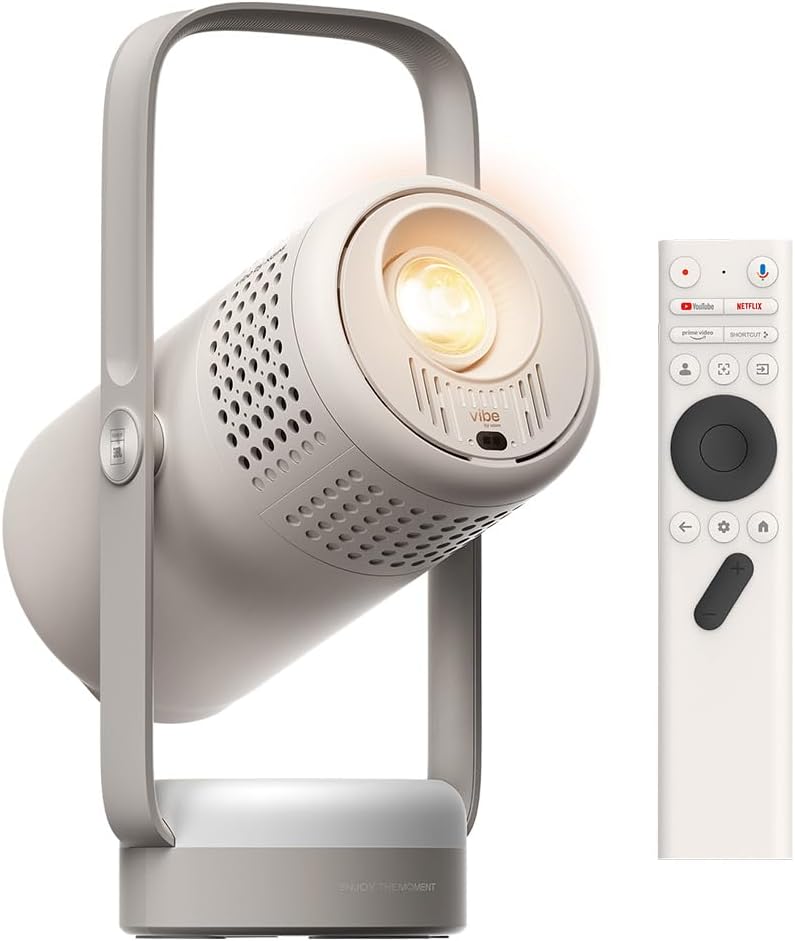 XGIMI Vibe One 1080P Battery Powered |
9.9/10 | Buy on Amazon | |
| -22% OFF |
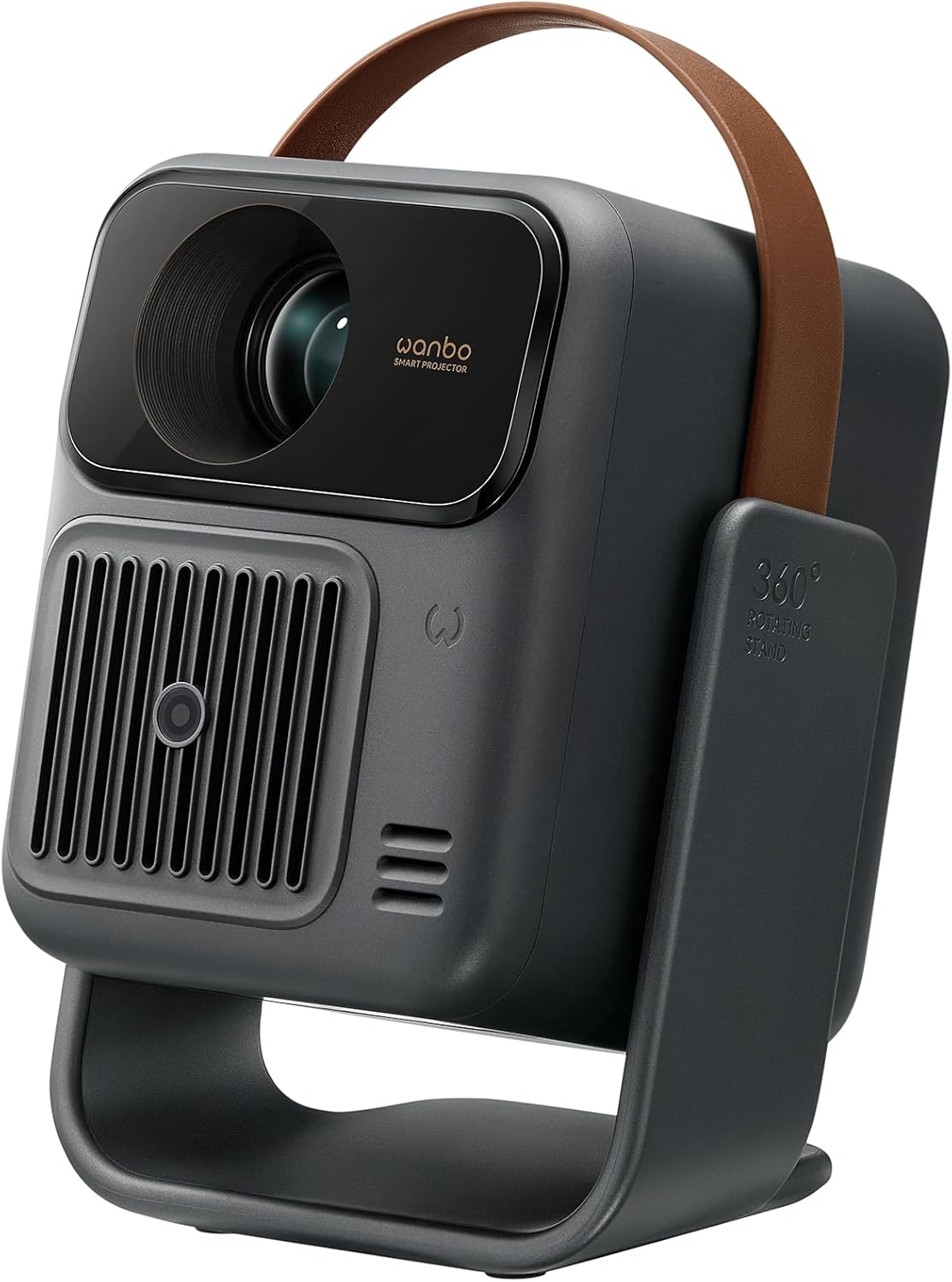 Wanbo ToGo Pro Portable Projector |
9.9/10 | Buy on Amazon |
| -13% OFF |
 NEBULA Mars 3 Air Portable Outdoor Projector |
9.5/10 | Buy on Amazon |
| -13% OFF |
 NEBULA Capsule 3 Laser Portable Mini Projector |
9.6/10 | Buy on Amazon |
 KODAK Luma 150 Mini Projector |
9.4/10 | Buy on Amazon | |
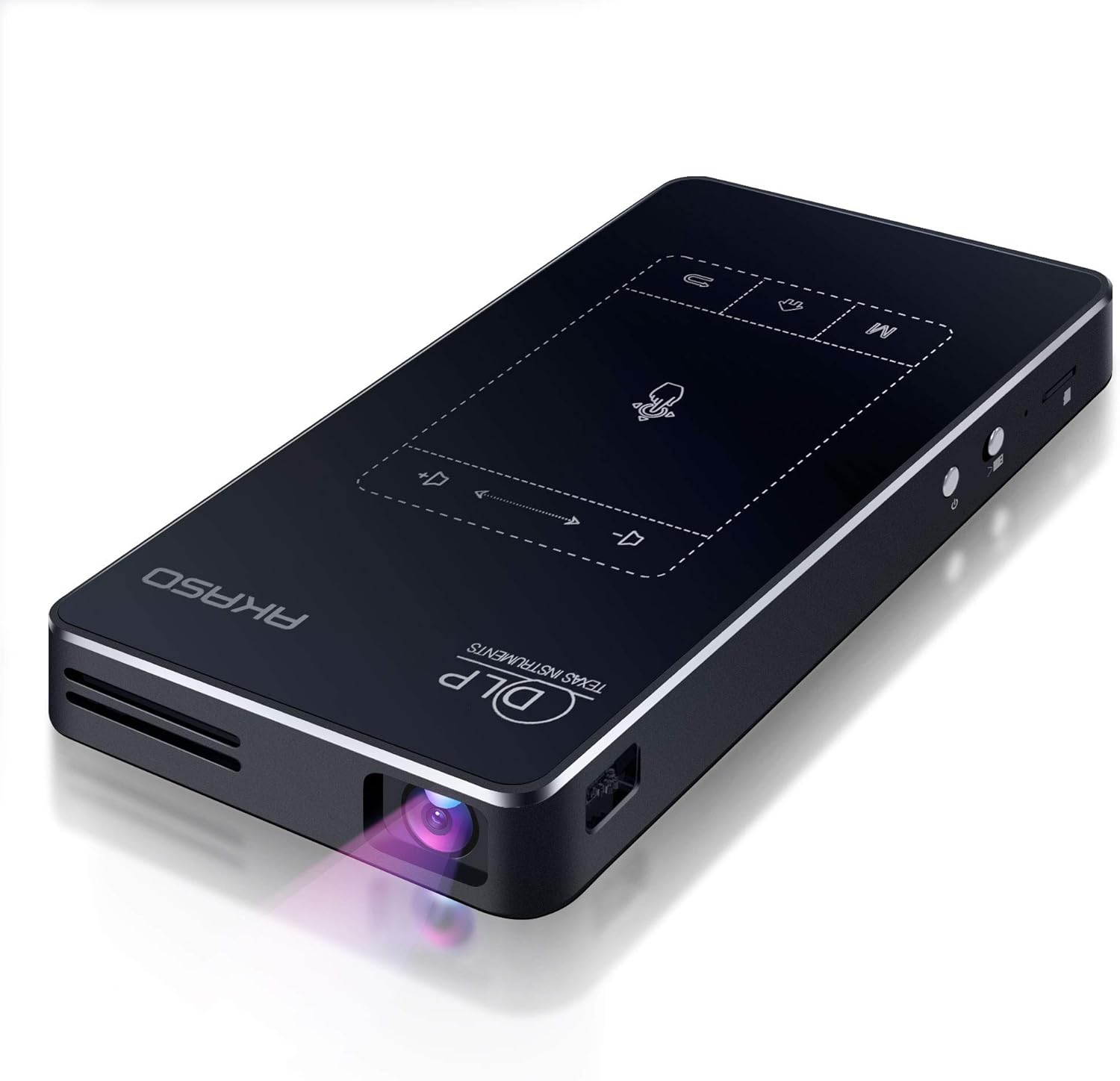 AKASO WT50 Mini Portable DLP Projector with WiFi |
9.7/10 | Buy on Amazon | |
 KODAK Luma 350 Portable Smart Projector |
9.4/10 | Buy on Amazon |
Pros
- Licensed Netflix built in via Google TV eliminates the need for workarounds or extra streaming sticks
- Truly cable-free operation thanks to the integrated battery, great for outdoor use and moving between rooms
- Automatic setup features remove the frustration of manual alignment, even for first-time projector users
- JBL-branded speakers provide above-average audio quality for a device this size
- The 160-degree stand and carry handle make it genuinely portable and flexible in how you position it
Cons
- Battery video playtime of up to 1.2 hours is relatively short and may not cover a full-length movie on a single charge
- At 1080P resolution and 3W dual speakers, it is well suited for casual viewing but may not satisfy home theater enthusiasts seeking 4K or premium audio
- No customer reviews are available yet, so long-term reliability and real-world performance data are still limited
The XGIMI Vibe One is a battery-powered 1080P smart portable projector designed for people who want flexible, on-the-go entertainment without the clutter of cables or the complexity of traditional home theater setups. It targets casual viewers, college students, families, and outdoor enthusiasts who want to stream movies, shows, or music virtually anywhere.
The headline feature is its Google TV integration with a fully licensed Netflix app, giving users immediate access to a massive content library right out of the box. Combined with Auto Focus and Auto Keystone Correction, the setup process is remarkably quick, projecting a sharp and level 1080P image onto walls or ceilings within seconds of powering on.
Build quality reflects a modern, lifestyle-oriented approach. The projector comes in two colorways and ships with customizable stickers, signaling that XGIMI is targeting a younger, style-conscious audience. The 160-degree adjustable stand is a genuinely clever design touch, serving double duty as both a flexible positioning tool and a carry handle for easy transport between rooms or outdoor settings.
The main drawback is battery life. Up to 1.2 hours of video playback means most feature-length films will require a power source partway through, which somewhat undermines the promise of true wireless freedom. Additionally, while the dual 3W JBL speakers are impressive for a projector this compact, audiophiles will likely want to pair it with an external speaker for larger gatherings.
Overall, the XGIMI Vibe One is a well-rounded and genuinely convenient portable projector that punches above its weight in terms of smart features and ease of use. It is best suited for casual, flexible viewing scenarios rather than dedicated home cinema use, and represents strong value for anyone prioritizing portability and simplicity.
Resolution: Full HD 1080P for crisp, detailed image quality suitable for most indoor and outdoor viewing environments.
Battery Life: Up to 1.2 hours of video playback and up to 4 hours of music playback on a single charge, with seamless transition to wired power when needed.
Audio: Dual 3W speakers tuned by JBL, with Dolby Audio support for enhanced sound reproduction across movies and music.
Smart Platform: Google TV with licensed Netflix, providing access to over 400,000 movies and TV episodes alongside all major streaming apps available through the Google Play Store.
Projection Flexibility: 160-degree adjustable built-in stand enables wall and ceiling projection. Auto Focus and Auto Keystone Correction ensure a properly aligned image without manual adjustment. Ambient Light Mode with 8 unique lighting effects adds atmosphere beyond standard projection use.
If you are considering the XGIMI Vibe One, it is worth thinking about how and where you plan to use it most. This projector excels in casual, flexible scenarios such as bedroom movie nights, backyard screenings, or moving between rooms without setting up a permanent installation. It is not designed to replace a high-end home theater projector.
The built-in battery is a genuine convenience, but the 1.2-hour video limit means you should plan to have a power outlet accessible for anything longer than a short film or a couple of TV episodes. For music listening and parties, the 4-hour battery life is much more practical and the Ambient Light Mode adds real value as an atmosphere creator.
Buyers who prioritize streaming convenience will appreciate the licensed Netflix and Google TV integration, which means no extra dongles or subscriptions are required to get started. If you already own a Chromecast or Fire Stick, that advantage is less significant, but the native integration is still cleaner and simpler. This projector is an excellent choice for anyone upgrading from a basic portable projector or stepping into the smart projector category for the first time.
Pros
- Truly portable with a long-lasting built-in battery
- No extra streaming device needed thanks to full Google TV integration
- Quick and easy setup with auto-focus and keystone correction
- Sharp, bright 1080P picture quality praised by multiple reviewers
- Quiet operation ideal for movie nights and gaming
Cons
- Built-in speakers are best for indoor use; outdoor settings benefit from a Bluetooth speaker
- Remote does not include AAA batteries
- 500 ANSI lumens brightness performs best in darker environments, less ideal in bright ambient light
The Wanbo ToGo Pro is a battery-powered portable projector designed for people who want cinema-quality entertainment without being tied to an outlet. With built-in Google TV 14, it's ideal for campers, RV travelers, and backyard movie enthusiasts who want an all-in-one streaming solution right out of the box.
Its standout feature is the 3.5-hour battery life, which comfortably covers a full movie outdoors, along with fast ASA3.0 auto-focus and auto keystone correction that get the image sharp in seconds. Reviewers consistently praise the native 1080P picture quality and note that Google TV makes accessing Netflix, YouTube, and other apps seamless without extra hardware.
Build quality feels premium for the price, helped by its Red Dot Design Award-winning compact form, integrated carry handle, and 360° rotating stand that adapts to tricky angles. At just 27dB, the fan noise is nearly imperceptible, making it well-suited for both movie nights and casual gaming sessions.
The main tradeoff is audio: while indoor sound is described as clear and sufficient for smaller rooms, outdoor use benefits from pairing a Bluetooth speaker since open-air environments can overpower the built-in speakers. Some buyers also noted the remote doesn't ship with batteries, a minor inconvenience.
Overall, the Wanbo ToGo Pro delivers strong value for a cord-free, smart projector that's genuinely easy to move and set up anywhere. It's best suited for casual home theater fans, campers, and families looking for a flexible, no-fuss streaming projector rather than users needing ultra-high brightness for well-lit rooms.
The Wanbo ToGo Pro features a native 1080P (1920 x 1080) resolution with support for up to 4K (3840 x 2160) input, backed by 500 ANSI lumens brightness and a 2500:1 contrast ratio for clear, vivid images in moderately lit rooms.
Connectivity includes HDMI, USB, 3.5mm audio out, Wi-Fi, and Bluetooth, allowing it to pair with laptops, gaming consoles, streaming sticks, and external speakers with ease.
It projects images from 40 to 200 inches, with a throw distance ranging from 3.94 to 11.48 feet, and runs on an 82-watt lamp rated for 20,000 hours of use. The unit weighs 5.7 pounds and measures 6.54"L x 6.26"W x 9.06"H, making it easy to pack for travel.
Pros
- Genuinely portable with a built-in battery, no cords required for outdoor use
- Sharp, vibrant 1080p HDR picture that reviewers say exceeds the stated 150-inch max in dark rooms
- Fast, hassle-free autofocus and keystone setup
- Google TV integration works smoothly with popular streaming apps
- Surprisingly capable built-in sound for a projector this size
Cons
- Battery life caps out around 2.5 hours, only enough for one movie or two episodes per charge
- Built-in speakers, while decent, aren't loud enough for larger gatherings without an external speaker
- Not bright enough for well-lit rooms, performs best from late afternoon into night
The NEBULA Mars 3 Air is a portable, battery-powered projector built for people who want to take movie night outside the living room, whether that's the backyard, a campsite, or a friend's patio. Its Google TV integration and Netflix support mean it functions as a self-contained streaming device, appealing to anyone who wants big-screen entertainment without hauling along a laptop or streaming stick.
Where this projector shines is in setup speed and picture quality. The Intelligent Environment Adaptation Technology handles autofocus and keystone correction in about three seconds, and reviewers consistently praise the 1080p HDR image, with one user reporting sharp visuals up to 200 inches in a dark room, well beyond the official 150-inch spec. The dual 8W Dolby speakers also perform above expectations, doubling as a passable Bluetooth speaker for casual gatherings.
Build quality feels solid and compact at just 3.7 pounds, making it easy to move between rooms or toss in a bag for a trip. Multiple mounting options (tripod, ceiling, table) add flexibility, and the array of ports, including HDMI, USB-A, and Bluetooth, ensures it works with almost any external device you'd want to pair with it.
The main tradeoffs are battery life and brightness. At 400 ANSI Lumens, the Mars 3 Air needs dim or dark conditions to really impress, so it's not the right pick for daytime outdoor viewing. Battery life tops out around 2.5 hours of video, enough for a single movie but not a marathon session, and a few users noted defective remote batteries out of the box, an easy fix but a mildly annoying first impression.
Overall, this is a strong choice for casual, mobile home theater use, especially for evening and nighttime viewing. Anyone wanting a plug-and-play, portable Netflix machine for backyard movie nights or camping trips will likely be satisfied, while those needing daytime brightness or party-level volume may want to pair it with external gear.
Pros
- Laser engine produces noticeably sharper, more vibrant images compared to LED-based rivals at similar price points
- Exceptionally portable at 2 lbs, making it one of the smallest 300-lumen projectors available
- Full Google TV ecosystem with officially licensed Netflix removes the need for any external streaming stick
- Dolby Digital audio is genuinely impressive for a projector this size, reducing reliance on a Bluetooth speaker
- PD charging support means a standard power bank can extend viewing sessions outdoors indefinitely
Cons
- At 300 ANSI Lumens, image quality degrades noticeably in well-lit or brightly sunlit environments, making a dark setting essential for the best picture
- The 2.5-hour battery life covers a single standard film but may fall short for longer events without access to a power source
- The 500:1 contrast ratio lags behind some LCD and higher-end DLP competitors, which can affect deep black reproduction
The NEBULA Capsule 3 Laser is a compact, battery-powered smart projector designed for people who refuse to compromise on entertainment while on the move. Whether you are setting up a backyard movie night, presenting in a conference room, or camping off-grid, this device packs a surprisingly complete home-theater experience into a form factor roughly the size of a soda can.
The standout feature is undoubtedly the laser light source, which pushes 300 ANSI Lumens of 1080p brightness with a wider color gamut and improved contrast compared to the LED-based Capsule 3. In real-world use, colors appear punchy and saturated, and fine details hold up well in moderately dim environments. The 25ms game latency is a welcome bonus for casual gamers connecting a console or streaming a game via the built-in Chromecast.
Physically, the Capsule 3 Laser is a marvel of miniaturization. At just 2 lbs and measuring 3.3 x 3.3 x 6.7 inches, it slips into a jacket pocket or daypack with ease. Build quality feels premium, with a matte finish and solid construction that inspires confidence for travel use. Setup is genuinely fast, and the auto-focus and keystone correction features mean you spend less time fiddling and more time watching.
The main drawbacks center on brightness and battery life. Like all compact projectors, the Capsule 3 Laser struggles in bright ambient light, so daytime outdoor use is not ideal. The 2.5-hour battery is enough for most movies but tight for longer content or double features, and the 500:1 contrast ratio means blacks can appear somewhat washed out compared to higher-end units. These are expected trade-offs for a projector this small.
Overall, the NEBULA Capsule 3 Laser earns its place as one of the best portable projectors in its class. It is the right choice for frequent travelers, outdoor enthusiasts, and cord-cutters who want a versatile, all-in-one smart TV experience they can take anywhere. If portability and smart-platform depth are your priorities, this projector delivers exceptional value.
Optical Engine: DLP with Laser light source
Resolution: 1080p Full HD (supports 4K decoding)
Brightness: 300 ANSI Lumens
Contrast Ratio: 500:1
Maximum Screen Size: 120 inches
Operating System: Google TV (officially licensed Netflix)
Audio: 8W Dolby Digital stereo speakers
Battery Life: Up to 2.5 hours video playback, up to 8 hours audio (ECO Mode)
Charging: USB Power Delivery (PD) compatible, supports power bank charging
Connectivity: Wi-Fi, Chromecast Built-in, Google Assistant
Game Latency: 25ms
Dimensions: 3.3 x 3.3 x 6.7 inches
Weight: 2 lbs (approximately 900 g)
If you are deciding between the Capsule 3 Laser and its siblings, the key question is how you plan to use it. The Laser model is the best choice for users who prioritize image quality and color accuracy in a compact body, and who need official Netflix support baked directly into the OS without workarounds.
For strictly indoor use where portability is less critical, the Nebula Mars 3 Air offers 400 ANSI Lumens at a lower price point, though it lacks a built-in battery. If you need maximum brightness for semi-lit rooms, the Nebula P1 at 650 ANSI Lumens is worth considering, though it trades the compact form factor for that extra light output.
The Capsule 3 Laser hits the sweet spot for travelers, outdoor movie enthusiasts, and remote workers who need a reliable, self-contained smart projector. Make sure you have a dark or dim environment available for the best results, and consider pairing it with a high-capacity USB-C power bank to extend battery life for longer outdoor sessions.
Pros
- Extremely portable and lightweight for on-the-go use
- Simple wireless mirroring once connected to the Kodak network
- Sharp, clear image quality thanks to auto-focus and 1080p support
- Versatile connectivity with HDMI, USB, and microSD inputs
- Great niche uses beyond movies, such as projecting templates for crafts and cookie decorating
Cons
- Battery life is short at about 2.5 hours and drains faster when powering external devices like a streaming stick
- Low brightness rating (55 ANSI lumens) makes it best for dim rooms rather than bright environments
- Built-in speaker sound quality is weak, often requiring an external Bluetooth speaker
The KODAK Luma 150 is an ultra-mini pocket projector designed for people who prioritize portability over raw performance. Weighing just 7.5 oz and small enough to fit in a pocket, it targets travelers, campers, and casual users who want a simple, grab-and-go home entertainment or presentation solution.
Its standout features are wireless mirroring via Miracast and AirPlay, along with auto-focus that reduces setup hassle. Reviewers confirm that once connected to the Kodak network and paired with home Wi-Fi, screen mirroring from iPhones and Android devices works smoothly, and image clarity is better than expected for its size. Several users even repurpose it creatively, projecting cookie decorating templates with sharp, clean results.
Build quality feels solid for a device this size, with a touch-based control panel, a tripod mount for flexible placement, and a versatile charging cable that includes multiple plug adapters for international use. The compact footprint and HDMI, USB, and microSD inputs make it easy to connect a variety of media sources without extra accessories.
The trade-offs come from its small size and low power draw. At only 55 ANSI lumens, it performs best in dark or dim rooms rather than bright spaces, and the built-in speaker is noticeably weak, pushing many owners toward external Bluetooth audio. Battery life, rated around 2.5 hours, drops quickly if the projector is also powering an accessory like a streaming stick.
Overall, the KODAK Luma 150 is a solid pick for casual, portable projection needs like bedroom ceiling movies, outdoor gatherings, or hobbyist projects, but it is not meant to replace a full home theater projector. Buyers seeking convenience and mobility over brightness and battery longevity will find good value here.
Pros
- Extremely compact and lightweight design makes it one of the most portable projectors in its class
- DLP technology delivers cleaner, sharper images than comparable LCD mini projectors at this price point
- Built-in Android 9.0 eliminates the need for a separate streaming device, adding great standalone value
- Multiple connectivity options including HDMI, USB, Micro SD, Bluetooth, and wireless mirroring cover virtually every use case
- Long 30,000-hour lamp life means you won't need to worry about bulb replacements for years
Cons
- Native resolution is WVGA (854x480), so while it supports 1080p input, the actual projected image is not true 1080p and may look soft on larger screens
- At only 50 ANSI lumens, brightness is limited and the projector performs best in dim or dark environments, making daytime or well-lit room use difficult
- Battery life of approximately 2 hours may not be enough for longer movies without access to a power source
The AKASO WT50 is a palm-sized DLP projector designed for users who want big-screen entertainment without the bulk of a traditional projector. Built around an Android 9.0 system with built-in WiFi, Bluetooth, and a rechargeable battery, it targets movie fans, travelers, outdoor enthusiasts, and even creative hobbyists who need a versatile, go-anywhere display solution.
Performance-wise, the WT50 uses DLP technology with a 0.2 DMD chip, which produces noticeably cleaner and sharper images than LCD-based mini projectors at this price. Colors are vivid and the diffuse reflection design is gentler on the eyes during extended viewing sessions. That said, the native resolution is WVGA (854x480), meaning content is upscaled rather than displayed in true 1080p, so image sharpness on very large screens may not match higher-end projectors.
The build quality is a genuine highlight. The all-metal aluminum alloy casing feels premium and durable for its size, and at just 0.64 lbs, it is remarkably light. The compact footprint, roughly the size of a large smartphone, means it fits in a jacket pocket or small bag with ease. The included mini tripod and remote control add practical value right out of the box.
There are a few trade-offs worth noting. At 50 ANSI lumens, the brightness is modest, and the projector really shines only in dim or dark environments. Outdoor use at dusk or night works well, but daytime use in a lit room will result in a washed-out image. The 2-hour battery life is also a limitation for feature-length films, though a power bank or wall outlet can extend usage. Additionally, Netflix and Hulu cannot be wirelessly mirrored due to DRM restrictions, though you can download their apps directly via Google Play as a workaround.
Overall, the AKASO WT50 is an impressive feat of miniaturization and a genuinely useful portable projector for its price. It is best suited for users who prioritize portability and versatility over raw brightness or pixel-perfect resolution. Whether you are hosting a backyard movie night, decorating cookies with projected templates, or watching videos while camping, the WT50 delivers a compelling and creative experience in a remarkably small package.
Display Technology: DLP (0.2 DMD Optically Processed Chip)
Native Resolution: WVGA 854 x 480, supports up to 1920 x 1080p input
Brightness: 50 ANSI Lumens
Aspect Ratio: 16:9
Projection Size: 30 to 120 inches
Projection Ratio: 1.19:1
Operating System: Android 9.0
WiFi: Dual-band 2.4G and 5G (802.11ac)
Bluetooth: Yes
Screen Mirroring: AirPlay, Miracast, EShare, DLNA
Battery: 3.7V, 5000mAh built-in rechargeable
Battery Life: Approximately 2 to 3 hours
Lamp Life: 30,000 hours
Connectivity: HDMI, 2x USB 2.0, Micro SD (up to 32GB), 3.5mm Audio Jack
Keystone Correction: Automatic, up to 40 degrees
Dimensions: 5.5 x 3.1 x 0.8 inches
Weight: 0.64 lbs
Casing Material: Aluminum Alloy
In the Box: WT50 Projector, Remote Control, Mini Tripod, HDMI Cable, Charger, Quick Reference Guide
If you are considering the AKASO WT50, it helps to understand exactly what kind of projector this is and who it suits best. This is a mini projector built for portability and convenience, not a home theater replacement. If your priority is the sharpest possible 1080p image in a bright living room, a larger, higher-lumen projector will serve you better.
The WT50 is ideal for users who value portability above all else. Campers, travelers, and dorm room users will appreciate the battery-powered design and pocket-friendly size. The built-in Android system is a major convenience, removing the need to carry a separate Chromecast, Fire Stick, or laptop just to stream content. Simply connect to WiFi and download your preferred apps directly onto the projector.
For creative applications, the WT50 has found a surprisingly enthusiastic following. Cookie decorators, mural artists, and holiday decorators use it to project templates and designs onto surfaces with precision. The compact form and short throw distance make it well suited for these close-range creative tasks.
A few practical tips before buying: always use the projector in a dim or completely dark environment for the best image quality. Keep the projection distance between 1 and 1.5 meters for the sharpest focus. For Netflix or Hulu, download the apps directly via Google Play rather than attempting wireless mirroring. And if you plan extended sessions, keep a power bank or charger nearby to supplement the built-in battery.
Pros
- Extremely portable and lightweight for travel or on-the-go use
- Clear, bright picture quality that exceeds expectations for its size
- Android interface allows direct app downloads for phone-free streaming
- Easy setup with all necessary cables and remote included
- Great value for presentations, classrooms, and casual home entertainment
Cons
- Built-in speaker is weak and often requires an external Bluetooth speaker
- Native resolution is only 854x480, with 4K content downscaled to 1080p
- Screen mirroring has limitations with some streaming services due to copyright restrictions
The KODAK Luma 350 is a pocket-sized smart projector aimed at people who want portable entertainment without sacrificing convenience. It runs on Android, connects via WiFi and Bluetooth, and supports HDMI and USB inputs, making it a solid pick for travelers, casual movie fans, and professionals who need a lightweight presentation tool.
Its standout feature is the built-in Android interface, which lets users download streaming apps directly onto the projector rather than relying on screen mirroring, which can be limited by copyright restrictions. Real-world reviews confirm the picture is surprisingly sharp and bright for its size, with users successfully projecting images from 90 to over 100 inches with good clarity, especially when paired with a tripod.
Design-wise, the Luma 350 impresses with its sleek, compact 4.4-inch footprint that fits easily into a bag or even a large pocket. The touch controls and manual focus are straightforward, though the built-in speaker is a known weak point, with several users recommending pairing it with an external Bluetooth speaker for better audio.
On the downside, the native resolution of 854x480 means this isn't a projector for pixel-perfect 4K viewing, and while it plays 4K files, it downscales them to 1080p. Buyers expecting home-theater-level detail may be disappointed, but for casual use, presentations, or backyard movie nights, the tradeoff is reasonable.
Overall, the KODAK Luma 350 delivers strong value as a grab-and-go projector. It won't replace a dedicated home theater setup, but for portability, ease of use, and flexible streaming options, it's a smart choice for students, presenters, and entertainment on the move.
Display: DLP technology with native resolution of 854 x 480 and maximum image size of 150 inches (up to 200 inches in widescreen format).
Connectivity: WiFi, Bluetooth, HDMI, USB, and 3.5mm audio jack, with support for Miracast and DLNA casting.
Performance: 200 ANSI lumens brightness, 3500:1 contrast ratio, and a light source rated for 30,000 hours of use.
Design: Compact pocket form factor measuring 4.4 x 4.4 x 1.1 inches, with tripod mount compatibility and a built-in rechargeable battery.
Included Accessories: Remote control, HDMI cable, AC adapter, user manual, and warranty card, backed by a 1-year manufacturer warranty.
How to Choose Your Camping Projector
Battery Life and Runtime
Battery life is the cornerstone of any cordless camping projector. You need enough runtime to enjoy a full feature film without the anxiety of a mid-movie blackout. Look for models that clearly state video playback hours, not just music playback. Some projectors, like the Wanbo ToGo Pro, offer an impressive 3.5 hours, while others provide around 2.5 hours, which is typically sufficient for one movie. Consider if the projector can be used while charging, a handy feature for extended trips with access to a power bank or car outlet.
Brightness and Image Quality
Projector brightness, measured in ANSI Lumens, is crucial for outdoor use where you cannot achieve total darkness. A higher lumen count, such as the 400 ANSI found on the NEBULA Mars 3 Air, helps combat ambient light from a campfire or twilight. For true 1080p HD clarity, confirm the projector’s native resolution. Also, look for features like HDR support and good contrast ratios to ensure your movie’s colors pop against a natural backdrop.
Portability and Durability
Your camping gear must be tough and easy to carry. A projector’s weight and dimensions directly impact its travel-friendliness. The KODAK Luma 150 is a champion of portability, weighing just over seven ounces. Look for integrated handles or compact, soda-can designs like the NEBULA Capsule 3 Laser. A sturdy, adjustable stand is also valuable for projecting onto uneven surfaces like tent walls or hanging tarps. Durability in construction helps protect the internal components from the bumps of travel.
Connectivity and Smart Features
Seamless connectivity saves you from packing extra dongles and cables. The most convenient models have built-in smart TV platforms like Google TV or Android, giving you direct access to streaming apps over campsite Wi-Fi or a mobile hotspot. Strong dual-band Wi-Fi ensures stable screen mirroring from your phone. Bluetooth is essential for connecting to a portable speaker for louder audio. For more specialized compact options, our list of best battery powered mini projectors is a great resource.
Final Thoughts
Choosing the perfect cordless projector for camping ultimately balances your need for runtime, picture quality, and ease of use. For campers who prioritize a premium, all-in-one smart experience with excellent sound, the NEBULA Capsule 3 Laser Outdoor Portable Mini is a standout choice. If your adventure calls for maximum battery life and a large, vibrant display, the Wanbo ToGo Pro Portable Outdoor Projector delivers exceptional value. Whichever model you select, you are guaranteed to add a memorable new dimension to your nights under the stars.
Frequently Asked Questions
<!–How long do the batteries typically last in cordless projectors?
Battery life varies significantly by model and usage brightness. In our review, runtimes range from about 1.2 hours to 3.5 hours for video playback. Many projectors offer an Eco mode that extends battery life by slightly reducing brightness, which can be perfect for darker camping environments. Always check the manufacturer’s stated video playback time for the most accurate estimate.
Can I use a cordless projector without Wi-Fi while camping?
Yes, absolutely. While built-in apps require an internet connection, you can pre-download movies to a USB drive or smartphone and connect via HDMI or screen mirroring. Many projectors also have microSD card slots for playing stored media directly, making them fully functional in remote locations with no cellular service or Wi-Fi available.
What is the most important feature for outdoor projection?
For camping, brightness (ANSI Lumens) and battery life are the two most critical features. You need sufficient brightness to see the image despite ambient light, and enough battery to last your viewing session. Automatic keystone correction and focus are also highly valuable for quick setup on uneven ground. For further insights on essential features, consider our guide on projectors with built-in batteries.
Are cordless projectors bright enough for daytime use?
Most battery-powered projectors are designed for low-light or nighttime viewing. Even the brightest portable models struggle in direct sunlight or well-lit rooms. For the best experience, plan your outdoor movie nights for after dusk or set up in a shaded area. The projection surface also matters; a dedicated projector screen or a light-colored, smooth tarp will reflect light better than a dark tent wall.


Write Your Review
No reviews yet. Be the first to share your experience!