

You’re chasing that perfect headshot, threading the needle through a tight corner, or reacting to an enemy attack that seems impossibly fast. In these moments, every millisecond matters, and your display should be your ally, not a bottleneck. If you’re serious about gaming but crave a cinematic, room-filling experience, a 240Hz gaming projector is the ultimate upgrade. This refresh rate delivers incredibly smooth motion, drastically reducing blur and providing a tangible advantage in fast-paced titles.
This guide is for dedicated gamers who want to trade their desk monitor for a massive screen without sacrificing performance. We have assessed nine top-tier projectors capable of 240Hz refresh rates, examining their input lag, brightness, and gaming-specific features. Whether you’re setting up a dedicated theater room or a versatile living space battlestation, you will find a model here to transform your play. For a broader look at high-performance displays, explore our guide on the best HDR gaming projectors of 2026.
Pros
- Exceptional brightness at 3200 lumens allows use in rooms that are not fully darkened
- Dual-purpose design excels at both cinematic movie watching and high-refresh-rate gaming
- Laser light source ensures consistent color performance and eliminates costly lamp replacements
- Flexible installation thanks to 1.3x zoom and vertical lens shift with 3D keystone correction
- eARC connectivity future-proofs the setup for premium audio systems
Cons
- Premium price point places it out of reach for budget-conscious buyers
- 240Hz refresh rate is limited to 1080p resolution, not full 4K, which may disappoint some users
- No built-in smart TV platform mentioned, which may require an external streaming device for app access
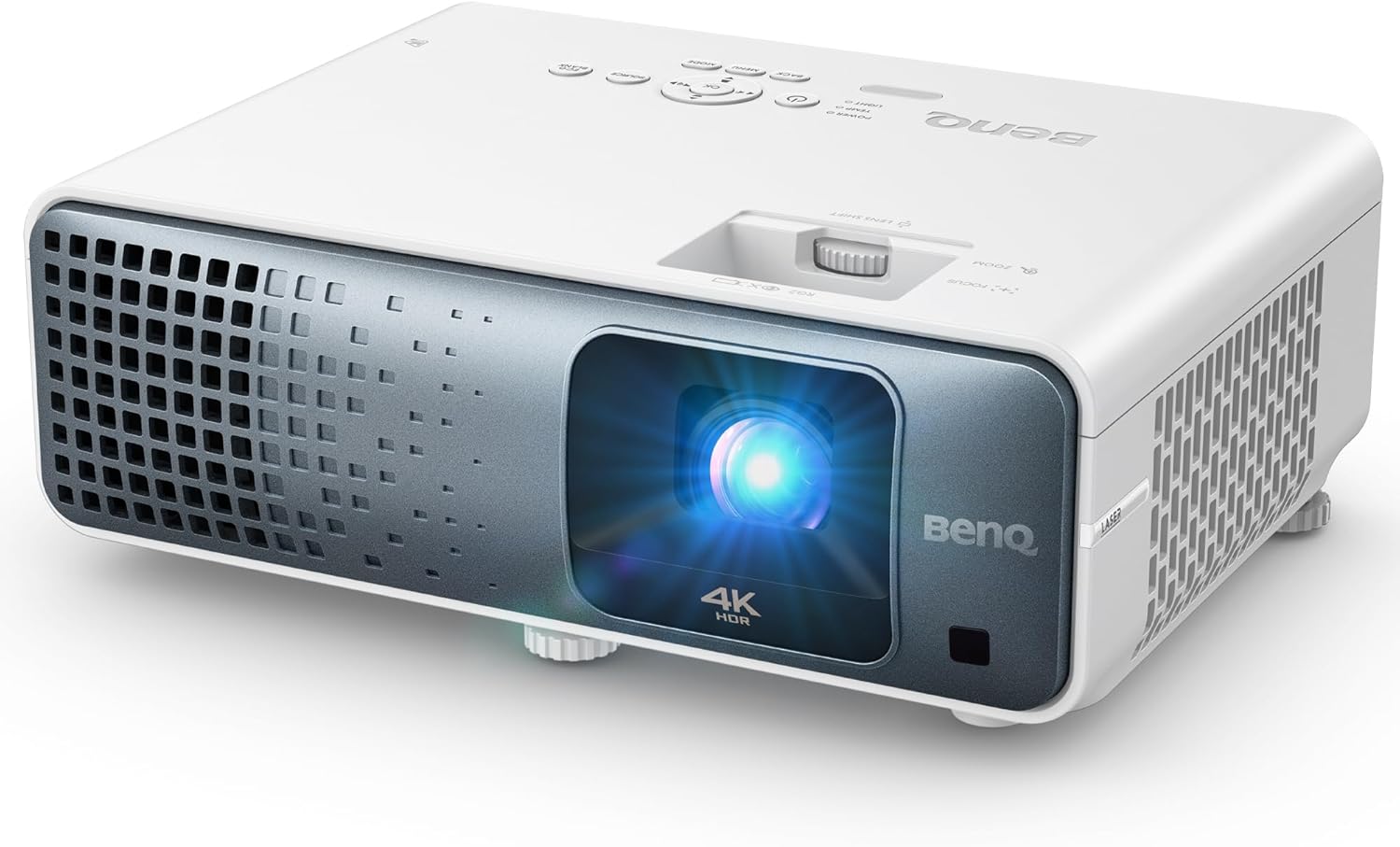
The BenQ TK710 is a 4K HDR laser projector designed to serve double duty as a premium home theater display and a high-performance gaming projector. Priced at the upper end of the consumer market, it targets enthusiasts who refuse to compromise between cinematic quality and gaming responsiveness. Whether you are setting up a dedicated home cinema or a versatile living room entertainment hub, the TK710 is built to handle both with confidence.
The headline feature is its 3200 ANSI lumen laser light source, which sets it apart from many competitors that struggle in anything but a pitch-dark room. Colors remain vibrant and contrast stays strong even with lights on, backed by 95% Rec.709 color coverage and HDR10 plus HLG support. The Dynamic Function actively adjusts the light source in real time to optimize contrast scene by scene, adding a layer of picture intelligence that benefits both film and gaming content.
For gamers, the TK710 delivers some of the most impressive specs in its class. At 1080p, it achieves a 240Hz refresh rate with just 4ms input lag, making fast-paced competitive titles feel genuinely responsive on a massive screen. At native 4K 60Hz, input lag drops to 16ms, which is well within the acceptable range for console gaming on PS5 and Xbox Series X. The eARC port adds audio flexibility, allowing lossless audio formats to pass through to a connected soundbar or AV receiver without extra cables.
On the installation side, the 1.3x optical zoom and vertical lens shift give users meaningful flexibility in placing the projector without resorting to digital correction that degrades image quality. The 3D keystone adjustment further assists in rooms where perfect alignment is not possible. One limitation worth noting is that the 240Hz high-refresh mode is capped at 1080p rather than 4K, so users expecting native 4K at ultra-high frame rates will need to manage expectations accordingly.
Overall, the BenQ TK710 is a compelling and well-rounded projector for buyers who want the best of both worlds. It earns its price through a durable laser light source, versatile connectivity including eARC, and genuinely impressive gaming performance. If you are serious about upgrading your home entertainment setup and need a projector that handles movie nights and gaming sessions with equal skill, the TK710 deserves serious consideration.
Resolution: True 4K UHD (3840 x 2160) with HDR10 and HLG support for rich, high-dynamic-range visuals across movies, sports, and gaming content.
Brightness and Light Source: 3200 ANSI lumens powered by a long-life laser light source. Laser technology delivers consistent brightness and color accuracy over thousands of hours without bulb replacements.
Gaming Performance: 4ms input lag at 1080p 240Hz for competitive gaming. 16ms input lag at 4K 60Hz for console gaming on PS5, Xbox Series X, and PC. Dedicated HDR Game Modes enhance in-game visuals.
Color Coverage: 95% Rec.709 color gamut coverage ensures accurate, cinema-grade color reproduction for both film and gaming content.
Connectivity: eARC support for high-quality audio passthrough. Compatible with major gaming consoles and streaming devices. Throw distance of approximately 6 feet for a 120-inch image at 10 feet.
Installation Flexibility: 1.3x optical zoom, vertical lens shift, and 3D keystone correction for versatile room placement. Backed by a 3-year manufacturer warranty for added peace of mind.
Who should buy the BenQ TK710? This projector is ideal for home theater enthusiasts who also game regularly and want a single display solution that excels at both. It is particularly well-suited for living rooms where full light control is not always possible, thanks to its 3200 lumen output.
Gaming Considerations: If you primarily play competitive titles at high frame rates, the 240Hz mode at 1080p will feel smooth and responsive on a large screen. Console gamers on PS5 or Xbox Series X will benefit most from the 4K 60Hz mode with 16ms lag, which is imperceptible during normal gameplay. PC gamers with high-refresh monitors will appreciate the flexibility to scale up to a big-screen format.
Home Theater Use: For movie watching, the laser light source and HDR10 support produce excellent contrast and color depth. The 95% Rec.709 coverage means skin tones, landscapes, and cinematic color grading look accurate and natural. Pairing this projector with a quality 4K screen and a good soundbar or AV receiver via eARC will deliver a genuinely cinematic experience.
Installation Tips: The 1.3x zoom and vertical lens shift make the TK710 easier to install than many fixed-lens projectors. At 120 inches, you only need about 6 feet of throw distance, making it suitable for smaller rooms. Plan your cable management around the eARC port if you intend to use an external audio system, as this will simplify your setup considerably.
Budget Note: At this price tier, buyers should also consider whether they need a built-in smart TV platform or are comfortable using an external streaming stick. Confirming smart platform availability before purchase will help avoid any surprises after setup.
Pros
- Excellent brightness for a short throw laser projector, usable with some ambient light
- Very low input lag makes it genuinely competitive for gaming, not just marketed as such
- Laser light source eliminates recurring lamp costs and offers instant on/off
- Compact footprint and short throw lens make placement easy in small rooms or golf sim bays
- Strong warranty coverage with 5-year or 12,000-hour light source protection
Cons
- Native resolution is 1080p, not true 4K, despite accepting 4K input signals
- Connectivity leans on HDMI and RCA, lacking newer wireless casting or smart platform integration
- At this price point, buyers expecting native 4K sharpness may be disappointed
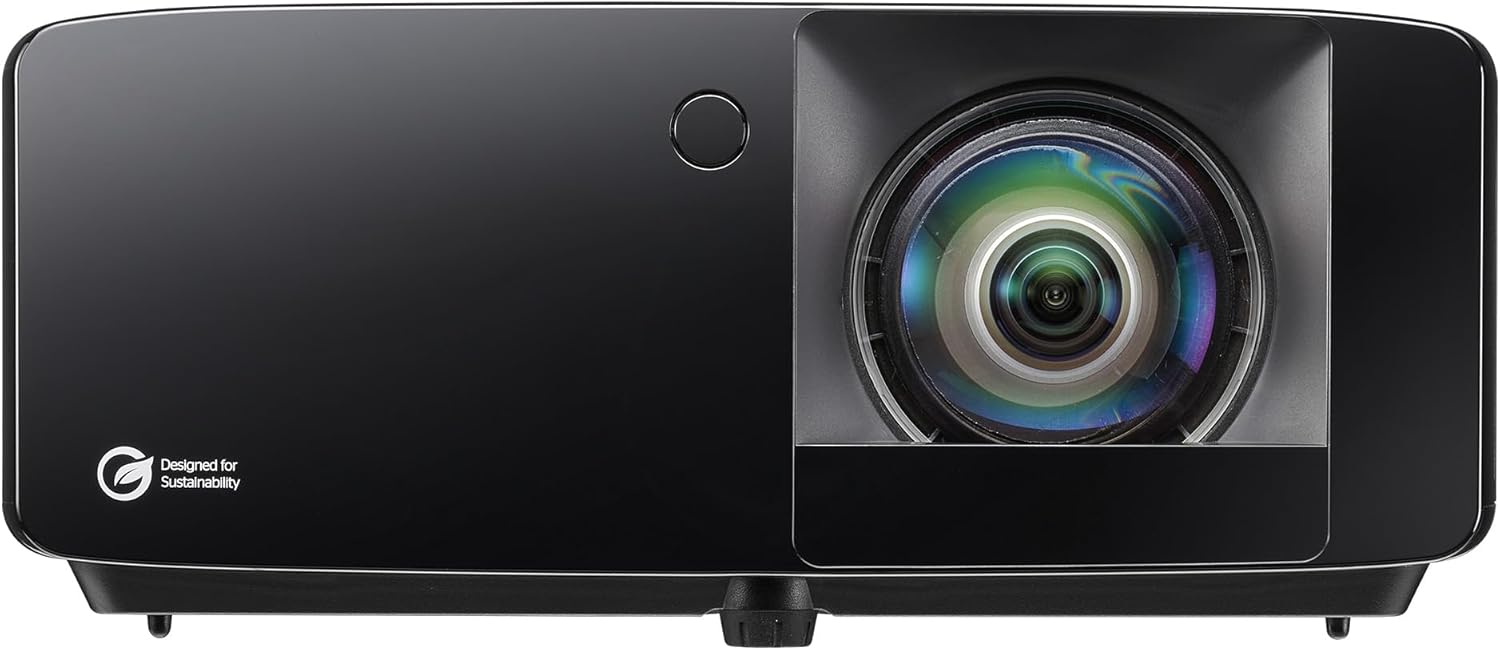
The Optoma GT2400HDR is a short throw laser projector aimed at two very specific buyers: home theater fans working with limited space, and golf simulator enthusiasts who need a big, bright image from a short distance. Its 0.496:1 throw ratio lets it fill a large screen while sitting just a few feet away, making it a practical fit for garages, basements, and media rooms where a traditional long-throw projector wouldn't work.
Brightness is the standout spec here. At 4,200 ISO lumens, the GT2400HDR holds up better than most home projectors when there's some ambient light in the room, which matters for golf sims and daytime viewing. Gamers get a real functional benefit too, with an 8.4ms input lag at 1080p120Hz in Enhanced Gaming Mode, a number that competes with dedicated gaming monitors rather than typical projectors.
Build quality centers around Optoma's DuraCore laser light source, rated for 30,000 hours in eco mode. This translates to years of use without swapping lamps, plus instant on/off and consistent brightness over time. The compact desktop form factor, at just under 9.5 pounds, supports flexible tabletop, wall, or ceiling mounting.
The main tradeoff is resolution. While the projector accepts 4K HDR10 and HLG signals, its native panel is Full HD 1080p, so it's not delivering true 4K sharpness. Connectivity is also fairly basic, relying on dual HDMI and RCA rather than modern wireless streaming options, so users will likely pair it with an external streaming device.
Overall, the GT2400HDR earns its place as a specialized tool rather than an all-purpose projector. It's a smart buy for anyone prioritizing brightness, low latency gaming, and short throw flexibility, particularly golf sim builders and space-constrained home theater setups, but 4K purists may want to look elsewhere.

Pros
- Exceptional color accuracy with a Delta E of approximately 0.9, producing near-perfect natural colors
- Massive 80 to 150 inch image from a compact, furniture-friendly ultra short throw placement
- Comprehensive HDR support including Dolby Vision, HDR10+, and IMAX Enhanced for premium content compatibility
- 240Hz refresh rate makes it one of the most capable UST projectors for gaming
- Google TV smart platform provides a polished, app-rich interface without needing an external streaming device
Cons
- At nearly $2,800, the price point is a significant investment that may not suit budget-conscious buyers
- 3,000:1 native contrast, while solid, may not fully satisfy videophiles who prefer the infinite contrast of OLED displays
- Ultra short throw projectors require a very flat, smooth wall or dedicated screen for the best image quality, adding potential extra cost
The Hisense PX3-PRO is a flagship ultra short throw laser projector aimed at home theater enthusiasts, gamers, and anyone looking to replace a large-screen TV with something far more cinematic. Supporting screen sizes from 80 to 150 inches and sitting just inches from the wall, it transforms any living room into a full-scale home cinema without the installation headaches of a traditional long-throw projector.
The standout feature here is Hisense's proprietary TriChroma triple laser engine, which uses dedicated red, blue, and green laser sources to achieve 110% of the BT.2020 color gamut and a color accuracy rating of Delta E approximately 0.9. In practical terms, this means colors are remarkably natural and vivid, with subtle gradations in skin tones and landscapes that cheaper projectors simply cannot reproduce. Combined with Dolby Vision, HDR10+, and IMAX Enhanced certification, supported content looks genuinely reference-grade.
For gamers, the PX3-PRO is a serious proposition. As the world's first UST projector officially designed for Xbox, it supports a 240Hz high refresh rate and is optimized to deliver responsive, fluid gameplay on a screen that dwarfs any conventional television. The Google TV platform adds a polished smart interface, giving users access to Netflix, Disney+, YouTube, and thousands of other apps without any external hardware.
On the downside, the premium price is a real barrier for many buyers. The native contrast ratio of 3,000:1, while respectable for a projector, still falls short of the deep blacks achievable on a high-end OLED TV. Additionally, getting the best image quality requires either a dedicated UST screen or a perfectly smooth, matte white wall, which can add to the overall cost of the setup.
Overall, the Hisense PX3-PRO is one of the most well-rounded ultra short throw projectors on the market today. It excels in color performance, gaming capability, and smart features, making it a compelling choice for buyers who want the biggest possible screen with the least installation complexity. For those who can stretch to the price, it delivers a genuinely impressive home cinema experience.
Resolution: Native 4K UHD with AI upscaling for lower-resolution content, powered by a DLP system with 2.07 million micromirrors for sharp detail up to 150 inches.
Brightness and Contrast: 3,000 lumens of brightness combined with a 3,000:1 native contrast ratio. Real-time Pro AI Algorithms continuously adjust brightness and contrast for optimal picture quality in varying room conditions.
Color Performance: TriChroma triple laser light source covering 110% of the BT.2020 color gamut. Color accuracy rated at Delta E approximately 0.9, supporting over 1.07 billion colors for natural, lifelike reproduction.
HDR and Audio: Dolby Vision, HDR10+, HLG, and IMAX Enhanced support. Dolby Atmos audio decoding for immersive, three-dimensional sound from compatible content.
Gaming and Refresh Rate: 240Hz high refresh rate with Xbox optimization for next-generation gaming performance. Ultra short throw lens projects up to 150 inches from just inches away from the wall.
Smart Platform and Longevity: Google TV built in with voice search and full app ecosystem access. Laser light source rated for up to 25,000 hours of use, reducing long-term maintenance costs significantly.
Is an Ultra Short Throw Projector Right for You? UST projectors like the PX3-PRO are ideal if you want a very large screen but cannot install a ceiling-mounted projector. They sit on a TV stand or low cabinet just inches from the wall, making them practical for apartments, living rooms, and dedicated home theaters alike. If you have a fixed, flat wall surface available, this format is extremely convenient.
Screen or Wall? For the best results, pair the PX3-PRO with a dedicated ambient light rejecting (ALR) or ultra short throw screen. While a smooth white wall works, a proper UST screen will significantly improve contrast, reject ambient light, and sharpen the overall image. Budget for this addition if you want truly reference-quality performance.
Room Lighting Considerations: With 3,000 lumens, the PX3-PRO performs well in moderately lit rooms, but like all projectors, it looks best in a darkened environment. If your viewing room receives heavy direct sunlight, consider blackout curtains or an ALR screen to maintain picture quality during daytime viewing.
Who Should Buy This: This projector is best suited to home theater enthusiasts who want premium color performance, gamers looking for a massive Xbox-optimized display, and households replacing a large TV with something more cinematic. It is a premium product and rewards buyers who are serious about their viewing and gaming experience.
Pros
- Exceptional gaming performance with industry-leading 4.2ms input lag and 240Hz refresh rate
- True 4K resolution with HDR support produces sharp, detailed, and dynamic images
- High 3200 ANSI lumen output allows use in ambient light without washing out the picture
- Versatile setup options including optical zoom, auto keystone, and 4-corner adjustment
- Long lamp life of up to 20,000 hours in SuperEco+ mode reduces long-term running costs
Cons
- At nearly $1000, it sits at a premium price point that may stretch budgets compared to entry-level 4K projectors
- The 1.1x optical zoom range is relatively narrow, which may limit placement flexibility in some room layouts
- No built-in smart TV platform means you need an external streaming device such as a Chromecast or Fire Stick
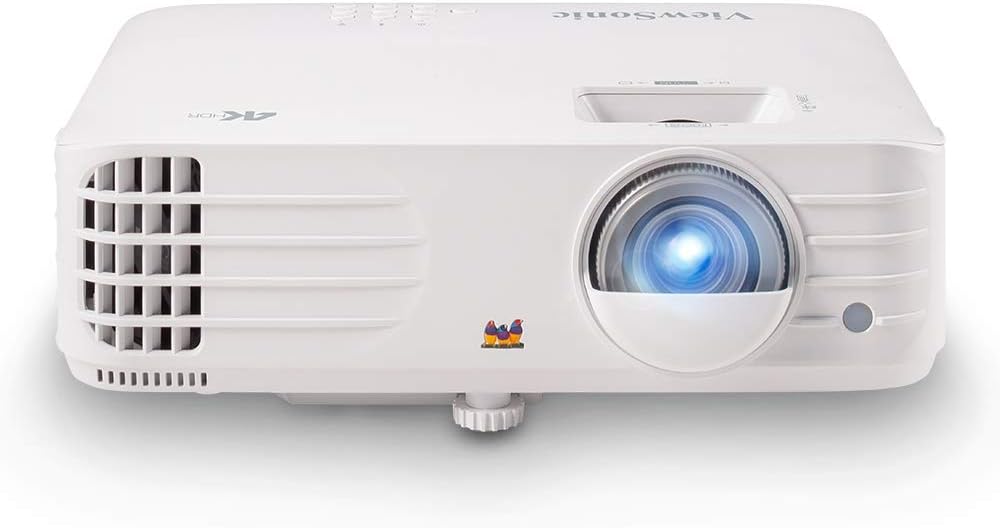
The ViewSonic PX701-4K is a true 4K UHD DLP projector designed for home theater enthusiasts and serious gamers who want a large-screen experience without investing in an oversized television. With a native 3840x2160 resolution, 3200 ANSI lumens, and support for both HDR10 and HLG, it positions itself as a versatile all-rounder that performs well in both darkened home theaters and moderately lit living rooms.
Where this projector truly stands out is in its gaming credentials. The 4.2ms input lag combined with a 240Hz refresh rate is genuinely impressive for a 4K projector at this price, putting it ahead of many competing models. Motion is smooth, fast-moving scenes remain sharp, and competitive gamers will notice a real difference compared to slower projectors. ViewSonic's SuperColor technology further enhances the experience by delivering a wide, accurate color gamut that makes both games and films look vivid and true to life.
Setup is made straightforward thanks to automatic horizontal and vertical keystone correction, 4-corner adjustment, and a built-in warping tool for curved surfaces. The 1.1x optical zoom offers some placement flexibility, though the range is modest. The projector supports ceiling mounting and can throw images from 30 inches up to a room-filling 300 inches, with a recommended maximum throw distance of 36 feet for a clear 300-inch image. Connectivity is practical, with dual HDMI ports, a powered USB-A output, and compatibility with most consoles, PCs, and streaming dongles.
On the downside, the absence of a built-in smart TV operating system means users must supply their own streaming device. The optical zoom range could be wider for greater installation flexibility, and the price point, while competitive for a true 4K gaming projector, is still a significant investment. Lamp-based projectors also require eventual bulb replacement, though the 20,000-hour SuperEco+ lifespan does mitigate this concern considerably.
Overall, the ViewSonic PX701-4K delivers a compelling combination of 4K image quality, gaming-grade responsiveness, and flexible setup features at a price that undercuts comparable large-screen TV alternatives. It is an excellent pick for anyone who wants the immersive thrill of a massive display for both movies and gaming, and is willing to add an external streaming stick to complete the setup.
Resolution: True 4K UHD (3840 x 2160p) with DLP display technology for sharp, pixel-dense imagery across all screen sizes.
Brightness and Color: 3200 ANSI lumens output with SuperColor technology, HDR10 and HLG support for enhanced contrast and a wide color gamut in varied lighting conditions.
Gaming Performance: 4.2ms input lag with a 240Hz refresh rate. Input lag activation requires enabling via advanced settings with the refresh rate set to 240Hz. Response time is based on the DMD chip.
Projection Size and Distance: Supports image sizes from 30 to 300 inches. Recommended throw distance for a 300-inch image is 36 feet. Projects an 80 to 150-inch image at a throw distance of 8.7 to 16.3 feet, with a 100-inch image achievable from 10.9 feet.
Zoom and Adjustment: 1.1x optical zoom, 0.8x to 2.0x digital zoom, automatic horizontal and vertical keystone, 4-corner adjustment, and curved surface warping tool. Throw ratio is 1.5 to 1.6.
Connectivity: Dual HDMI inputs, powered USB-A output (5V/1.5A) for wireless dongles such as Chromecast or Amazon Fire TV Stick. Compatible with gaming consoles, PCs, Macs, and mobile devices.
Lamp Life: Up to 15,000 hours in standard mode, extended to 20,000 hours in SuperEco+ mode, equivalent to approximately 13 years at 4 hours of daily use.
Mounting: Ceiling mountable, compatible with ViewSonic mount PJ-WMK-007.
Is this projector right for you? The ViewSonic PX701-4K is best suited to buyers who want a dual-purpose display for both home cinema and gaming. If you primarily watch films and sports, the true 4K resolution, HDR support, and high brightness will deliver a genuinely impressive picture. If you are a gamer, the 4.2ms input lag and 240Hz refresh rate are standout specs that rival dedicated gaming monitors on a much larger screen.
Room considerations: With 3200 lumens, this projector can handle rooms with some ambient light, but a darkened or dim environment will always produce the best contrast and color accuracy. Consider your room size carefully. The throw ratio of 1.5 to 1.6 means you will need roughly 11 feet of distance to project a 100-inch image, so measure your space before purchasing.
What you will need to add: This projector does not include a built-in smart TV platform, so plan to pair it with a streaming device such as a Chromecast, Amazon Fire TV Stick, or Apple TV. The built-in USB-A port conveniently powers these dongles without needing an extra wall adapter. A dedicated projection screen is recommended for the best image quality, though a flat white wall can work in a pinch.
Comparing alternatives: At this price tier, the PX701-4K competes with projectors like the BenQ TK700STi and Optoma UHD50X. Its 240Hz refresh rate and 4.2ms input lag give it a clear edge for gaming, while its SuperColor technology and HDR support keep it competitive for movie watching. If budget is the primary concern, entry-level 4K projectors are available at lower prices but typically sacrifice brightness, refresh rate, or input lag performance.

Pros
- Bright enough to replace a TV for daytime viewing
- Excellent color and contrast performance praised by cinema enthusiasts
- Strong gaming features including 240Hz and low input lag
- Flexible placement thanks to lens shift, zoom, and obstacle avoidance
- Premium built-in audio from Harman Kardon
Cons
- Auto keystone correction can be unreliable, requiring manual adjustment
- Some users report software bugs, including HDMI ARC audio dropouts and streaming quality restrictions
- Triple laser rainbow effect may be noticeable to sensitive eyes, especially in menus
The XGIMI HORIZON 20 Pro is a 4K RGB triple laser projector aimed at home theater enthusiasts and gamers who want a big-screen experience without sacrificing daytime usability. With 4100 ISO lumens of brightness, it stands out as one of the few projectors capable of holding its own against ambient light, making it a genuine TV replacement for many living rooms.
Where this projector really shines is color and contrast. The X-Master RGB triple laser engine combined with a 20,000:1 contrast ratio produces vibrant, lifelike visuals that reviewers describe as spectacular, even those who consider themselves longtime projector purists. Gamers will also appreciate the 240Hz refresh rate, 1ms response time, and support for VRR and ALLM, which together create a fluid, low-latency experience suited for fast-paced titles.
Build quality and setup flexibility are strong points as well. Flexible lens shift and optical zoom allow the projector to be placed off-center or at odd angles while still producing a clean, distortion-free image, and several users mention successfully hiding the unit in creative spots without compromising picture quality.
That said, the experience isn't flawless. The automatic keystone correction has been reported as unreliable, and the built-in Google TV software has drawn criticism for HDMI ARC audio dropouts and inconsistent streaming quality with certain services. A small percentage of viewers may also notice a rainbow effect from the laser system, particularly in menus, though most say it fades from notice once content starts playing.
Overall, the HORIZON 20 Pro delivers premium image quality, strong gaming performance, and real daytime usability that few projectors in this class can match. It's a compelling choice for movie lovers and gamers willing to work through some initial software quirks in exchange for a genuinely cinematic experience at home.
The HORIZON 20 Pro features native 4K UHD resolution (3840 x 2160) powered by DLP display technology and the MT9679 chipset with 4GB of RAM for smooth navigation and app performance.
Brightness is rated at 4100 ISO lumens with a 20,000:1 contrast ratio, supported by HDR10+, Dolby Vision, and IMAX Enhanced certification for a wide range of premium content formats.
Throw distance ranges from 1.06 to 5.31 meters, supporting image sizes from 40 to 300 inches, with 15cm of vertical keystone correction and flexible lens shift for versatile placement options.
Connectivity includes Bluetooth, HDMI, USB, and Wi-Fi, while built-in Harman Kardon speakers and Google TV integration round out a complete smart home theater package backed by a 2-year warranty.
Pros
- Exceptionally low input lag makes it one of the best projectors for gaming
- True 4K resolution with HDR10/HLG for detailed, vivid visuals
- Long 15,000-hour lamp life reduces long-term maintenance costs
- Easy setup with 1.1x zoom and vertical keystone correction
- Versatile placement options including ceiling, table, front, and rear mounting
Cons
- No built-in speakers mentioned, so an external audio system is likely needed
- 3,400 lumens may not be bright enough for well-lit rooms compared to pricier models
- Limited 1.1x zoom offers less installation flexibility than projectors with longer throw ratios
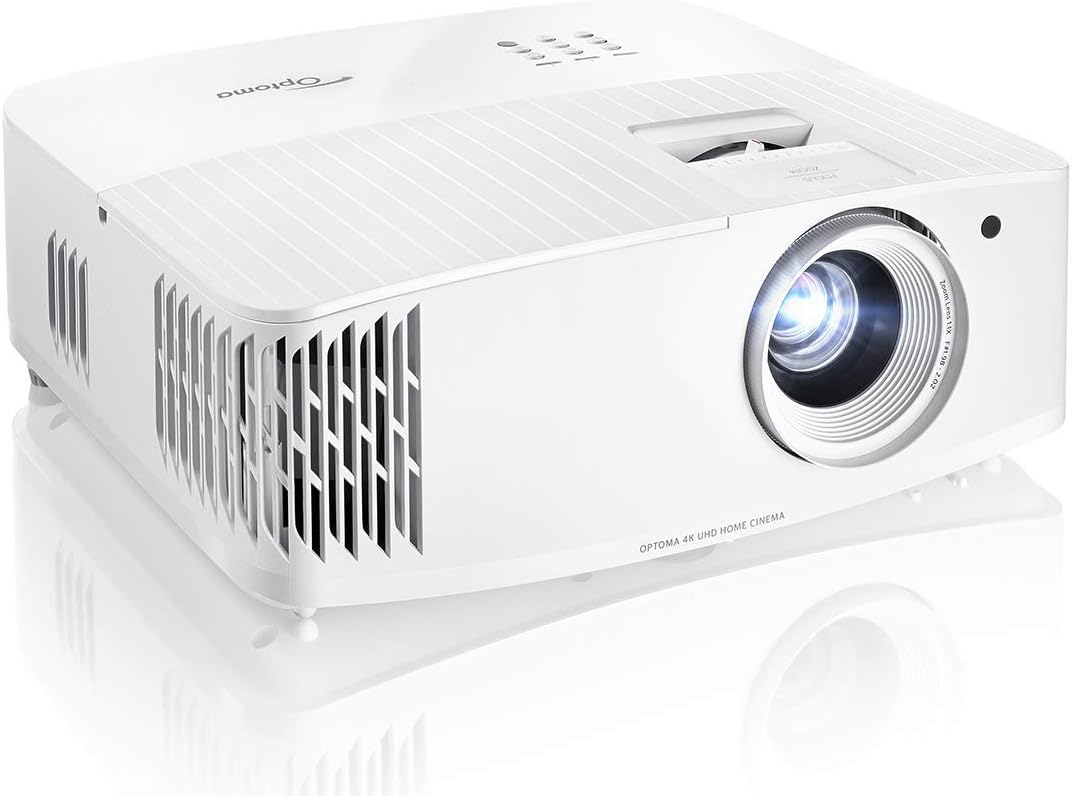
The Optoma UHD30 is a true 4K UHD DLP projector aimed squarely at gamers who also want a capable home theater display. It's a strong fit for PC and console gamers seeking low input lag without giving up 4K detail, as well as budget-conscious home theater fans who want a huge screen experience.
The standout feature is gaming performance: a 16ms response time at 1080p/240Hz and 25ms at native 4K UHD make this one of the fastest 4K projectors on the market. Combined with HDR10 and HLG support, UltraDetail processing, and a high 500,000:1 dynamic contrast ratio, the image quality holds up well for both fast-paced gameplay and cinematic content.
Build quality is straightforward and functional, with a compact 8.6-pound form factor that supports front, rear, ceiling, or tabletop mounting. Setup is simplified through 1.1x zoom and plus/minus 40-degree keystone correction, though the modest zoom range means placement flexibility is more limited than higher-end models.
On the downside, the 3,400-lumen brightness is respectable but may struggle in rooms with significant ambient light, and there's no mention of built-in audio, so most users will want a separate sound system. The lamp-based light engine also means eventual bulb replacement, though the 15,000-hour lifespan in Dynamic mode should last years under normal use.
Overall, the Optoma UHD30 delivers an impressive combination of true 4K resolution and genuinely fast response times at a price point well below many competing 4K projectors. It's a smart choice for gamers who don't want to compromise between speed and picture quality, and a solid pick for anyone building a flexible home theater and gaming setup.
Native resolution is true 3840 x 2160 4K UHD with support for HDR10 and HLG content, delivering 8.3 million distinct on-screen pixels and 3,400 ANSI lumens of brightness.
Gaming specs include a 240Hz refresh rate, 16ms response time at 1080p, and 25ms at 4K UHD, with console-friendly modes at 1080p 120Hz and 4K UHD 60Hz.
Connectivity covers HDMI 2.0 with HDCP 2.2, USB, and VGA inputs, plus a 12V trigger for motorized screens. The projector throws images from 34.1 inches up to 305 inches, with a minimum throw distance of 4 meters and maximum of 49 meters.
It weighs 8.6 pounds with dimensions of 12.4 x 10.6 x 4.64 inches, and includes a 1-year parts and labor warranty plus a 90-day lamp warranty.

Pros
- Extremely low input lag and high refresh rate ideal for gaming
- Bright enough to use with some ambient light in the room
- Long-lasting laser light source with minimal maintenance
- Versatile mounting and adjustment options including 360-degree projection
- Strong warranty coverage with three years on parts and labor
Cons
- Higher price point compared to standard home theater projectors
- USB connectivity limited to USB-A 2.0, lacking newer USB-C options
- Gaming-focused feature set may be overkill for buyers wanting a pure cinema projector
The ViewSonic LX700-4K is a 4K laser projector purpose-built for gamers, developed in partnership with Microsoft as an officially "Designed for Xbox" device. It's aimed squarely at console and PC gamers who want a massive screen without giving up the responsiveness expected from a proper gaming display, while still doubling as a capable home theater unit.

Pros
- Genuine 4K resolution with excellent color accuracy (100% DCI-P3) and high contrast
- Extremely fast response time makes it one of the more capable gaming projectors on the market
- Built-in Android TV removes the need for an external streaming device
- Flexible installation thanks to lens shift and zoom, plus a large 200-inch max image size
- Strong built-in audio system reduces need for external speakers in casual setups
Cons
- No user reviews yet, so real-world reliability and long-term performance are unverified
- 3300 lumens is good but may still struggle against strong ambient light in very bright rooms
- Premium price point puts it above many entry-level and mid-range gaming projectors
The BenQ X3100i is a true 4K 4LED gaming projector aimed at gamers and home theater enthusiasts who want a single device that handles both fast-paced competitive play and cinematic streaming. With HDR10, HDR-PRO, and 100% DCI-P3 color coverage, it targets users who care about picture accuracy as much as performance.
The standout feature here is the 4.2ms response time at 1080p@240Hz, which puts it in serious contention among gaming-focused projectors where input lag can make or break the experience. Paired with 3300 ANSI lumens and a 500,000:1 contrast ratio, the image should hold up reasonably well even in rooms with some ambient light, though a fully darkened room will still deliver the best results.
Built-in Android TV is a major convenience, letting users stream Netflix, Prime Video, Disney+, and YouTube directly without hooking up a separate streaming stick, and AirPlay/Chromecast support adds flexibility for casting from phones and laptops. The TreVolo 7.1-channel Dolby Atmos audio system with eARC support further reduces the need for external speakers in casual viewing setups.
On the design side, the 1.3x zoom and 40-60% vertical lens shift make installation more forgiving than fixed-lens projectors, and a max image size of 200 inches gives plenty of room to scale up for a true home theater feel. The main unknown is long-term durability and real-world performance, since there are no verified customer reviews yet to confirm BenQ's marketing claims.
Overall, the BenQ X3100i looks like a well-rounded 4K gaming projector that combines fast response times, accurate color, and smart TV convenience in one package. It's a strong choice for gamers and movie fans who want a premium all-in-one projector, though budget-conscious buyers may want to wait for more user feedback before committing.

Pros
- Exceptional brightness and color accuracy (ΔE<0.8) suitable for bright rooms
- Best-in-class gaming specs among projectors, including 240Hz and low input lag
- Flexible installation thanks to strong zoom and lens shift range
- Long-lasting laser light source rated for 20,000 hours
- Supports advanced formats like Dolby Vision, IMAX Enhanced, and 3D
Cons
- Premium price point puts it well above mainstream home projectors
- 3D glasses are not included and must be purchased separately
- At 7.5 kg and requiring a dedicated setup, it's less portable than compact projector alternatives
The XGIMI TITAN Noir is a flagship 4K laser projector aimed at home theater purists and gamers who refuse to compromise on either picture quality or responsiveness. With native 3840x2160 resolution, RGB triple laser illumination, and Dolby Vision/IMAX Enhanced certification, it positions itself as a true cinema replacement rather than a casual streaming device.
In real-world use, the standout feature is brightness: 4800 ISO lumens combined with 110% BT.2020 color gamut means this projector can hold its own even in rooms with ambient light, a common weakness for projectors in this category. The dual iris system and DBLE enhancement push contrast up to a claimed 100,000:1, and while native contrast sits at 7000:1, the perceived depth in high-contrast scenes is noticeably improved over standard single-laser units.
Gamers get a rare treat here: 240Hz refresh rate, 1ms response time, VRR, ALLM, and FreeSync support turn this into one of the few projectors that can genuinely keep pace with a gaming monitor, scaled up to a 300-inch display. Combined with Gigabit LAN for stable low-latency streaming, it's a legitimate option for console and PC gamers who want a big-screen setup without sacrificing responsiveness.
Build quality reflects its flagship status at 7.5 kg with a desktop form factor and auto-focus capability, though the 0.98-2.0:1 throw ratio and generous lens shift give installers plenty of flexibility for ceiling mounts or rear placement. The main drawbacks are the steep price and the fact that 3D glasses aren't bundled despite 3D format support being a headline feature.
Overall, the TITAN Noir is best suited for dedicated home theater rooms or gaming setups where budget is secondary to performance. Casual users or those wanting a portable, budget-friendly projector should look elsewhere, but enthusiasts chasing cinema-grade brightness, color, and gaming latency in one package will find this one hard to beat.
Native resolution is 3840 x 2160 (true 4K) using DLP display technology, with a maximum image size of 300 inches and minimum image size of 40 inches. Throw distance ranges from 7.2 feet to 43.6 feet, giving installers flexibility across a range of room sizes.
The RGB triple laser light source is rated at 4800 ANSI lumens with a 20,000-hour operating life, and the unit draws 360 watts at 120 volts. Contrast is rated up to 100,000:1 dynamic with Dual Intelligent Iris technology enhancing perceived depth.
Connectivity includes HDMI, USB, Bluetooth, and 3.5mm audio out, plus Gigabit LAN for low-latency gaming and streaming. The projector weighs 7.5 kg and measures 14.92" x 11.34" x 9.09", with auto focus and a 1-year manufacturer warranty included.
Choosing Your 240Hz Gaming Projector
Response Time and Input Lag
A 240Hz refresh rate is only part of the speed equation. You must also consider input lag and response time. Input lag is the delay between your controller input and the action appearing on screen. Look for projectors with a dedicated gaming mode that minimizes this, often measured in milliseconds.
Response time refers to how quickly pixels can change color. A combination of low input lag and fast response time ensures your gameplay feels instant and precise. Models like the BenQ X3100i True 4K 4LED Gaming Projector 4.2ms highlight these critical metrics for competitive players.
Brightness and Light Source
Brightness, measured in ANSI or ISO lumens, determines how well your image holds up in rooms with ambient light. For a versatile gaming space, a projector with high brightness is essential. Light source technology also affects longevity and color performance.
Traditional lamp projectors may require more maintenance, while laser and LED light sources offer longer lifespans and consistent brightness. The XGIMI HORIZON 20 Pro 4K RGB Triple Laser Home projector, for example, uses a robust triple-laser system for vibrant, long-lasting visuals, even in daytime conditions.
Resolution and Visual Enhancements
<!–While 240Hz is often paired with 1080p resolution for maximum speed, many modern projectors support 4K signals. Some use pixel-shifting to achieve a 4K-like image, while others are true 4K. Consider what matters most for your gaming library: raw speed or higher visual fidelity.
Features like HDR10, HLG, and dynamic contrast ratios add depth and realism to supported games. For the pinnacle of image quality, check out our reviews of the best dolby vision gaming projectors to see the full spectrum of visual technology available.
Setup Flexibility and Throw Distance
<!–Your room’s dimensions will dictate your projector choice. Standard-throw models need distance from the screen, while short-throw and ultra-short-throw models can create a large image from just inches away. This is perfect for smaller rooms or avoiding ceiling mounts.
Features like optical zoom, lens shift, and keystone correction are invaluable for fine-tuning your image without moving the projector physically. The Hisense PX3-PRO Ultra Short Throw Triple Laser demonstrates how ultra-short-throw technology can deliver a massive screen with minimal setup hassle.
Final Thoughts
Upgrading to a 240Hz gaming projector is a definitive step towards a more immersive and responsive gaming sanctuary. For gamers seeking a brilliant balance of 4K clarity, high brightness, and smart features in a traditional setup, the BenQ TK710 4K HDR Laser 3200 Lms Home is a compelling choice. If your space demands a revolutionary setup where the projector sits right against the wall, the immersive cinema-quality experience of the Hisense PX3-PRO Ultra Short Throw Triple Laser is truly impressive, bringing a colossal, lag-free image to even the most compact rooms.
Frequently Asked Questions
Is a 240Hz projector worth it for console gaming?
While many current-generation consoles are capped at 120Hz for most titles, a 240Hz projector offers significant future-proofing. The high refresh rate also ensures the absolute smoothest possible rendition of 60Hz or 120Hz content, with reduced motion blur. For PC gaming, where high frame rates are more common, the benefit is immediate and substantial.
Do I need a special screen for a 240Hz gaming projector?
You do not strictly need a special screen, but the right screen can enhance performance. A high-gain screen can improve perceived brightness, while an ambient light rejecting (ALR) screen is excellent for rooms with windows or lights. For the best results, match your screen type to your room’s lighting conditions and your projector’s throw distance, a topic we cover in our guide to the best Wi-Fi gaming projectors for immersive play.
Can I use a 240Hz projector for movies and everyday TV?
Absolutely. These projectors are versatile home entertainment hubs. They typically feature multiple picture modes, including dedicated cinema and HDR settings for film content. Their high brightness and resolution make them excellent for sports, streaming services, and general TV viewing, offering a true big-screen alternative to a traditional television.
What is the main difference between laser and lamp projectors for gaming?
The core differences are longevity and maintenance. Laser light sources, like those in the Optoma GT2400HDR, can last up to 30,000 hours with minimal brightness decay, effectively meaning no bulb replacements. They also achieve full brightness instantly. Lamp-based models may have a lower initial cost but require periodic lamp changes, which adds long-term cost and downtime.


Write Your Review
No reviews yet. Be the first to share your experience!