

Imagine setting up a movie theater in your backyard, delivering a presentation from your hotel room, or tracing a complex design for a craft project—all from a device that fits in your pocket. Finding the best pocket mini projector means balancing true portability with enough performance for your specific needs. Whether you’re a frequent traveler, a creative hobbyist, or someone who loves impromptu entertainment, this guide reviews nine leading models to help you make an informed choice. For a broader look at ultra-portable options, explore our list of the best pocket portable projectors.
| Pick | Product | AI Score | Buy |
|---|---|---|---|
 KODAK Luma 150 Pocket Mini Projector Kit
|
9.8/10 | Buy on Amazon | |
| -12% OFF |
 YGSKK Mini Projector WiFi 6 1080P Electric Focus
|
9.5/10 | Buy on Amazon |
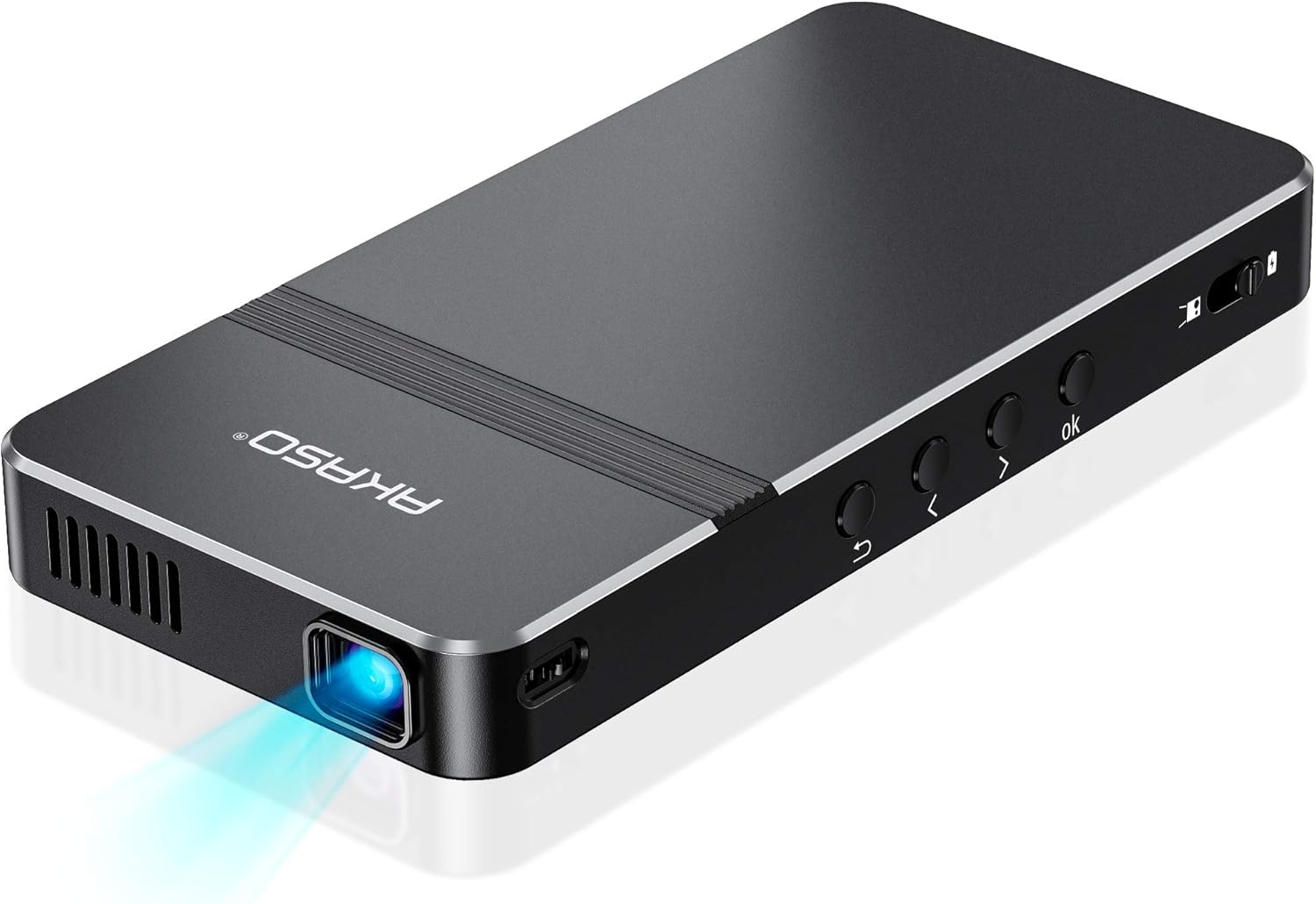 AKASO Mini DLP Pocket Projector 1080P with WiFi
|
9.9/10 | Buy on Amazon | |
 KODAK Luma 150 Mini Projector
|
9.4/10 | Buy on Amazon | |
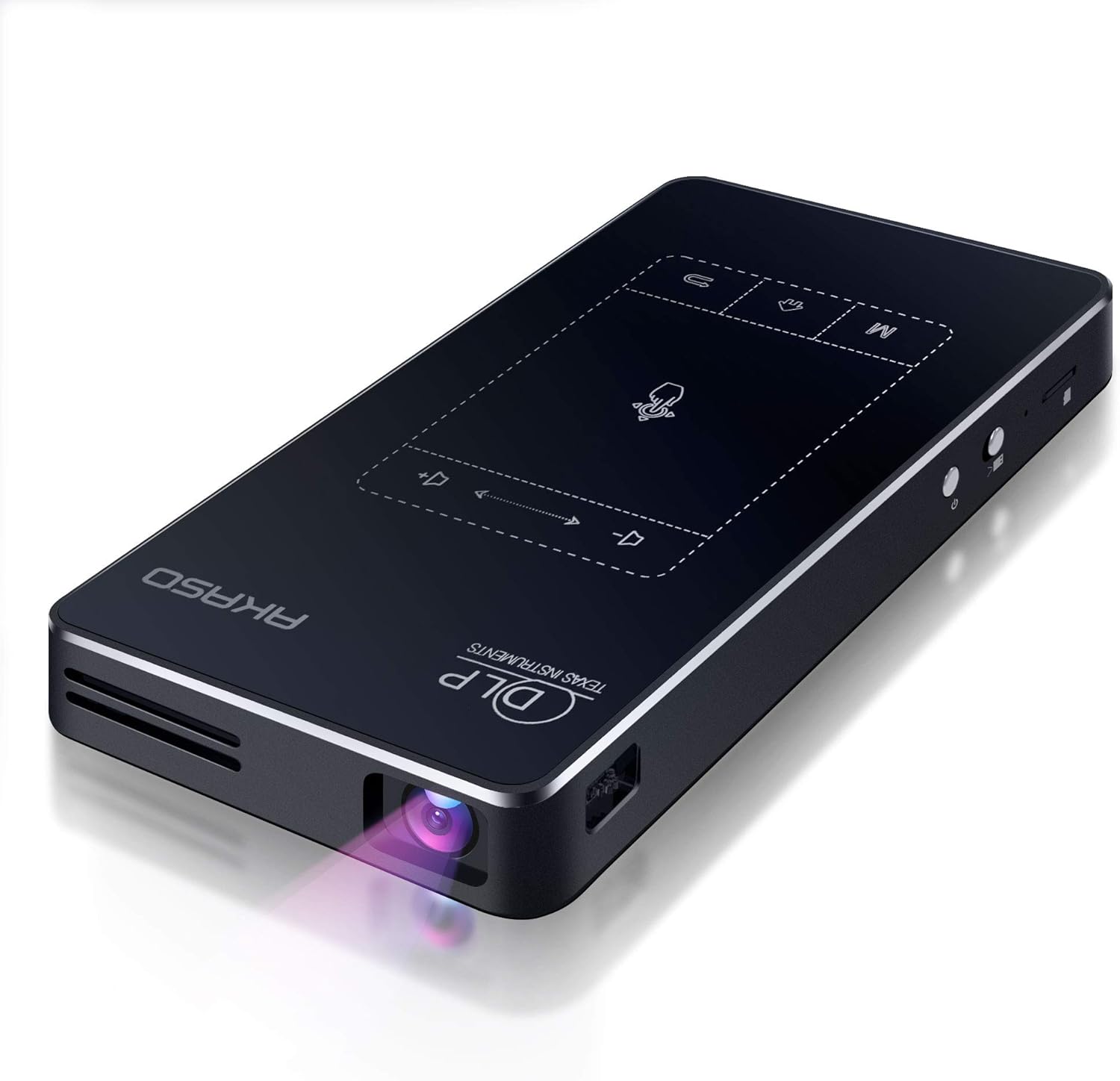 AKASO WT50 Mini Portable DLP Projector with WiFi
|
9.9/10 | Buy on Amazon | |
| -25% OFF |
 WISHOLY Mini Proyector WiFi Bluetooth 1080P
|
9.5/10 | Buy on Amazon |
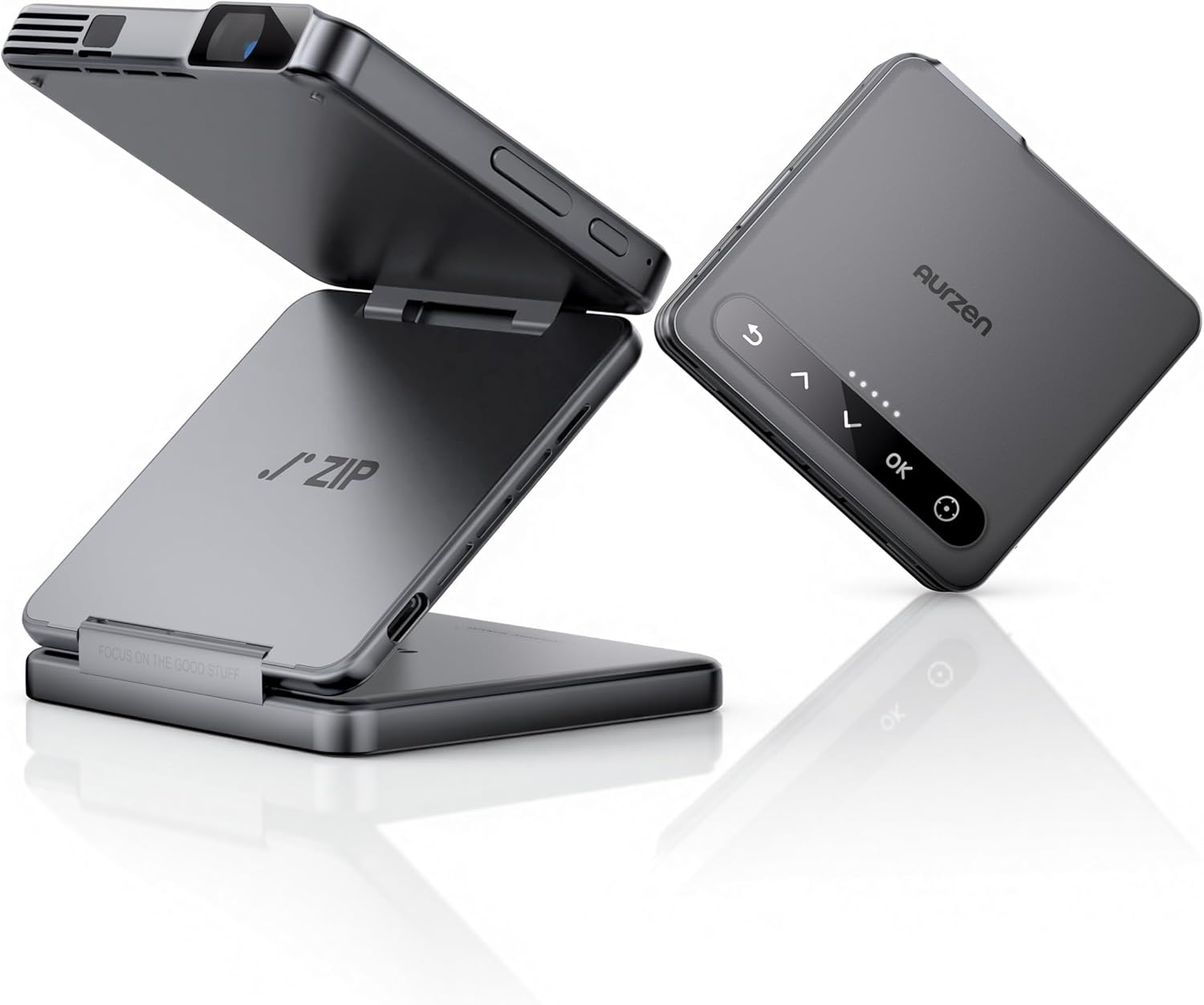 Aurzen ZIP Tri-Fold Mini Projector
|
9.7/10 | Buy on Amazon | |
 APIO Mini Pocket Projector
|
9.7/10 | Buy on Amazon |
Pros
- Genuinely pocket-sized and lightweight at 7.76 ounces
- Comes with a generous accessory bundle (tripod, case, screen) at no extra cost
- Wireless screen mirroring works across Android, iOS, and Windows
- Long-life LED light source rated for 30,000 hours
- Early customer reviews are uniformly positive on build quality and included accessories
Cons
- Low 55-lumen brightness limits use to dim or dark rooms
- Native resolution of only 640 x 360 falls well short of HD, so image detail is soft
- Battery life caps out at 2.5 hours, requiring a USB cable for longer sessions
The KODAK Luma 150 Type 4 is a pocket-sized DLP pico projector aimed at people who want portable entertainment without hauling around a full-size setup. It's a good fit for dorm rooms, camping trips, backyard movie nights, or quick informal presentations where absolute image quality is less important than convenience.
The standout feature is wireless casting: Miracast and AirPlay support let you mirror content from Android, iOS, or Windows devices without cables, and the bundled tripod plus 60-inch screen mean you can be projecting within a couple of minutes of unboxing. HDMI, USB, and microSD inputs add flexibility for wired sources like laptops or streaming sticks.
Build quality feels intentional for travel: at under 8 ounces and roughly the size of a smartphone, it slips into the included carrying case easily, and push-button controls with auto screen alignment keep operation simple. The 30,000-hour light source is a nice long-term reassurance that most owners won't outlast their unit's lamp.
The tradeoffs come from its size. At just 55 lumens and a 640x360 native resolution, this is not a projector for bright rooms or detail-critical content; text and fine imagery can look soft, and you'll want to dim the lights for the best picture. Battery life is also modest at 2.5 hours, so longer sessions require staying tethered to USB power.
Overall, the Luma 150 kit delivers strong value for casual, on-the-go viewing thanks to its complete accessory bundle and wireless streaming smarts. Buyers should set expectations around brightness and resolution, but for portable, low-key entertainment it's a compelling and well-reviewed pick.
Display: DLP technology with 640 x 360 native resolution, 1000:1 contrast ratio, and a maximum image size of up to 120 inches from a throw distance of 0.3 to 8.5 feet.
Brightness: 55 ANSI lumens with a 12-watt lamp rated for 30,000 hours of operation.
Connectivity: HDMI, USB, microSD, 3.5mm audio jack, and 802.11 b/g/n Wi-Fi for Miracast and AirPlay casting.
Power: Internal battery offering up to 2.5 hours of use, or continuous power via USB cable.
Dimensions & Weight: 3.94" x 3.94" x 0.91", weighing 7.76 ounces, with a tripod mount for stable placement.
Included in Kit: Carrying bag, tripod, 60-inch projector screen, HDMI cable, power adapter, and power cord, backed by a 1-year warranty.
Pros
- Excellent value at budget price with premium features like WiFi 6 and electric focusing
- Native 1080P resolution delivers sharp, clear images with above-average brightness for the category
- Built-in apps eliminate need for external streaming devices, simplifying setup and reducing clutter
- Compact 8x4x4 inch design makes it genuinely portable for multiple rooms or outdoor use
- Versatile connectivity supports nearly any device including gaming consoles and mobile phones
Cons
- 4K compatibility requires external 4K source devices, not true native 4K projection
- Bluetooth audio only, cannot mirror audio from smartphones wirelessly to the projector
- 300 ANSI lumens may struggle with ambient light in very bright rooms during daytime
The YGSKK mini projector is a compact home theater solution designed for bedroom entertainment, outdoor movie nights, and casual use in apartments or dorms. It combines practical features like built-in streaming apps and WiFi 6 connectivity with a genuinely portable form factor, making it ideal for users who want big-screen entertainment without professional installation or complex equipment.
The standout technical features deliver real performance improvements over similarly-priced competitors. Native 1080P resolution paired with 300 ANSI lumens brightness produces noticeably sharp, vivid images, while WiFi 6 support ensures stable streaming without the buffering and disconnection issues common in budget projectors. The electric auto-focus system is a game-changer, delivering crisp focus in seconds via remote control rather than requiring manual lens adjustment.
Build quality reflects the budget-friendly price point, but the design is thoughtful where it matters. The 210-degree rotating base provides genuine flexibility for ceiling projection or unconventional mounting, and the compact 8x4x4 inch chassis makes it easy to move between rooms. Built-in stereo speakers handle audio adequately for casual viewing, though connecting external speakers via Bluetooth is recommended for better sound quality.
Limitations exist primarily in brightness for daytime use and the lack of true 4K native support, though 4K compatibility via external devices is a nice bonus. The inability to mirror Bluetooth audio from phones is a minor inconvenience, but HDMI and USB connectivity more than compensate. The 50-200 inch projection range is genuinely useful, scaling from intimate bedroom viewing to larger outdoor gatherings.
Final verdict: The YGSKK mini projector delivers exceptional value for budget-conscious buyers seeking portable entertainment with modern conveniences. WiFi 6, electric focus, and built-in apps make it significantly more user-friendly than older budget models. Best suited for indoor entertainment, small outdoor events, and users prioritizing ease of use over professional-grade specifications.
Display and Image: Native 1080P resolution, 4K compatible, 300 ANSI lumens brightness, 50-200 inch projection range, 4.92-17 feet projection distance
Connectivity: WiFi 6/5G/2.4G, Bluetooth 5.3, HDMI, USB, 3.5mm audio jack, wireless smartphone mirroring (iPhone and Android)
Focus and Adjustment: Electric auto-focus with remote control, 210-degree rotating base, adjustable projection angle
Built-in Features: Streaming apps (YouTube, Prime Video, Hulu), app store, stereo speakers, J-Share wireless connection technology
Compatibility: PS5/PS4, Xbox, TV sticks, TV boxes, laptops, USB drives, DVD players, external hard drives, smartphones
Physical Dimensions: 8 x 4 x 4 inches, portable and lightweight design
Support: 3-year warranty, 24/7 technical support
Who Should Buy This? Budget-conscious buyers seeking portable entertainment for bedrooms, apartments, outdoor gatherings, or travel. Ideal for those wanting built-in streaming without external devices, and users who value ease of use with electric focusing and wireless connectivity.
Room Brightness Considerations: The 300 ANSI lumens brightness performs best in dimmed or dark environments. For daytime or well-lit rooms, consider darker curtains or blinds for optimal image quality and brightness impact.
Streaming Setup: Built-in apps work best with stable WiFi 6 or 5G connections. Place the projector within reasonable range of your router for consistent performance. Both phone and projector must be on the same network for wireless mirroring to function.
Device Compatibility: For 4K content, connect 4K-capable devices (Fire TV 4K, compatible USB drives, 4K streaming sticks) via HDMI. For audio, use Bluetooth speakers or the 3.5mm jack rather than relying on projector speakers for movie nights. The projector does not support Bluetooth audio from smartphones.
Projection Distance Planning: Verify your room allows 4.92-17 feet of projection distance. The 210-degree base enables ceiling projection, making it adaptable to most room layouts. Measure your wall or ceiling space to determine optimal screen size before purchasing.
Pros
- Genuinely pocket-sized and lightweight design makes it one of the most portable projectors available
- Wireless mirroring via AirPlay and EZCast offers flexible, cable-free screen sharing from smartphones
- Long LED lamp lifespan of up to 30,000 hours means low maintenance and lasting value
- Tripod and remote control included in the box add real convenience right out of the package
- Versatile enough for entertainment, business presentations, and creative hobby use
Cons
- At 50 ANSI lumens, brightness is limited and a dark environment is required for a quality image, making it unsuitable for well-lit rooms
- Copyrighted streaming content from Netflix, Hulu, and similar services cannot be mirrored wirelessly or via HDMI, which is a notable restriction for streaming users
- Battery runtime of up to 2.5 hours may not be enough for longer movies without access to a power source
The AKASO Mini Cookie Projector is a palm-sized DLP pico projector designed for users who want big-screen experiences without the bulk of a traditional projector. It targets a wide audience ranging from casual movie watchers and gamers to small business presenters and creative hobbyists who use it for cookie decorating or art tracing. Its pocket-friendly form factor and built-in battery make it one of the more genuinely portable options in its price range.
On the performance side, the projector supports 1080P resolution and delivers a 1000:1 contrast ratio, which produces sharp and detailed images when used in a properly darkened room. The 50 ANSI lumen output is modest, and AKASO themselves recommend a dark environment for the best results, so this is not a projector for bright living rooms or outdoor daytime use. That said, the DLP LED lamp is rated for up to 30,000 hours, which is a strong long-term value proposition.
Connectivity is a genuine strength here. The updated Type-C port joins HDMI, AV, and Micro SD inputs, and wireless mirroring is supported through AirPlay and EZCast for easy smartphone casting. The included tripod and remote control add a layer of everyday convenience that many competing mini projectors skip. Setup is straightforward and the package feels well-rounded for the price.
The most significant drawback is the streaming limitation. Copyrighted content from platforms like Netflix and Hulu cannot be cast wirelessly or through HDMI, which will frustrate users who primarily want to stream. The 2.5-hour battery life is also a consideration for anyone planning to watch full-length films without a nearby outlet. These are real-world limitations worth factoring into your decision.
Overall, the AKASO Mini Projector earns its strong rating by delivering a compact, versatile, and well-equipped package at a reasonable price. It is best suited for users who value portability and creative flexibility over raw brightness. If your use case involves a dark room, short to medium-length content, and a mix of wired and wireless sources, this projector delivers solid value and a genuinely fun experience.
Projection Technology: DLP (Digital Light Processing) with LED light source rated up to 30,000 hours. Supports native and input resolution up to 1080P Full HD.
Brightness and Contrast: 50 ANSI lumens brightness with a 1000:1 contrast ratio. Best performance achieved in dark or dimly lit environments. Screen size adjustable up to 150 inches.
Connectivity: Wired inputs include Type-C (updated from Micro USB as of October 2025), HDMI (cable included), AV, and Micro SD card slot. Wireless connectivity supported via AirPlay and EZCast for screen mirroring from mobile devices.
Battery and Portability: Built-in rechargeable battery with up to 2.5 hours of playback time. Compact pocket-sized form factor with integrated stereo speakers. Tripod and remote control included in the box.
Important Note: Copyrighted streaming content from services such as Netflix and Hulu cannot be mirrored wirelessly or via HDMI cable due to DRM restrictions. A dark environment is strongly recommended for optimal image quality.
Who should buy this projector? The AKASO Mini Projector is an excellent choice for travelers, students, and hobbyists who need a portable display solution without committing to a full-sized unit. It is particularly well-suited for people who want a projector for creative projects like cookie decorating, art tracing, or craft work, as its clear and adjustable image projection fills a niche that most projectors ignore.
Is it good for movies? It can handle movies well in a dark room, but the 50 ANSI lumen brightness means ambient light will wash out the image significantly. Users who primarily want to stream Netflix or Hulu should be aware that DRM restrictions prevent wireless and HDMI mirroring of that content. Local media files via Micro SD or HDMI from a laptop work without issue.
Is it good for business use? Yes, for small meetings and informal presentations it works well. The included tripod and remote control make it easy to set up and operate independently. For larger conference rooms or presentations in bright environments, a higher-lumen projector would be a better fit.
What accessories are included? The box includes an HDMI cable, a tripod, and a remote control, which is a generous bundle for a mini projector. This means you can get started right away without purchasing additional accessories for most common use cases.
Pros
- Extremely portable and lightweight for on-the-go use
- Simple wireless mirroring once connected to the Kodak network
- Sharp, clear image quality thanks to auto-focus and 1080p support
- Versatile connectivity with HDMI, USB, and microSD inputs
- Great niche uses beyond movies, such as projecting templates for crafts and cookie decorating
Cons
- Battery life is short at about 2.5 hours and drains faster when powering external devices like a streaming stick
- Low brightness rating (55 ANSI lumens) makes it best for dim rooms rather than bright environments
- Built-in speaker sound quality is weak, often requiring an external Bluetooth speaker
The KODAK Luma 150 is an ultra-mini pocket projector designed for people who prioritize portability over raw performance. Weighing just 7.5 oz and small enough to fit in a pocket, it targets travelers, campers, and casual users who want a simple, grab-and-go home entertainment or presentation solution.
Its standout features are wireless mirroring via Miracast and AirPlay, along with auto-focus that reduces setup hassle. Reviewers confirm that once connected to the Kodak network and paired with home Wi-Fi, screen mirroring from iPhones and Android devices works smoothly, and image clarity is better than expected for its size. Several users even repurpose it creatively, projecting cookie decorating templates with sharp, clean results.
Build quality feels solid for a device this size, with a touch-based control panel, a tripod mount for flexible placement, and a versatile charging cable that includes multiple plug adapters for international use. The compact footprint and HDMI, USB, and microSD inputs make it easy to connect a variety of media sources without extra accessories.
The trade-offs come from its small size and low power draw. At only 55 ANSI lumens, it performs best in dark or dim rooms rather than bright spaces, and the built-in speaker is noticeably weak, pushing many owners toward external Bluetooth audio. Battery life, rated around 2.5 hours, drops quickly if the projector is also powering an accessory like a streaming stick.
Overall, the KODAK Luma 150 is a solid pick for casual, portable projection needs like bedroom ceiling movies, outdoor gatherings, or hobbyist projects, but it is not meant to replace a full home theater projector. Buyers seeking convenience and mobility over brightness and battery longevity will find good value here.
Pros
- Extremely compact and lightweight design makes it one of the most portable projectors in its class
- DLP technology delivers cleaner, sharper images than comparable LCD mini projectors at this price point
- Built-in Android 9.0 eliminates the need for a separate streaming device, adding great standalone value
- Multiple connectivity options including HDMI, USB, Micro SD, Bluetooth, and wireless mirroring cover virtually every use case
- Long 30,000-hour lamp life means you won't need to worry about bulb replacements for years
Cons
- Native resolution is WVGA (854x480), so while it supports 1080p input, the actual projected image is not true 1080p and may look soft on larger screens
- At only 50 ANSI lumens, brightness is limited and the projector performs best in dim or dark environments, making daytime or well-lit room use difficult
- Battery life of approximately 2 hours may not be enough for longer movies without access to a power source
The AKASO WT50 is a palm-sized DLP projector designed for users who want big-screen entertainment without the bulk of a traditional projector. Built around an Android 9.0 system with built-in WiFi, Bluetooth, and a rechargeable battery, it targets movie fans, travelers, outdoor enthusiasts, and even creative hobbyists who need a versatile, go-anywhere display solution.
Performance-wise, the WT50 uses DLP technology with a 0.2 DMD chip, which produces noticeably cleaner and sharper images than LCD-based mini projectors at this price. Colors are vivid and the diffuse reflection design is gentler on the eyes during extended viewing sessions. That said, the native resolution is WVGA (854x480), meaning content is upscaled rather than displayed in true 1080p, so image sharpness on very large screens may not match higher-end projectors.
The build quality is a genuine highlight. The all-metal aluminum alloy casing feels premium and durable for its size, and at just 0.64 lbs, it is remarkably light. The compact footprint, roughly the size of a large smartphone, means it fits in a jacket pocket or small bag with ease. The included mini tripod and remote control add practical value right out of the box.
There are a few trade-offs worth noting. At 50 ANSI lumens, the brightness is modest, and the projector really shines only in dim or dark environments. Outdoor use at dusk or night works well, but daytime use in a lit room will result in a washed-out image. The 2-hour battery life is also a limitation for feature-length films, though a power bank or wall outlet can extend usage. Additionally, Netflix and Hulu cannot be wirelessly mirrored due to DRM restrictions, though you can download their apps directly via Google Play as a workaround.
Overall, the AKASO WT50 is an impressive feat of miniaturization and a genuinely useful portable projector for its price. It is best suited for users who prioritize portability and versatility over raw brightness or pixel-perfect resolution. Whether you are hosting a backyard movie night, decorating cookies with projected templates, or watching videos while camping, the WT50 delivers a compelling and creative experience in a remarkably small package.
Display Technology: DLP (0.2 DMD Optically Processed Chip)
Native Resolution: WVGA 854 x 480, supports up to 1920 x 1080p input
Brightness: 50 ANSI Lumens
Aspect Ratio: 16:9
Projection Size: 30 to 120 inches
Projection Ratio: 1.19:1
Operating System: Android 9.0
WiFi: Dual-band 2.4G and 5G (802.11ac)
Bluetooth: Yes
Screen Mirroring: AirPlay, Miracast, EShare, DLNA
Battery: 3.7V, 5000mAh built-in rechargeable
Battery Life: Approximately 2 to 3 hours
Lamp Life: 30,000 hours
Connectivity: HDMI, 2x USB 2.0, Micro SD (up to 32GB), 3.5mm Audio Jack
Keystone Correction: Automatic, up to 40 degrees
Dimensions: 5.5 x 3.1 x 0.8 inches
Weight: 0.64 lbs
Casing Material: Aluminum Alloy
In the Box: WT50 Projector, Remote Control, Mini Tripod, HDMI Cable, Charger, Quick Reference Guide
If you are considering the AKASO WT50, it helps to understand exactly what kind of projector this is and who it suits best. This is a mini projector built for portability and convenience, not a home theater replacement. If your priority is the sharpest possible 1080p image in a bright living room, a larger, higher-lumen projector will serve you better.
The WT50 is ideal for users who value portability above all else. Campers, travelers, and dorm room users will appreciate the battery-powered design and pocket-friendly size. The built-in Android system is a major convenience, removing the need to carry a separate Chromecast, Fire Stick, or laptop just to stream content. Simply connect to WiFi and download your preferred apps directly onto the projector.
For creative applications, the WT50 has found a surprisingly enthusiastic following. Cookie decorators, mural artists, and holiday decorators use it to project templates and designs onto surfaces with precision. The compact form and short throw distance make it well suited for these close-range creative tasks.
A few practical tips before buying: always use the projector in a dim or completely dark environment for the best image quality. Keep the projection distance between 1 and 1.5 meters for the sharpest focus. For Netflix or Hulu, download the apps directly via Google Play rather than attempting wireless mirroring. And if you plan extended sessions, keep a power bank or charger nearby to supplement the built-in battery.
Pros
- Configuración inalámbrica sencilla sin necesidad de cables o adaptadores
- Soporte giratorio flexible para múltiples ángulos de proyección
- Corrección trapezoidal automática que ahorra tiempo de ajuste
- Tamaño compacto y ligero, fácil de transportar
- Buen soporte posventa con garantías extendidas
Cons
- No puede reflejar apps de streaming como Netflix, Hulu o Prime Video directamente vía WiFi por restricciones de derechos de autor
- El Bluetooth solo transmite audio, no permite espejar pantalla de smartphones
- La calificación de 3.9/5 sugiere experiencias mixtas en cuanto a calidad de imagen o durabilidad
El WISHOLY Mini Proyector es un dispositivo de entretenimiento portátil pensado para usuarios que buscan una alternativa económica a los proyectores tradicionales, ya sea para cine en casa, noches de películas al aire libre o presentaciones básicas. Su enfoque en la conectividad inalámbrica y su tamaño compacto lo hacen atractivo para quienes valoran la simplicidad y la movilidad.
Entre sus características más destacadas están el WiFi de doble banda 2.4G+5G para duplicación de pantalla sin demoras, y la corrección trapezoidal vertical automática que ajusta la imagen sin necesidad de configuraciones manuales. El soporte giratorio de 180° añade versatilidad, permitiendo proyectar desde mesas, techos o paredes según el espacio disponible.
En cuanto a diseño, el proyector es notablemente compacto y ligero, con dimensiones que facilitan guardarlo en una mochila o maleta. Su sistema de enfriamiento integrado ayuda a mantener un rendimiento estable durante sesiones prolongadas, aunque como con muchos proyectores de este rango de precio, la luminosidad y nitidez pueden no igualar a modelos más costosos.
Una limitación importante a considerar es que, debido a restricciones de derechos de autor, no se pueden transmitir directamente aplicaciones como Netflix, Hulu o Prime Video vía WiFi, por lo que los usuarios necesitarán un TV Stick o conexión HDMI para acceder a estos servicios. Asimismo, el Bluetooth está limitado exclusivamente a la salida de audio.
En general, el WISHOLY Mini Proyector representa una opción razonable para quienes buscan un proyector portátil y funcional a un precio accesible, especialmente si ya cuentan con un TV Stick o planean usarlo principalmente para contenido propio, videojuegos o presentaciones. No es la mejor opción para quienes priorizan streaming directo sin dispositivos adicionales.
Pros
- Extremely compact and lightweight tri-fold design
- Fast, accurate auto focus and keystone correction
- Easy no-Wi-Fi screen mirroring for quick setup
- Doubles as a Bluetooth 5.4 speaker
- Backed by a 2-year warranty and SGS-verified brightness rating
Cons
- Only 100 ANSI lumens and a 300:1 contrast ratio limit use to dim or dark rooms
- Battery lasts just 1.5 hours in eco-mode, so longer sessions require plugging in
- DRM-protected streaming apps require an additional CastPlay Pro dongle sold separately
The Aurzen ZIP is a pocket-sized DLP projector aimed at people who value portability above all else. Its tri-fold, wallet-size design and built-in stand make it a natural fit for travelers, crafters, and anyone who wants a grab-and-go screen without lugging around a full-size projector.
Where the ZIP shines is in its smart engineering: ToF-based auto focus continuously adjusts the image 30 times per second, keeping content sharp even when the projector is moved or repositioned, which is especially useful for tracing, cookie decorating, or sewing projects. One-click mirroring works without Wi-Fi, and the vertical mode is a nice touch for viewing social media or sports clips in their native aspect ratio.
Build quality feels purposeful rather than premium, with a Dark Grey plastic shell that prioritizes weight savings over rigidity. At just 0.62 lb and roughly the size of a large smartphone when folded, it genuinely disappears into a bag or even a large pocket, and the integrated stand removes the need for extra accessories.
The tradeoffs are clear once you look past the form factor: 100 ANSI lumens and a 300:1 contrast ratio mean this is not a projector for bright rooms or detailed movie nights, and the 1.5-hour battery life is best supplemented with wall power for longer use. Streaming apps with DRM protection also require a separately sold CastPlay Pro dongle, and Google Cast devices are not supported at all.
Overall, the Aurzen ZIP is best understood as a creative and travel companion rather than a home theater replacement. If you want an ultra-portable screen for tracing, casual mirroring, or quick entertainment on the move, it delivers convincingly; if you need strong brightness or all-day battery life, look elsewhere.
The ZIP uses DLP display technology with a native resolution of 1280 x 720 (720p) and supports 1080p input signals. Brightness is rated at an SGS-certified 100 ANSI lumens, with a 300:1 contrast ratio and a maximum image size of 125 inches at a 9.8-foot throw distance.
Connectivity includes Bluetooth 5.4 for audio pairing and USB-C for both charging and DisplayPort Alt Mode mirroring. The built-in 5000mAh battery supports up to 1.5 hours of eco-mode playtime and can be recharged via USB-C PD, with simultaneous charge-and-play requiring a 24W or higher adapter.
Physically, the projector measures 3.3 x 3 x 1 inches when folded and weighs 0.62 lb, making it one of the smallest DLP projectors on the market. It ships with a Type-C fast charging cable, user manual, and welcome card, and is backed by a 2-year manufacturer warranty.
Pros
- Very affordable price point for a portable projector
- Small, lightweight, and easy to transport
- Battery power adds flexibility for outdoor or on-the-go use
- Popular and effective for niche uses like cookie decorating and tracing
- Long-lasting DLP lamp reduces long-term maintenance costs
Cons
- Low native resolution (640x360) and only 20 lumens limit image clarity and brightness
- Connecting smartphones, especially iPhones, often causes image skewing or requires extra adapters
- No built-in Bluetooth, so an HDMI cable is required for most device connections
The APIO AP106 is a mini DLP pocket projector designed for casual, budget-conscious users who need a portable display solution rather than a true home theater centerpiece. It's a great fit for hobbyists, students giving quick presentations, or anyone looking for a fun, low-cost way to project images, such as decorators tracing designs onto cookies.
Its standout feature is portability: the projector weighs under a pound and fits easily in a bag, thanks to its compact 3.46-inch footprint. The built-in 2600mAh battery allows up to two hours of cord-free projecting, and the dual 1W speakers offer decent built-in sound for a device this small.
Build quality feels appropriate for the price, with simple touch controls and standard HDMI and USB ports for connecting laptops, DVD players, and gaming consoles. However, the 640x360 native resolution and 20-lumen brightness are quite low, meaning images work best in dim rooms and at short throw distances rather than for detailed movie watching.
The most common drawback reported by users involves smartphone connectivity, particularly with iPhones, where image scaling and skewing become noticeable issues. Since there's no Bluetooth, an HDMI cable and possibly an adapter are required for most phone connections, which can be inconvenient for some buyers.
Overall, the APIO AP106 delivers solid value for specific, low-demand use cases like cookie decorating, tracing projects, or simple laptop-based presentations. It's not a home theater replacement, but for its price and portability, it does what it promises for the right audience.
How to Choose Your Pocket Mini Projector
Prioritize Connectivity and Smart Features
Wireless screen mirroring via AirPlay, Miracast, or proprietary apps is essential for cable-free use. Some models, like the AKASO WT50 Mini Projector with WiFi and Bluetooth, go further with a built-in Android system for direct app access. Check if the projector supports the streaming services you use, noting that DRM-protected content often requires a connected TV stick.
Evaluate Brightness and Image Quality
Pocket projectors excel in dark environments. Look for DLP technology for sharper images and better color. While ANSI lumens ratings are low compared to larger models, a rating around 50-100 ANSI, like on the AKASO Mini Projector, is suitable for personal viewing. Native resolution indicates true sharpness, with many supporting 1080p input for detailed content.
Consider Battery Life and Portability
A built-in rechargeable battery is key for true portability. Run times typically range from 1.5 to 2.5 hours. Weight is also crucial; the lightest models weigh under a pound. The Aurzen ZIP Tri-Fold DLP Pocket Mini Projector exemplifies extreme portability with its unique folding design. For more compact options, see our guide to the best small mini projectors.
Assess Intended Use and Extra Features
Your primary use dictates priorities. For entertainment, look for good speakers and large screen support. For creative work like cookie decorating or tracing, auto-focus and keystone correction, as found on the Aurzen ZIP, are invaluable. Some projectors include useful accessories like tripods or cases, adding immediate value.
Final Thoughts
Selecting the right pocket mini projector hinges on your specific scenario. For users who value a complete, ready-to-use kit with a screen and seamless wireless streaming, the KODAK Luma 150 Type 4 Pocket DLP Pico Projector is a standout option. If your priority is maximum affordability with modern smart features and strong connectivity, the Mini Projector with Wifi and Bluetooth offers incredible value. Regardless of your choice, these compact devices unlock big-screen potential wherever you go.
Frequently Asked Questions
Can I watch Netflix on a pocket mini projector?
Yes, but often not directly through wireless screen mirroring due to digital rights management (DRM) restrictions. The most reliable method is to connect a streaming device like a Roku, Amazon Fire TV Stick, or Google Chromecast to the projector’s HDMI port. Some projectors with built-in Android systems may also allow you to download the Netflix app directly.
How bright does a pocket projector need to be for outdoor use?
For any usable image outdoors, you must wait until full darkness. Even the brightest pocket projectors have limited lumens. Success depends more on having a high-contrast screen or a very dark, shaded environment. For better outdoor performance, consider our picks for more capable best lightweight portable projectors.
Are pocket projectors good for presentations?
They can be excellent for small, informal meetings or one-on-one client reviews. Their portability is a major advantage. Ensure the model has reliable wireless connectivity (like Miracast for Windows or AirPlay for Mac) or an HDMI port for your laptop. Battery life should be sufficient to last through your presentation without needing an outlet.
What is the main difference between DLP and LCD in mini projectors?
DLP (Digital Light Processing) technology, common in the models we reviewed, typically offers sharper pixels, better contrast, and a more compact design. It also avoids the “screen door effect” sometimes seen on LCD projectors. DLP is generally preferred for its image quality and durability in portable designs.


Write Your Review
No reviews yet. Be the first to share your experience!