

Imagine turning any hotel room, campsite, or friend’s living room into a personal cinema. The right portable projector can make this a reality, but with so many options, choosing the best DLP projectors for travel requires careful consideration. This guide is designed for travelers, outdoor enthusiasts, and anyone who wants big-screen entertainment on the go. We have evaluated nine top models to help you find the perfect match for your mobile lifestyle. For a broader look at portable options, explore our guide to the best small projectors for travel.
| Pick | Product | AI Score | Buy |
|---|---|---|---|
| -10% OFF |
 8849PRO MARS Mini Projector |
9.9/10 | Buy on Amazon |
| -17% OFF |
 YGSKK Mini Projector WiFi 6 1080P Electric Focus |
9.7/10 | Buy on Amazon |
| Prime |
 NEBULA Capsule 3 Portable Projector |
9.6/10 | Buy on Amazon |
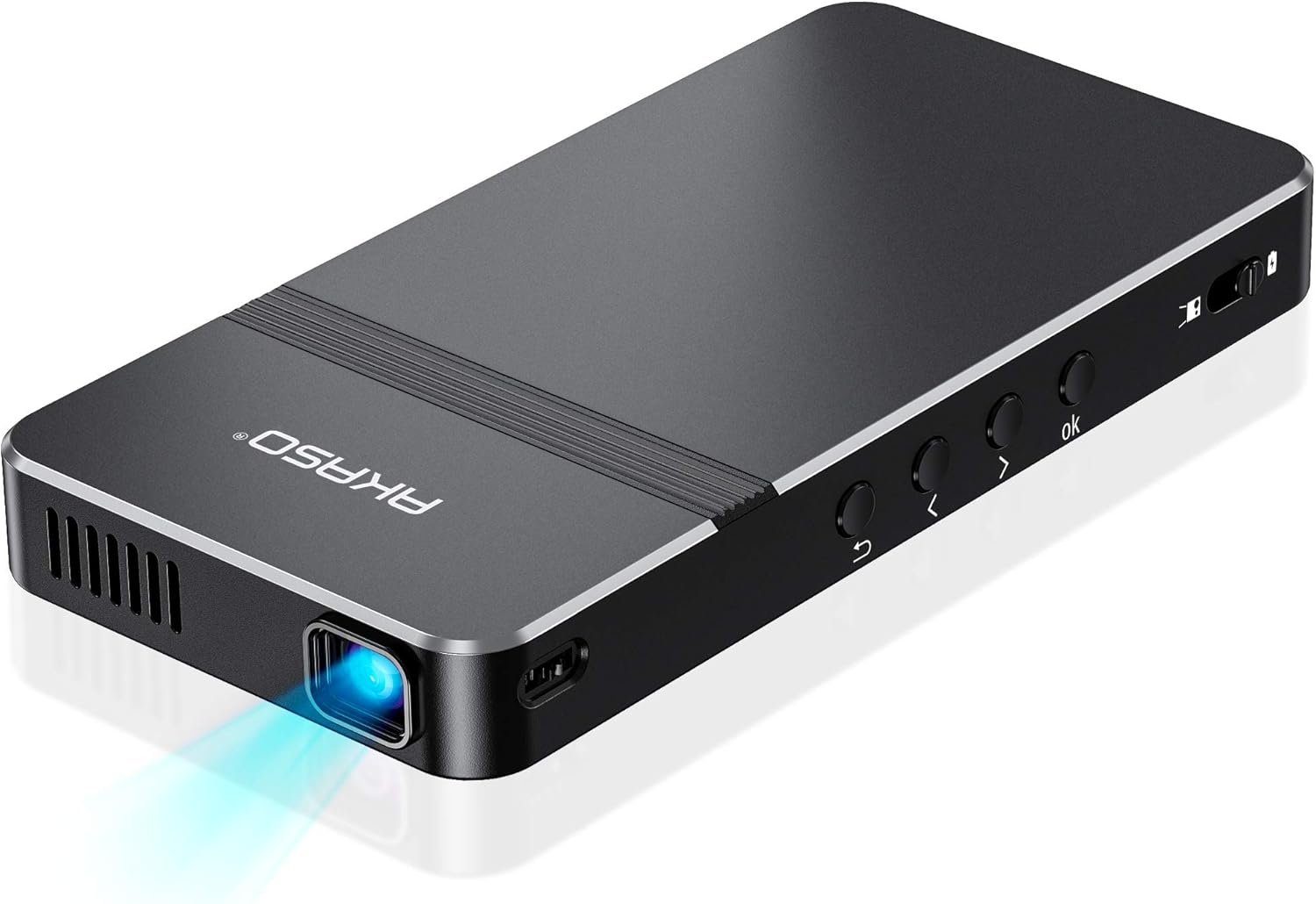 AKASO Mini DLP Pocket Projector 1080P with WiFi |
9.5/10 | Buy on Amazon | |
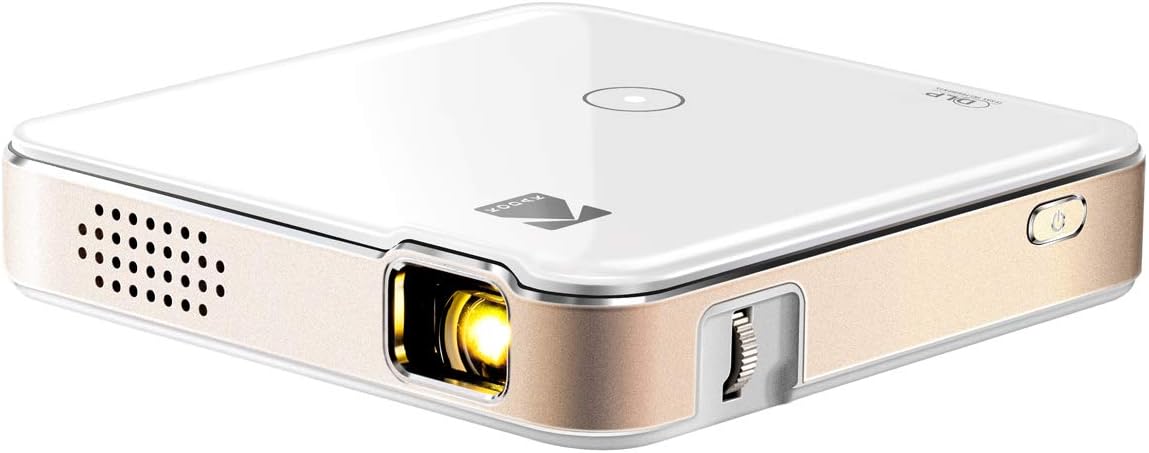 KODAK Luma 150 Mini Portable Projector |
9.5/10 | Buy on Amazon | |
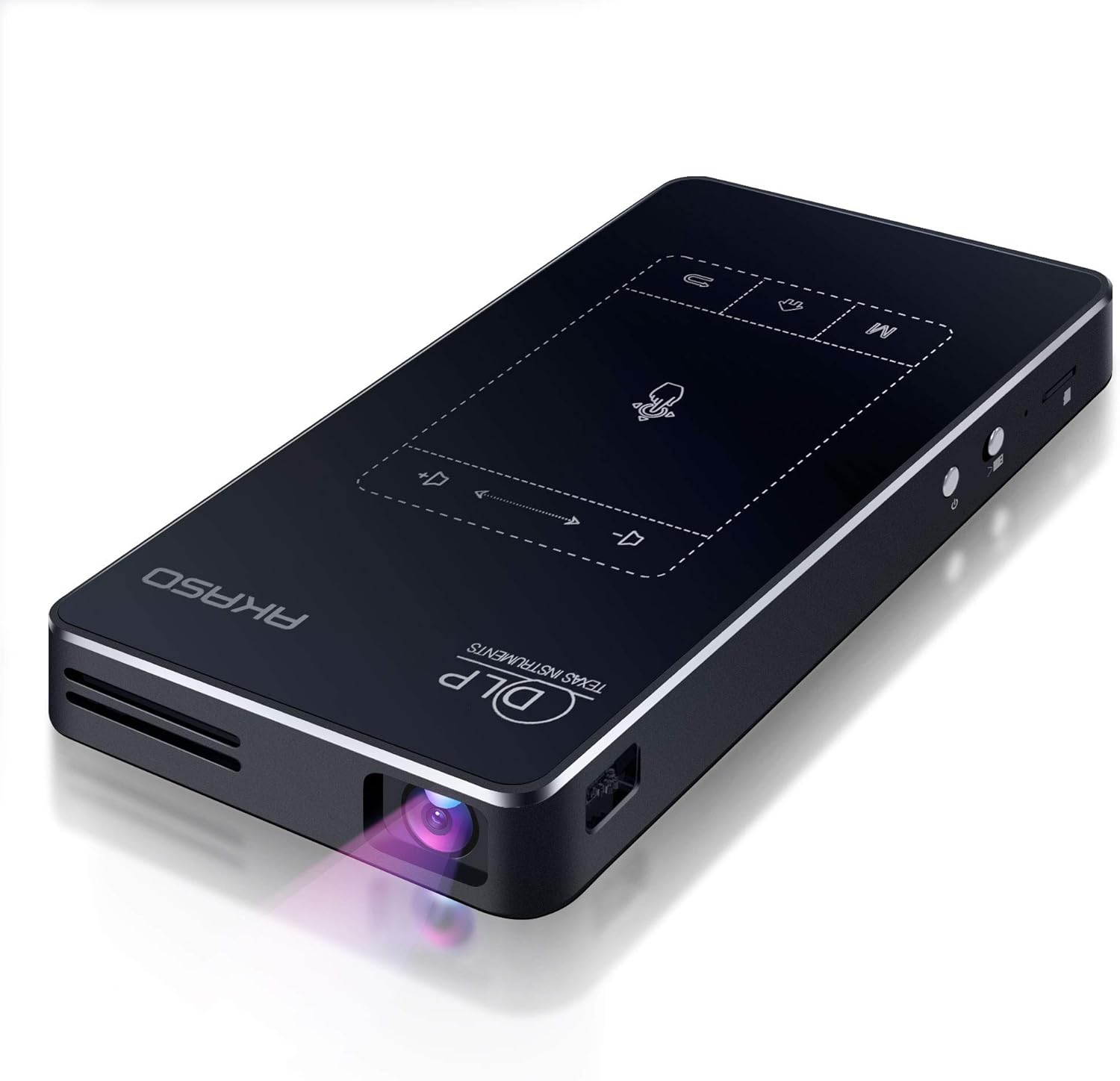 AKASO WT50 Mini Portable DLP Projector with WiFi |
9.5/10 | Buy on Amazon | |
| Prime |
 KODAK Luma 75 Mini Projector |
9.5/10 | Buy on Amazon |
 Sony MP-CD1 Pocket Pico Projector |
9.4/10 | Buy on Amazon | |
| Prime |
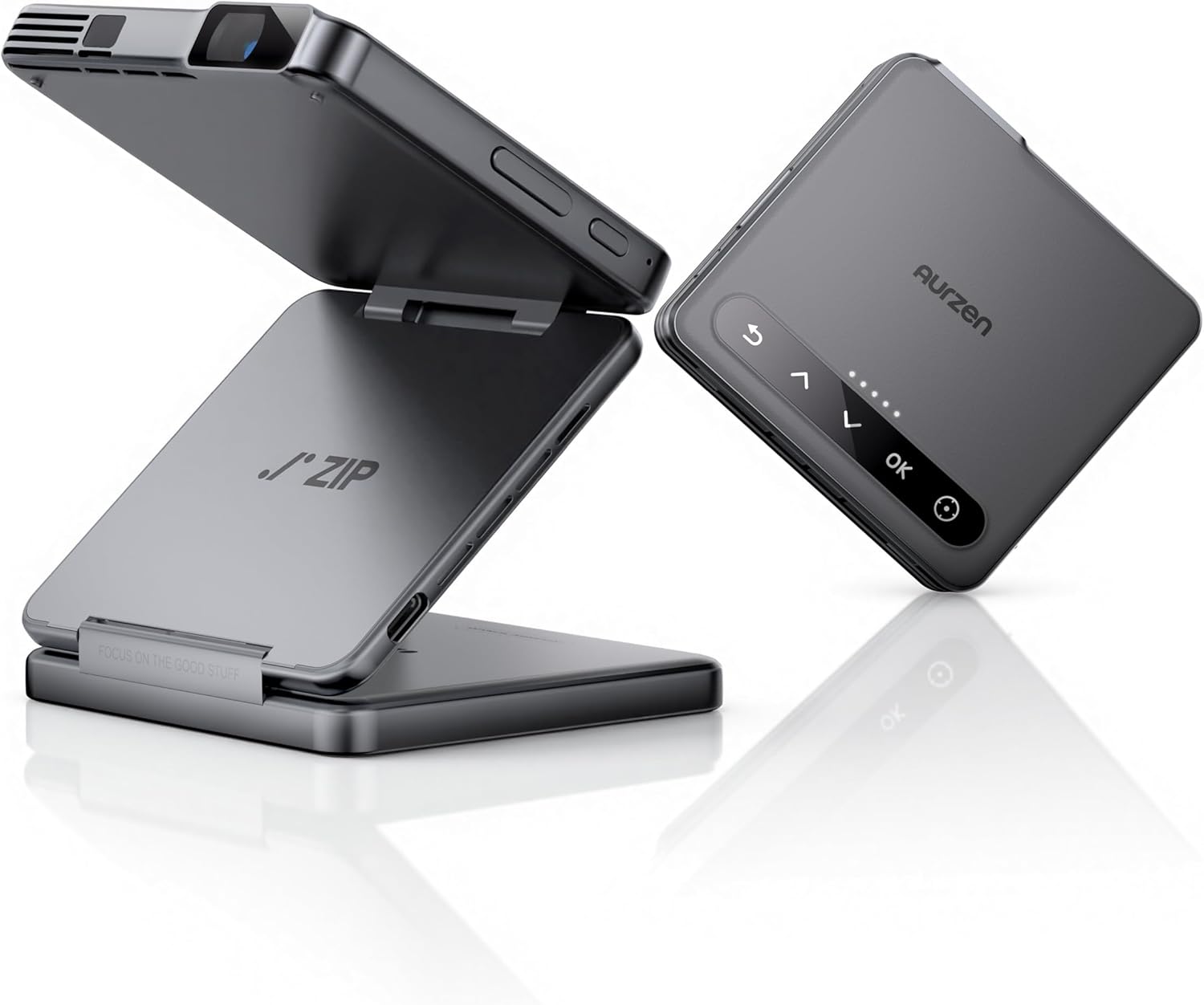 Aurzen ZIP Tri-Fold Mini Projector |
9.3/10 | Buy on Amazon |
Pros
- Compact, well-built design that's easy to carry and store
- Auto keystone and auto focus simplify picture alignment
- No Wi-Fi/Bluetooth means fewer connectivity headaches or lag
- Good picture quality when powered via external USB power source
- Comes with a metal stand and Lightning adapter for added convenience
Cons
- Resolution drops significantly (640x360) when powered directly from a phone
- No built-in speaker, requires external audio setup for sound
- Keystone correction only works vertically, not horizontally
The 8849PRO MARS Mini Projector is a compact DLP projector designed for users who want straightforward, cable-based video projection without the complications of Wi-Fi or Bluetooth setup. It's aimed at casual movie watchers, travelers, and anyone needing a quick presentation tool that works directly with a smartphone or laptop via USB-C.
Pros
- Excellent value at budget price with premium features like WiFi 6 and electric focusing
- Native 1080P resolution delivers sharp, clear images with above-average brightness for the category
- Built-in apps eliminate need for external streaming devices, simplifying setup and reducing clutter
- Compact 8x4x4 inch design makes it genuinely portable for multiple rooms or outdoor use
- Versatile connectivity supports nearly any device including gaming consoles and mobile phones
Cons
- 4K compatibility requires external 4K source devices, not true native 4K projection
- Bluetooth audio only, cannot mirror audio from smartphones wirelessly to the projector
- 300 ANSI lumens may struggle with ambient light in very bright rooms during daytime
The YGSKK mini projector is a compact home theater solution designed for bedroom entertainment, outdoor movie nights, and casual use in apartments or dorms. It combines practical features like built-in streaming apps and WiFi 6 connectivity with a genuinely portable form factor, making it ideal for users who want big-screen entertainment without professional installation or complex equipment.
The standout technical features deliver real performance improvements over similarly-priced competitors. Native 1080P resolution paired with 300 ANSI lumens brightness produces noticeably sharp, vivid images, while WiFi 6 support ensures stable streaming without the buffering and disconnection issues common in budget projectors. The electric auto-focus system is a game-changer, delivering crisp focus in seconds via remote control rather than requiring manual lens adjustment.
Build quality reflects the budget-friendly price point, but the design is thoughtful where it matters. The 210-degree rotating base provides genuine flexibility for ceiling projection or unconventional mounting, and the compact 8x4x4 inch chassis makes it easy to move between rooms. Built-in stereo speakers handle audio adequately for casual viewing, though connecting external speakers via Bluetooth is recommended for better sound quality.
Limitations exist primarily in brightness for daytime use and the lack of true 4K native support, though 4K compatibility via external devices is a nice bonus. The inability to mirror Bluetooth audio from phones is a minor inconvenience, but HDMI and USB connectivity more than compensate. The 50-200 inch projection range is genuinely useful, scaling from intimate bedroom viewing to larger outdoor gatherings.
Final verdict: The YGSKK mini projector delivers exceptional value for budget-conscious buyers seeking portable entertainment with modern conveniences. WiFi 6, electric focus, and built-in apps make it significantly more user-friendly than older budget models. Best suited for indoor entertainment, small outdoor events, and users prioritizing ease of use over professional-grade specifications.
Display and Image: Native 1080P resolution, 4K compatible, 300 ANSI lumens brightness, 50-200 inch projection range, 4.92-17 feet projection distance
Connectivity: WiFi 6/5G/2.4G, Bluetooth 5.3, HDMI, USB, 3.5mm audio jack, wireless smartphone mirroring (iPhone and Android)
Focus and Adjustment: Electric auto-focus with remote control, 210-degree rotating base, adjustable projection angle
Built-in Features: Streaming apps (YouTube, Prime Video, Hulu), app store, stereo speakers, J-Share wireless connection technology
Compatibility: PS5/PS4, Xbox, TV sticks, TV boxes, laptops, USB drives, DVD players, external hard drives, smartphones
Physical Dimensions: 8 x 4 x 4 inches, portable and lightweight design
Support: 3-year warranty, 24/7 technical support
Who Should Buy This? Budget-conscious buyers seeking portable entertainment for bedrooms, apartments, outdoor gatherings, or travel. Ideal for those wanting built-in streaming without external devices, and users who value ease of use with electric focusing and wireless connectivity.
Room Brightness Considerations: The 300 ANSI lumens brightness performs best in dimmed or dark environments. For daytime or well-lit rooms, consider darker curtains or blinds for optimal image quality and brightness impact.
Streaming Setup: Built-in apps work best with stable WiFi 6 or 5G connections. Place the projector within reasonable range of your router for consistent performance. Both phone and projector must be on the same network for wireless mirroring to function.
Device Compatibility: For 4K content, connect 4K-capable devices (Fire TV 4K, compatible USB drives, 4K streaming sticks) via HDMI. For audio, use Bluetooth speakers or the 3.5mm jack rather than relying on projector speakers for movie nights. The projector does not support Bluetooth audio from smartphones.
Projection Distance Planning: Verify your room allows 4.92-17 feet of projection distance. The 210-degree base enables ceiling projection, making it adaptable to most room layouts. Measure your wall or ceiling space to determine optimal screen size before purchasing.
Pros
- Official Netflix certification ensures a smooth, fully supported streaming experience
- Ultra-compact form factor makes it genuinely portable for travel, camping, or room-to-room use
- Google TV ecosystem provides a familiar, content-rich smart platform
- Fast 3-second auto-alignment eliminates tedious manual setup
- Dual-purpose as a Bluetooth speaker for music playback up to 8 hours
Cons
- 200 ANSI Lumens brightness is relatively low, limiting performance in well-lit rooms
- 2.5-hour battery life (eco mode) may not cover longer films or extended sessions without a power source
- 400:1 contrast ratio is modest compared to competing models in the Nebula lineup
The NEBULA Capsule 3 is an ultra-portable 1080p projector built for people who refuse to compromise on entertainment just because they are away from home. Running on Google TV with official Netflix certification, it targets cord-cutters, travelers, van-lifers, and anyone who wants a cinema-scale screen without a permanent installation.
The standout feature here is the seamless smart TV experience. Because Capsule 3 is a licensed Netflix device, content plays natively at full quality without workarounds, and Google TV layers in Amazon Prime Video, YouTube, and thousands of other apps on top. Casting from a phone or laptop is also supported, giving you multiple ways to get content onto that 120-inch screen.
In terms of design, the Capsule 3 is remarkably compact at just over three inches wide, making it easy to slip into a bag. The 180-degree foldable stand is a thoughtful addition, allowing projection at almost any angle. Setup is handled automatically in about three seconds thanks to built-in autofocus, keystone correction, and obstacle avoidance, so you spend more time watching and less time adjusting.
The main trade-off is brightness. At 200 ANSI Lumens, the Capsule 3 performs best in darkened rooms or outdoor evenings. Bright living rooms or sunlit spaces will wash out the image noticeably. The 2.5-hour battery life in eco mode is enough for most films, but longer content will require a power connection, and the 400:1 contrast ratio is on the lower end for this price range.
Overall, the NEBULA Capsule 3 is a well-rounded portable projector that prioritizes convenience and smart features over raw brightness. It is the right pick for users who want a true plug-and-play big-screen experience in a travel-friendly package, as long as they can control the ambient lighting.
Resolution: 1080p Full HD | Brightness: 200 ANSI Lumens | Contrast Ratio: 400:1 | Optical Engine: DLP + LED
Operating System: Google TV (Official Netflix Certified) | Battery Life: Up to 2.5 hours video (ECO Mode), up to 8 hours audio | Speaker: 8W Dolby Digital
Max Screen Size: 120 inches | Dimensions: 3.1 x 3.1 x 6.3 inches | Connectivity: Wi-Fi, HDMI, Bluetooth | Stand: 180-degree foldable
Smart Features: Auto keystone correction, autofocus, obstacle avoidance, screen fit (all in 3 seconds) | Control Options: Voice remote, Nebula app, on-board controls | Multiple User Profiles: Supported via Google TV
The Capsule 3 is best suited for users who prioritize portability and smart streaming over maximum brightness. If your viewing environment is a bedroom, a dark living room, a tent, or a van, this projector will deliver a genuinely impressive experience. It is not the right tool for bright conference rooms or outdoor daytime use.
If you need more brightness, the Nebula P1 offers 650 ANSI Lumens in a slightly larger body, though it lacks a built-in battery. The Nebula Capsule 3 Laser is a closer sibling with laser optics and better contrast, but at a higher price point. For 4K content, the Nebula Cosmos 4K SE is the step-up option in the same ecosystem.
Battery-powered projectors like the Capsule 3 are ideal as a secondary screen for travel rather than a full replacement for a home theater setup. Pair it with a small Bluetooth speaker if you need louder audio for group settings, as the built-in 8W speaker works well for personal viewing but may feel limited for larger gatherings.
Before first use, Nebula recommends updating to the latest firmware for the best streaming compatibility and system stability. This is a quick one-time step that significantly improves the out-of-the-box experience and is worth doing before your first movie night.
Pros
- Genuinely pocket-sized and lightweight design makes it one of the most portable projectors available
- Wireless mirroring via AirPlay and EZCast offers flexible, cable-free screen sharing from smartphones
- Long LED lamp lifespan of up to 30,000 hours means low maintenance and lasting value
- Tripod and remote control included in the box add real convenience right out of the package
- Versatile enough for entertainment, business presentations, and creative hobby use
Cons
- At 50 ANSI lumens, brightness is limited and a dark environment is required for a quality image, making it unsuitable for well-lit rooms
- Copyrighted streaming content from Netflix, Hulu, and similar services cannot be mirrored wirelessly or via HDMI, which is a notable restriction for streaming users
- Battery runtime of up to 2.5 hours may not be enough for longer movies without access to a power source
The AKASO Mini Cookie Projector is a palm-sized DLP pico projector designed for users who want big-screen experiences without the bulk of a traditional projector. It targets a wide audience ranging from casual movie watchers and gamers to small business presenters and creative hobbyists who use it for cookie decorating or art tracing. Its pocket-friendly form factor and built-in battery make it one of the more genuinely portable options in its price range.
On the performance side, the projector supports 1080P resolution and delivers a 1000:1 contrast ratio, which produces sharp and detailed images when used in a properly darkened room. The 50 ANSI lumen output is modest, and AKASO themselves recommend a dark environment for the best results, so this is not a projector for bright living rooms or outdoor daytime use. That said, the DLP LED lamp is rated for up to 30,000 hours, which is a strong long-term value proposition.
Connectivity is a genuine strength here. The updated Type-C port joins HDMI, AV, and Micro SD inputs, and wireless mirroring is supported through AirPlay and EZCast for easy smartphone casting. The included tripod and remote control add a layer of everyday convenience that many competing mini projectors skip. Setup is straightforward and the package feels well-rounded for the price.
The most significant drawback is the streaming limitation. Copyrighted content from platforms like Netflix and Hulu cannot be cast wirelessly or through HDMI, which will frustrate users who primarily want to stream. The 2.5-hour battery life is also a consideration for anyone planning to watch full-length films without a nearby outlet. These are real-world limitations worth factoring into your decision.
Overall, the AKASO Mini Projector earns its strong rating by delivering a compact, versatile, and well-equipped package at a reasonable price. It is best suited for users who value portability and creative flexibility over raw brightness. If your use case involves a dark room, short to medium-length content, and a mix of wired and wireless sources, this projector delivers solid value and a genuinely fun experience.
Projection Technology: DLP (Digital Light Processing) with LED light source rated up to 30,000 hours. Supports native and input resolution up to 1080P Full HD.
Brightness and Contrast: 50 ANSI lumens brightness with a 1000:1 contrast ratio. Best performance achieved in dark or dimly lit environments. Screen size adjustable up to 150 inches.
Connectivity: Wired inputs include Type-C (updated from Micro USB as of October 2025), HDMI (cable included), AV, and Micro SD card slot. Wireless connectivity supported via AirPlay and EZCast for screen mirroring from mobile devices.
Battery and Portability: Built-in rechargeable battery with up to 2.5 hours of playback time. Compact pocket-sized form factor with integrated stereo speakers. Tripod and remote control included in the box.
Important Note: Copyrighted streaming content from services such as Netflix and Hulu cannot be mirrored wirelessly or via HDMI cable due to DRM restrictions. A dark environment is strongly recommended for optimal image quality.
Who should buy this projector? The AKASO Mini Projector is an excellent choice for travelers, students, and hobbyists who need a portable display solution without committing to a full-sized unit. It is particularly well-suited for people who want a projector for creative projects like cookie decorating, art tracing, or craft work, as its clear and adjustable image projection fills a niche that most projectors ignore.
Is it good for movies? It can handle movies well in a dark room, but the 50 ANSI lumen brightness means ambient light will wash out the image significantly. Users who primarily want to stream Netflix or Hulu should be aware that DRM restrictions prevent wireless and HDMI mirroring of that content. Local media files via Micro SD or HDMI from a laptop work without issue.
Is it good for business use? Yes, for small meetings and informal presentations it works well. The included tripod and remote control make it easy to set up and operate independently. For larger conference rooms or presentations in bright environments, a higher-lumen projector would be a better fit.
What accessories are included? The box includes an HDMI cable, a tripod, and a remote control, which is a generous bundle for a mini projector. This means you can get started right away without purchasing additional accessories for most common use cases.
Pros
- Exceptionally portable at 7.75 oz with a slim, pocket-friendly profile
- Versatile connectivity covering wired HDMI, USB, microSD, and wireless AirPlay and Miracast
- Built-in battery eliminates the need for a power outlet during short viewing sessions
- DLP display technology produces accurate colors and sharp contrast for its class
- Tripod-compatible base adds flexibility for presentations and fixed-angle setups
Cons
- Native resolution of 854x480 is modest, so image sharpness may disappoint viewers expecting true HD clarity
- At 60 ANSI lumens, brightness is limited and performs best only in darkened rooms
- Copyrighted streaming content from Netflix, Hulu, and similar services cannot be mirrored wirelessly
The KODAK Luma 150 is a pocket-sized DLP projector designed for people who want big-screen entertainment or professional presentations without carrying bulky equipment. Weighing just 7.75 oz and measuring under an inch thin, it targets travelers, remote workers, educators, and casual home entertainers who value convenience above all else.
The projector supports screen sizes up to 150 inches and connects to virtually any device through HDMI, USB, microSD, AirPlay, or Miracast. This breadth of connectivity is one of its strongest real-world advantages, letting users switch between a laptop for work slides, a smartphone for photos, or a streaming stick for movies with minimal fuss. DLP technology ensures colors remain punchy and contrast stays respectable at 1000:1 for a device of this size.
Build quality feels solid and purposeful for its compact form factor. The illuminated onboard touch controls are intuitive, the manual focus wheel is easy to adjust, and the included HDMI and micro-USB cables mean you can get started right out of the box. The integrated 1.5W speaker is adequate for small rooms but will benefit from a Bluetooth speaker in larger settings.
The most notable drawback is brightness. At 60 ANSI lumens, the Luma 150 requires a darkened environment to produce a satisfying image, which limits spontaneous daytime use. The native 854x480 resolution also means that while 1080p input is supported, the projected image is not truly full HD. Additionally, wireless mirroring is restricted to non-DRM content, so Netflix and Hulu users will need a physical streaming device like a Firestick plugged in via HDMI.
Overall, the KODAK Luma 150 earns its strong community rating as a capable, highly portable projector for its niche. It is not a replacement for a home theater projector, but for on-the-go presentations, casual movie nights in a dark room, or sharing content with a small group, it delivers genuine value in a remarkably compact package.
Technology: DLP 0.3-inch EM DMD. Native Resolution: 854 x 480. Input Support: Up to 1080p. Brightness: 60 ANSI lumens. Contrast Ratio: 1000:1. Display Colors: 16.7 million.
Aspect Ratio: 16:9. Max Screen Size: 150 inches. Throw Ratio: 1:2. Focus: Manual. LED Lifespan: 3,000 hours. Operating System: Linux.
Speaker: 1.5W built-in. Battery Life: Up to 2.5 hours. Connectivity: HDMI, USB, microSD, AirPlay, Miracast. Dimensions: 3.9 x 3.9 x 0.89 inches. Weight: 7.75 oz. Tripod Mount: Yes, standard threading included.
If you are considering the KODAK Luma 150, the most important question to ask is how and where you plan to use it. This projector excels in controlled, low-light environments such as a darkened bedroom, a conference room with blinds drawn, or an outdoor backyard setup after sunset. Users expecting to project in bright or sunlit rooms will likely find the 60 ANSI lumen output insufficient.
For business users, the Luma 150 is a compelling travel companion. Its tripod mount, near-universal connectivity, and pocket-friendly size make it easy to run a polished presentation from a laptop or USB drive without relying on a venue to supply equipment. Pair it with a small Bluetooth speaker for larger meeting rooms where the built-in audio may fall short.
Home entertainment users should note the DRM limitation on wireless mirroring. If your primary goal is streaming Netflix or Disney Plus wirelessly, you will need to plug in a dedicated streaming stick via HDMI. For personal video libraries, YouTube, or downloaded content, the wireless casting works smoothly. Consider whether the 2.5-hour battery fits your typical viewing session, as longer films may require a power connection.
Pros
- Extremely compact and lightweight design makes it one of the most portable projectors in its class
- DLP technology delivers cleaner, sharper images than comparable LCD mini projectors at this price point
- Built-in Android 9.0 eliminates the need for a separate streaming device, adding great standalone value
- Multiple connectivity options including HDMI, USB, Micro SD, Bluetooth, and wireless mirroring cover virtually every use case
- Long 30,000-hour lamp life means you won't need to worry about bulb replacements for years
Cons
- Native resolution is WVGA (854x480), so while it supports 1080p input, the actual projected image is not true 1080p and may look soft on larger screens
- At only 50 ANSI lumens, brightness is limited and the projector performs best in dim or dark environments, making daytime or well-lit room use difficult
- Battery life of approximately 2 hours may not be enough for longer movies without access to a power source
The AKASO WT50 is a palm-sized DLP projector designed for users who want big-screen entertainment without the bulk of a traditional projector. Built around an Android 9.0 system with built-in WiFi, Bluetooth, and a rechargeable battery, it targets movie fans, travelers, outdoor enthusiasts, and even creative hobbyists who need a versatile, go-anywhere display solution.
Performance-wise, the WT50 uses DLP technology with a 0.2 DMD chip, which produces noticeably cleaner and sharper images than LCD-based mini projectors at this price. Colors are vivid and the diffuse reflection design is gentler on the eyes during extended viewing sessions. That said, the native resolution is WVGA (854x480), meaning content is upscaled rather than displayed in true 1080p, so image sharpness on very large screens may not match higher-end projectors.
The build quality is a genuine highlight. The all-metal aluminum alloy casing feels premium and durable for its size, and at just 0.64 lbs, it is remarkably light. The compact footprint, roughly the size of a large smartphone, means it fits in a jacket pocket or small bag with ease. The included mini tripod and remote control add practical value right out of the box.
There are a few trade-offs worth noting. At 50 ANSI lumens, the brightness is modest, and the projector really shines only in dim or dark environments. Outdoor use at dusk or night works well, but daytime use in a lit room will result in a washed-out image. The 2-hour battery life is also a limitation for feature-length films, though a power bank or wall outlet can extend usage. Additionally, Netflix and Hulu cannot be wirelessly mirrored due to DRM restrictions, though you can download their apps directly via Google Play as a workaround.
Overall, the AKASO WT50 is an impressive feat of miniaturization and a genuinely useful portable projector for its price. It is best suited for users who prioritize portability and versatility over raw brightness or pixel-perfect resolution. Whether you are hosting a backyard movie night, decorating cookies with projected templates, or watching videos while camping, the WT50 delivers a compelling and creative experience in a remarkably small package.
Display Technology: DLP (0.2 DMD Optically Processed Chip)
Native Resolution: WVGA 854 x 480, supports up to 1920 x 1080p input
Brightness: 50 ANSI Lumens
Aspect Ratio: 16:9
Projection Size: 30 to 120 inches
Projection Ratio: 1.19:1
Operating System: Android 9.0
WiFi: Dual-band 2.4G and 5G (802.11ac)
Bluetooth: Yes
Screen Mirroring: AirPlay, Miracast, EShare, DLNA
Battery: 3.7V, 5000mAh built-in rechargeable
Battery Life: Approximately 2 to 3 hours
Lamp Life: 30,000 hours
Connectivity: HDMI, 2x USB 2.0, Micro SD (up to 32GB), 3.5mm Audio Jack
Keystone Correction: Automatic, up to 40 degrees
Dimensions: 5.5 x 3.1 x 0.8 inches
Weight: 0.64 lbs
Casing Material: Aluminum Alloy
In the Box: WT50 Projector, Remote Control, Mini Tripod, HDMI Cable, Charger, Quick Reference Guide
If you are considering the AKASO WT50, it helps to understand exactly what kind of projector this is and who it suits best. This is a mini projector built for portability and convenience, not a home theater replacement. If your priority is the sharpest possible 1080p image in a bright living room, a larger, higher-lumen projector will serve you better.
The WT50 is ideal for users who value portability above all else. Campers, travelers, and dorm room users will appreciate the battery-powered design and pocket-friendly size. The built-in Android system is a major convenience, removing the need to carry a separate Chromecast, Fire Stick, or laptop just to stream content. Simply connect to WiFi and download your preferred apps directly onto the projector.
For creative applications, the WT50 has found a surprisingly enthusiastic following. Cookie decorators, mural artists, and holiday decorators use it to project templates and designs onto surfaces with precision. The compact form and short throw distance make it well suited for these close-range creative tasks.
A few practical tips before buying: always use the projector in a dim or completely dark environment for the best image quality. Keep the projection distance between 1 and 1.5 meters for the sharpest focus. For Netflix or Hulu, download the apps directly via Google Play rather than attempting wireless mirroring. And if you plan extended sessions, keep a power bank or charger nearby to supplement the built-in battery.
Pros
- Extremely portable and lightweight design
- Simple, button-based plug-and-play operation
- Multiple input options (HDMI, USB, MicroSD)
- Built-in speaker eliminates need for extra audio equipment
- Tripod-compatible for flexible setup
Cons
- Native display resolution (640 x 360) is far below true 1080p, so fine detail will look soft on larger screens
- Low brightness (35 ANSI lumens) means it only performs well in dark or dim rooms
- Short battery-dependent playback window (up to 1.5-2 hours) limits extended use without a power source
The KODAK Luma 75 is a pocket-sized DLP projector aimed at casual users who want an ultra-portable way to enjoy movies, photos, or games on a bigger screen. It's ideal for travelers, students, or anyone who wants a fun, budget-friendly entertainment option rather than a serious home theater replacement.
Its standout feature is sheer portability, weighing just 6.35 ounces and small enough to slip into a bag or pocket. The DLP engine supports 16.7 million colors and accepts 1080p input, but the display's native resolution of 640 x 360 means actual output detail is closer to standard definition, especially noticeable at larger projection sizes.
Build quality feels solid for its size, with a simple button interface and tripod mount threading on the bottom for stable setups. The onboard media player supports MicroSD, USB, and HDMI, making it easy to plug in a laptop, streaming stick, or gaming console without fuss.
The main drawbacks are its low brightness rating of 35 ANSI lumens, which restricts good use to dark or dim rooms, and a fairly short built-in playback time. It's also worth noting the marketing '1080p' label refers to input compatibility, not native output sharpness.
Overall, the KODAK Luma 75 delivers on its promise as a fun, ultra-portable pocket projector for casual viewing, but buyers expecting sharp, true HD detail or bright daytime performance should look elsewhere. For quick backyard movie nights or travel entertainment, it's a solid, affordable choice.
Technology: DLP Optical Engine, LED Display
Resolution: Supports 1920 x 1080 input, native display output of 640 x 360
Brightness: 35 ANSI lumens, best used in dark or dim rooms
Screen Size: Up to 100 inches
Connectivity: HDMI, USB 2.0, MicroSD, 3.5mm audio output
Dimensions: 3.46" x 3.46" x 0.91", Weight: 6.35 ounces
Extras: Built-in 1W speaker, tripod mount threading, onboard media player
Pros
- Extremely compact and lightweight, easy to carry daily
- Fast boot time and simple HDMI setup
- Solid picture quality and sharp focus for its size, per user reviews
- Auto keystone correction eliminates need for tripod or manual adjustment
- Includes carrying case, HDMI cable, and charging accessories
Cons
- Ships with zero charge and can take up to 30 minutes before it will power on, which isn't clearly explained in the manual
- 105 ANSI lumens brightness is modest and best suited for dim rooms, not bright environments
- 2-hour battery life may not cover longer movies or extended presentations
The Sony MP-CD1 is a pocket-sized pico projector designed for business professionals, casual gamers, and movie enthusiasts who need a projector that travels well. Weighing under 10 ounces and small enough to slip into a bag, it's built for spontaneous presentations or impromptu movie nights on the go.
Its standout feature is portability paired with surprising performance: a 105 ANSI lumen output powered by Texas Instruments' IntelliBright technology allows for a bright, dynamic image up to 120 inches from a short throw distance. Reviewers praise the sharp focus and consistent picture quality, especially when paired with streaming dongles or devices like Roku and Fire TV Stick.
Build quality feels premium, with a solid, slightly weighty feel that several users appreciated as a sign of durability. The included carrying case is a thoughtful touch, allowing the device to charge while still protected, and the automatic keystone correction means you can set it on any flat surface without fumbling with a tripod.
The main drawback reported by users is a lack of clarity in the setup instructions, particularly regarding the initial charge time, since the unit arrives uncharged and needs about 30 minutes on the charger before it will power on. Additionally, at only 105 lumens and a 2-hour battery life, it's better suited for dim rooms and shorter viewing sessions rather than bright environments or lengthy use.
Overall, the Sony MP-CD1 delivers on its promise as a genuinely portable, easy-to-use projector for business pitches, casual entertainment, and travel. It's not a replacement for a full-size home theater projector, but for its category, it offers dependable performance, smart features like auto keystone correction, and the kind of grab-and-go convenience that makes it a worthwhile pick for mobile professionals and light entertainment use.
Pros
- Extremely compact and lightweight tri-fold design
- Fast, accurate auto focus and keystone correction
- Easy no-Wi-Fi screen mirroring for quick setup
- Doubles as a Bluetooth 5.4 speaker
- Backed by a 2-year warranty and SGS-verified brightness rating
Cons
- Only 100 ANSI lumens and a 300:1 contrast ratio limit use to dim or dark rooms
- Battery lasts just 1.5 hours in eco-mode, so longer sessions require plugging in
- DRM-protected streaming apps require an additional CastPlay Pro dongle sold separately
The Aurzen ZIP is a pocket-sized DLP projector aimed at people who value portability above all else. Its tri-fold, wallet-size design and built-in stand make it a natural fit for travelers, crafters, and anyone who wants a grab-and-go screen without lugging around a full-size projector.
Where the ZIP shines is in its smart engineering: ToF-based auto focus continuously adjusts the image 30 times per second, keeping content sharp even when the projector is moved or repositioned, which is especially useful for tracing, cookie decorating, or sewing projects. One-click mirroring works without Wi-Fi, and the vertical mode is a nice touch for viewing social media or sports clips in their native aspect ratio.
Build quality feels purposeful rather than premium, with a Dark Grey plastic shell that prioritizes weight savings over rigidity. At just 0.62 lb and roughly the size of a large smartphone when folded, it genuinely disappears into a bag or even a large pocket, and the integrated stand removes the need for extra accessories.
The tradeoffs are clear once you look past the form factor: 100 ANSI lumens and a 300:1 contrast ratio mean this is not a projector for bright rooms or detailed movie nights, and the 1.5-hour battery life is best supplemented with wall power for longer use. Streaming apps with DRM protection also require a separately sold CastPlay Pro dongle, and Google Cast devices are not supported at all.
Overall, the Aurzen ZIP is best understood as a creative and travel companion rather than a home theater replacement. If you want an ultra-portable screen for tracing, casual mirroring, or quick entertainment on the move, it delivers convincingly; if you need strong brightness or all-day battery life, look elsewhere.
The ZIP uses DLP display technology with a native resolution of 1280 x 720 (720p) and supports 1080p input signals. Brightness is rated at an SGS-certified 100 ANSI lumens, with a 300:1 contrast ratio and a maximum image size of 125 inches at a 9.8-foot throw distance.
Connectivity includes Bluetooth 5.4 for audio pairing and USB-C for both charging and DisplayPort Alt Mode mirroring. The built-in 5000mAh battery supports up to 1.5 hours of eco-mode playtime and can be recharged via USB-C PD, with simultaneous charge-and-play requiring a 24W or higher adapter.
Physically, the projector measures 3.3 x 3 x 1 inches when folded and weighs 0.62 lb, making it one of the smallest DLP projectors on the market. It ships with a Type-C fast charging cable, user manual, and welcome card, and is backed by a 2-year manufacturer warranty.
How to Choose Your Travel DLP Projector
Prioritize Portability and Battery Life
True travel projectors must be compact and light. Look for models that can easily fit in a backpack or even a large pocket. Equally important is the built-in battery life. You need enough power to watch a full movie without being tethered to an outlet. Some models offer eco modes to extend playtime. Consider how you will use it. A short camping trip might need less battery than a long flight delay. For dedicated battery performance, our list of the best rechargeable projectors for travel offers focused insights.
Evaluate Connectivity and Smart Features
Your projector should connect seamlessly to your devices. Built-in Wi-Fi and Bluetooth simplify wireless streaming from phones and tablets. Some models include full Android systems with app stores. This turns the projector into a standalone entertainment hub. Others rely on simple HDMI or USB-C connections. Decide if you want a smart device or a simple plug-and-play display. Remember, certain streaming services have digital rights management restrictions on mirroring.
Assess Image Quality and Setup Ease
DLP technology generally offers good contrast and color accuracy. Look for native 720P or 1080P resolution for a sharp picture. Brightness, measured in ANSI lumens, is critical for use outside of pitch-black rooms. Automatic features are a traveler’s best friend. Auto-focus and keystone correction ensure a perfect rectangle quickly. You will not want to fiddle with manual knobs in a new environment every time. If high definition is your priority, see our review of the best full HD projectors for travel.
Consider Versatility and Durability
A travel projector should be more than just for movies. Many models double as creative tools for tracing art or decorating cookies. Some feature unique folding designs or built-in stands for flexible placement. Think about the build quality. A device that travels needs to withstand the bumps of a journey. A robust casing and reliable components are essential. For options that excel in wireless convenience, check out the best wireless projectors for travel.
Final Thoughts
Choosing the right DLP projector transforms how you enjoy media away from home. Whether you prioritize ultimate smart features in a model like the NEBULA Capsule 3 Portable Projector or crave the ultra-compact, creative versatility of the Aurzen ZIP Tri-Fold DLP Pocket Mini Projector, there is a perfect travel companion on this list. Consider your primary use case, pack it in your bag, and get ready for cinema anywhere.
Frequently Asked Questions
Can I use Netflix on a portable travel projector?
Yes, but the method varies. Some projectors have certified Netflix apps built into their Android TV system. Others require you to plug in a streaming stick via HDMI. Wireless screen mirroring from your phone often does not work with Netflix due to copyright protection. Always check the product specifications for confirmed streaming app support.
How bright does a travel projector need to be?
For the best travel projectors, brightness between 50 and 200 ANSI lumens is common. This is sufficient for use in dimly lit or dark rooms. If you plan to use it outdoors at dusk or in a room with some ambient light, aim for the higher end of that range. Remember, no mini projector is truly daylight-bright. Managing ambient light is key to a good image.
What is the advantage of DLP over LCD for portable projectors?
DLP projectors often have a more compact optical engine, allowing for smaller device sizes. They typically offer better contrast with deeper blacks and are less prone to the “screen door” pixel effect. DLP chips also have a sealed design, which makes them more resistant to dust, a valuable trait for a device that travels. For a wide selection of compact models, visit our Mini / Pocket Projectors category page.
Are these projectors good for business presentations on the go?
Absolutely. Many models reviewed here are excellent for mobile professionals. Features like automatic keystone correction, multiple connectivity options (HDMI, USB-C), and compact form factors make them ideal for impromptu client meetings or conferences. Some even include a tripod mount for stable placement on any surface.


Write Your Review
No reviews yet. Be the first to share your experience!