

Your smartphone holds a world of entertainment, from streaming services to personal photos and videos. But sometimes, you want to share that content on a screen bigger than your hand. That’s where a portable projector for smartphones comes in, transforming any wall into a personal cinema without the need for bulky equipment or a complicated setup. This guide reviews six of the most capable models available, all designed to connect effortlessly with your phone and deliver impressive results without stretching your budget.
| Pick | Product | AI Score | Buy |
|---|---|---|---|
| -13% OFF |
 VOPLLS Smart Mini Projector with Netflix |
9.8/10 | Buy on Amazon |
| -9% OFF |
 VISSPL 4K Google TV Projector with WiFi 6 |
9.6/10 | Buy on Amazon |
| -9% OFF |
 LYNCAST X7 2000 ANSI Smart Projector |
9.8/10 | Buy on Amazon |
| -25% OFF |
 Soundcore Nebula P1i Portable Projector |
9.5/10 | Buy on Amazon |
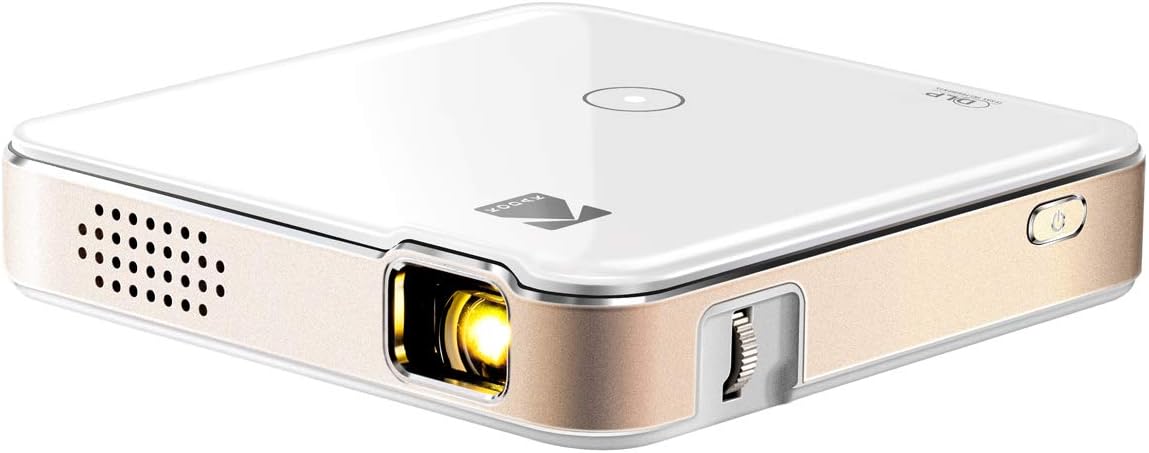 KODAK Luma 150 Mini Portable Projector |
9.5/10 | Buy on Amazon | |
 KODAK Luma 150 Mini Projector |
9.4/10 | Buy on Amazon |
Pros
- Built-in licensed streaming apps eliminate the need for extra devices
- Fast, accurate auto focus and keystone correction simplify setup
- Slim, lightweight design is easy to transport and position
- Certified brightness rating backed by honest measurement standards
- Reviewers consistently praise picture clarity and ease of use
Cons
- 320 ANSI lumens, while honestly rated, is still modest for bright rooms or large screens
- Built-in speaker sound is basic and likely needs an external audio device for best experience
- Bluetooth is output-only, so it can't be used as a receiver for external audio sources
The VOPLLS Smart Mini Projector is built for people who want a genuine streaming experience without juggling extra hardware. With Netflix, YouTube, and Prime Video officially licensed and pre-installed, it's ideal for students, casual movie fans, and anyone setting up a bedroom or backyard home theater on a budget.
The standout feature here is convenience: native 1080P resolution paired with HDR10+ and 4K upscaling produces a noticeably sharp picture, while the ISO-certified 320 ANSI lumens rating means the brightness claim is trustworthy rather than exaggerated. Auto focus locks in clarity within seconds, and the 6D keystone correction adjusts the image automatically even when the projector isn't perfectly centered, which reviewers confirm works smoothly in real-world use.
Design-wise, the 1.81-inch ultra-slim body and 360° rotating stand make this one of the more portable projectors in its class. It's easy to move between rooms, pack for travel, or angle upward for ceiling projection, and testers note it feels solid despite the lightweight build.
The main tradeoffs are typical for compact projectors: the built-in speaker is serviceable but basic, and while 320 lumens is honestly measured, it still performs best in dim to moderately lit rooms rather than full daylight. Bluetooth is limited to audio output only, so external sound upgrades are recommended for movie nights.
Overall, this projector delivers real value by combining licensed streaming apps, accurate auto-alignment, and a slim, travel-friendly design at a mid-range price. It's a smart choice for casual home theater setups, dorm rooms, or outdoor movie nights where simplicity and picture quality matter more than raw brightness.
Pros
- All-in-one smart projector eliminates the need for extra streaming devices
- Sharp, bright image quality praised consistently in customer reviews
- Fast and reliable auto focus and auto keystone setup
- Quiet operation suitable for bedroom and nighttime use
- Highly portable with flexible mounting and stand options
Cons
- Native resolution is 1080P, with 4K achieved through decoding rather than true native 4K
- Maximum throw distance of 10 feet may limit very large screen sizes in smaller rooms
- Remote does not include batteries, an easy detail to overlook out of the box
The VISSPL RD618 is a smart Google TV projector built for households that want a true all-in-one entertainment hub without juggling extra streaming devices. With 10,000+ apps built right in, it's aimed at families, movie enthusiasts, and casual gamers looking for a simple plug-and-play big-screen setup at home or outdoors.
Where this projector stands out is its combination of 3000 ANSI brightness, 4K decoding, and HDR10 support, which together produce a noticeably vivid and detailed picture, even in rooms with some ambient light. Reviewers consistently highlight the AI Auto Focus feature, noting that the image stays sharp automatically, and the 6D Auto Keystone correction removes the hassle of manual alignment that plagues many budget projectors.
Build quality feels solid for a portable unit, with a 360° adjustable stand that makes ceiling projection from bed or angled outdoor setups genuinely convenient. The 25dB cooling system is a thoughtful touch, keeping noise low enough for late-night viewing in shared bedrooms without a distracting fan hum in the background.
On the downside, the native 1080P resolution means true 4K content is upscaled rather than displayed at full native detail, and the 10-foot maximum throw distance may restrict screen size in larger rooms. These are reasonable trade-offs at this price point, but worth knowing before buying.
Overall, the VISSPL RD618 delivers strong value for anyone wanting a smart, portable, and genuinely easy-to-use projector. It's particularly well suited to bedroom ceiling viewing, backyard movie nights, and casual home theater setups where simplicity and picture quality matter more than native 4K resolution.
The VISSPL RD618 features a native resolution of 1920 x 1080 with support for 4K (4096 x 2160) decoding, HDR10 enhancement, and a 99.8% wide color gamut for rich, accurate colors.
It offers 3000 ANSI lumens of brightness, a high contrast ratio, and an LED light source rated for up to 100,000 hours of operation, ensuring long-term reliability.
Connectivity includes WiFi 6, Bluetooth 5.2, HDMI with ARC/CEC support, USB, and a 3.5mm audio jack, making it compatible with gaming consoles, laptops, smartphones, tablets, and external speakers.
The projector operates at 72 watts, weighs in as a compact desktop/portable unit, and supports tripod, ceiling, wall, tabletop, and floor mounting for flexible placement in any room or outdoor setting.
Pros
- Impressive 2000 ANSI lumens brightness holds up well in real-world viewing conditions
- Seamless AI auto-calibration removes the hassle of manual setup for quick, accurate projection
- Full Android 14 ecosystem with native Netflix, YouTube, and Disney+ support out of the box
- Bidirectional Bluetooth 5.4 doubles as a standalone speaker hub for music playback
- Compact, lightweight design with versatile mounting options suits a wide range of spaces
Cons
- Native resolution is 1080P, so true 4K content is downscaled and will not satisfy dedicated 4K home theater purists
- At 2000 ANSI lumens, very bright ambient environments may still wash out the image compared to higher-lumen competitors
- The Lumina Go app for smartphone control requires a separate download, adding a small extra step for new users
The LYNCAST X7 is a compact Android 14 smart projector aimed at home theater enthusiasts, college students, and casual users who want a big-screen cinematic experience without spending a fortune or dedicating a full room to it. With a 200-inch maximum projection size, built-in streaming apps, and AI-assisted setup, it positions itself as an all-in-one entertainment hub that genuinely replaces the need for additional streaming devices or external speakers.
The standout feature of the X7 is its AI Visual Calibration system, which handles auto-focus, keystone correction, obstacle avoidance, and screen fitting automatically. In practice this means you can place the projector on a table, mount it to a ceiling, or prop it on a shelf and get a sharp, properly aligned image within seconds. The 2000 ANSI lumens output is strong for this price range, delivering watchable images in dimly lit rooms and impressive results in full darkness, though very bright living rooms will still challenge it.
Picture quality benefits from a native 1920x1080P resolution, a claimed 18000:1 contrast ratio, and 10-bit color depth covering 93% of the sRGB color gamut. The upgraded H726 chip handles 4K and 8K content decoding smoothly, presenting it at native 1080P. The 20W HiFi stereo speakers with Dolby Atmos support are genuinely capable for a built-in audio system, producing clear mids and decent bass that removes the immediate need for a soundbar in casual setups.
On the connectivity side, WiFi 6 and Bluetooth 5.4 are modern additions that feel future-proof. AirPlay, Miracast, and Transcreen support covers virtually every device ecosystem, and the inclusion of HDMI with CEC and ARC support is a welcome touch for those connecting game consoles or Blu-ray players. The main drawback to note is that the native resolution remains 1080P, so buyers expecting a true 4K image from 4K sources will be disappointed, as all content is rendered at 1080P regardless of input.
Overall, the LYNCAST X7 delivers exceptional value for its category. It is best suited to users who prioritize convenience, smart features, and versatility over absolute image fidelity. For movie nights, gaming sessions, sports events, and office presentations in small to medium spaces, it is a compelling and well-rounded choice that punches well above its price point.
Brightness: 2000 ANSI Lumens
Native Resolution: 1920 x 1080P (Full HD)
Input Support: 4K and 8K decoding
Color Depth: 10-bit
Contrast Ratio: 18000:1
Color Gamut: 93% sRGB, 125% sRGB coverage
HDR Support: HDR10
Processor: H726 Chip
Operating System: Android 14
App Store: Google Play Store (10,000+ apps)
Free Live Channels: 800+
Wireless: WiFi 6 (802.11ax), Bluetooth 5.4 (Bidirectional)
Screen Mirroring: AirPlay, Miracast, Transcreen
Speaker: 20W HiFi Stereo Dual Speakers
Audio Formats: Dolby Atmos, Hi-Res Audio
Throw Ratio: 1.08:1 (Short Throw)
Projection Size: 60 to 200 inches
Lamp Life: 100,000 hours
Rotation: 180 degrees
Ports: HDMI (CEC/ARC), USB, 3.5mm Audio Jack
Mounting: Tabletop, Ceiling, Wall, Bracket
Dimensions: 8.9 x 5.7 x 7 inches
Weight: 1.8 kg (4 lbs)
Remote: Smart Voice Remote with Air Mouse
App Control: Lumina Go App (iOS and Android)
If you are considering the LYNCAST X7, the most important question to ask is what your primary use case will be. For movie nights in a darkened room, backyard screenings, dorm entertainment, or casual gaming, this projector hits an impressive sweet spot of brightness, smart features, and ease of use. It is not designed for dedicated home cinema rooms where a true 4K laser projector would be the appropriate choice.
Room lighting matters significantly with any projector. The X7 performs best in rooms where you can control ambient light, such as closing blinds or watching after sunset outdoors. In a fully darkened room, the 2000 ANSI lumens output produces a vivid, punchy image on screens up to around 120 to 150 inches. Pushing to the full 200 inches is achievable but works best in near-total darkness.
For gaming, the short throw ratio and HDMI connectivity with CEC support make connecting a Nintendo Switch, PS5, or Xbox straightforward. Keep in mind that projectors generally have higher input lag than dedicated gaming monitors, so competitive fast-paced gaming may not be the ideal use case, but casual and single-player gaming experiences are excellent on the large screen.
If audio quality is a priority, the built-in 20W speakers are surprisingly capable for a projector, but audiophiles will appreciate that the bidirectional Bluetooth 5.4 allows pairing with premium external speakers. The 3.5mm jack also supports wired speaker or headphone connections for added flexibility. Overall, the X7 is best purchased by users who value convenience, versatility, and smart connectivity over raw resolution performance.
Pros
- Innovative flippable speaker design offers genuinely flexible audio positioning for any room layout
- Google TV integration eliminates the need for a separate streaming device, streamlining setup
- Autofocus and auto keystone correction make placement effortless with no manual fiddling
- All-glass lens and sealed optical engine promise durability and sustained image quality over time
- Solid 1080p image quality with TUV-certified brightness suitable for darkened home environments
Cons
- No built-in battery means you must have a power outlet or a separate portable power station for true outdoor use, adding cost and bulk
- 380 ANSI lumens, while decent, may struggle in rooms with significant ambient light, limiting daytime versatility
- Initial firmware update required before first use, which can delay the out-of-the-box experience
The Soundcore Nebula P1i is a 1080p portable projector from Anker's Nebula line, designed for users who want a capable home and outdoor entertainment system in a compact, flexible package. With built-in Google TV, a flippable speaker system, and smart auto-setup technology, it targets movie enthusiasts, casual streamers, and anyone who wants a versatile big-screen experience without a complex installation.
The standout feature is undoubtedly the flippable 20W Dolby Audio speaker, which rotates 90 degrees horizontally and 200 degrees vertically. This lets you direct sound toward the audience regardless of where the projector is physically placed, a genuinely useful innovation for flexible home setups. The built-in Google TV platform means you can access Netflix, YouTube, Prime Video, and a vast app library directly, removing the need for any external streaming device.
Image quality is driven by TUV-certified 380 ANSI lumens and Full HD 1080p resolution, delivering sharp and colorful visuals in dark or dimly lit environments. The all-glass lens and fully sealed optical engine are premium touches that protect image quality over the long term by resisting dust and wear. The IEA 3.0 smart setup system handles autofocus, auto keystone, obstacle avoidance, and screen fitting automatically, so getting a perfect picture takes seconds rather than minutes.
The most notable drawback is the absence of a built-in battery. For outdoor or off-grid use, you will need a compatible portable power station such as the Anker SOLIX C300, which adds to the overall cost and setup. Additionally, at 380 ANSI lumens, the projector performs best in controlled, dark environments, and users expecting bright daytime projection may be disappointed. A firmware update is also required before first use, which is a minor but real inconvenience.
Overall, the Soundcore Nebula P1i is a well-engineered portable projector that earns its strong user rating. Its combination of smart setup, Google TV, and the unique flippable speaker makes it stand out in its price range. It is best suited for home users who want a flexible, room-to-room entertainment solution, and outdoor enthusiasts who are willing to pair it with a portable power source for backyard or camping use.
Resolution: 1080p Full HD with 4K content support. Brightness: 380 ANSI lumens, TUV certified. Audio: 20W total output (2 x 10W) with Dolby Audio certification.
Connectivity: Wi-Fi, Bluetooth, Google TV built-in. Lens: All-glass construction with fully sealed optical engine. Setup: IEA 3.0 with autofocus, auto keystone, obstacle avoidance, and screen fit.
Dimensions: 183 x 204 x 228 mm. Weight: 7.3 lb. Power: External power required, no built-in battery. Compatible with Anker SOLIX C300 for approximately 3.5 to 3.7 hours of runtime. Operating System: Google TV (Android 14 after firmware update).
If you are considering the Nebula P1i, the first question to ask is where you plan to use it most. For dedicated home use in a darkened living room or bedroom, this projector delivers excellent value with its sharp 1080p image, smart auto-setup, and integrated streaming. You will not need any additional devices to start watching your favorite content.
For outdoor or portable use, budget for a compatible portable power station alongside the projector. The Anker SOLIX C300 is the recommended pairing and provides roughly 3.5 to 3.7 hours of runtime, which covers most movies. Without a power station, the P1i is not truly portable in the way a battery-powered projector would be.
Consider your room's lighting conditions carefully. The 380 ANSI lumens output is solid for a projector in this category and price range, but it works best in dim to dark environments. If you need a projector for bright living rooms or outdoor daytime use, you may want to look at higher-lumen options. For evening backyard screenings or dark indoor setups, the P1i will perform very well. First-time projector buyers will appreciate the effortless auto-setup, while tech-savvy users will enjoy the full Google TV ecosystem and Bluetooth audio flexibility.
Pros
- Exceptionally portable at 7.75 oz with a slim, pocket-friendly profile
- Versatile connectivity covering wired HDMI, USB, microSD, and wireless AirPlay and Miracast
- Built-in battery eliminates the need for a power outlet during short viewing sessions
- DLP display technology produces accurate colors and sharp contrast for its class
- Tripod-compatible base adds flexibility for presentations and fixed-angle setups
Cons
- Native resolution of 854x480 is modest, so image sharpness may disappoint viewers expecting true HD clarity
- At 60 ANSI lumens, brightness is limited and performs best only in darkened rooms
- Copyrighted streaming content from Netflix, Hulu, and similar services cannot be mirrored wirelessly
The KODAK Luma 150 is a pocket-sized DLP projector designed for people who want big-screen entertainment or professional presentations without carrying bulky equipment. Weighing just 7.75 oz and measuring under an inch thin, it targets travelers, remote workers, educators, and casual home entertainers who value convenience above all else.
The projector supports screen sizes up to 150 inches and connects to virtually any device through HDMI, USB, microSD, AirPlay, or Miracast. This breadth of connectivity is one of its strongest real-world advantages, letting users switch between a laptop for work slides, a smartphone for photos, or a streaming stick for movies with minimal fuss. DLP technology ensures colors remain punchy and contrast stays respectable at 1000:1 for a device of this size.
Build quality feels solid and purposeful for its compact form factor. The illuminated onboard touch controls are intuitive, the manual focus wheel is easy to adjust, and the included HDMI and micro-USB cables mean you can get started right out of the box. The integrated 1.5W speaker is adequate for small rooms but will benefit from a Bluetooth speaker in larger settings.
The most notable drawback is brightness. At 60 ANSI lumens, the Luma 150 requires a darkened environment to produce a satisfying image, which limits spontaneous daytime use. The native 854x480 resolution also means that while 1080p input is supported, the projected image is not truly full HD. Additionally, wireless mirroring is restricted to non-DRM content, so Netflix and Hulu users will need a physical streaming device like a Firestick plugged in via HDMI.
Overall, the KODAK Luma 150 earns its strong community rating as a capable, highly portable projector for its niche. It is not a replacement for a home theater projector, but for on-the-go presentations, casual movie nights in a dark room, or sharing content with a small group, it delivers genuine value in a remarkably compact package.
Technology: DLP 0.3-inch EM DMD. Native Resolution: 854 x 480. Input Support: Up to 1080p. Brightness: 60 ANSI lumens. Contrast Ratio: 1000:1. Display Colors: 16.7 million.
Aspect Ratio: 16:9. Max Screen Size: 150 inches. Throw Ratio: 1:2. Focus: Manual. LED Lifespan: 3,000 hours. Operating System: Linux.
Speaker: 1.5W built-in. Battery Life: Up to 2.5 hours. Connectivity: HDMI, USB, microSD, AirPlay, Miracast. Dimensions: 3.9 x 3.9 x 0.89 inches. Weight: 7.75 oz. Tripod Mount: Yes, standard threading included.
If you are considering the KODAK Luma 150, the most important question to ask is how and where you plan to use it. This projector excels in controlled, low-light environments such as a darkened bedroom, a conference room with blinds drawn, or an outdoor backyard setup after sunset. Users expecting to project in bright or sunlit rooms will likely find the 60 ANSI lumen output insufficient.
For business users, the Luma 150 is a compelling travel companion. Its tripod mount, near-universal connectivity, and pocket-friendly size make it easy to run a polished presentation from a laptop or USB drive without relying on a venue to supply equipment. Pair it with a small Bluetooth speaker for larger meeting rooms where the built-in audio may fall short.
Home entertainment users should note the DRM limitation on wireless mirroring. If your primary goal is streaming Netflix or Disney Plus wirelessly, you will need to plug in a dedicated streaming stick via HDMI. For personal video libraries, YouTube, or downloaded content, the wireless casting works smoothly. Consider whether the 2.5-hour battery fits your typical viewing session, as longer films may require a power connection.
Pros
- Extremely portable and lightweight for on-the-go use
- Simple wireless mirroring once connected to the Kodak network
- Sharp, clear image quality thanks to auto-focus and 1080p support
- Versatile connectivity with HDMI, USB, and microSD inputs
- Great niche uses beyond movies, such as projecting templates for crafts and cookie decorating
Cons
- Battery life is short at about 2.5 hours and drains faster when powering external devices like a streaming stick
- Low brightness rating (55 ANSI lumens) makes it best for dim rooms rather than bright environments
- Built-in speaker sound quality is weak, often requiring an external Bluetooth speaker
The KODAK Luma 150 is an ultra-mini pocket projector designed for people who prioritize portability over raw performance. Weighing just 7.5 oz and small enough to fit in a pocket, it targets travelers, campers, and casual users who want a simple, grab-and-go home entertainment or presentation solution.
Its standout features are wireless mirroring via Miracast and AirPlay, along with auto-focus that reduces setup hassle. Reviewers confirm that once connected to the Kodak network and paired with home Wi-Fi, screen mirroring from iPhones and Android devices works smoothly, and image clarity is better than expected for its size. Several users even repurpose it creatively, projecting cookie decorating templates with sharp, clean results.
Build quality feels solid for a device this size, with a touch-based control panel, a tripod mount for flexible placement, and a versatile charging cable that includes multiple plug adapters for international use. The compact footprint and HDMI, USB, and microSD inputs make it easy to connect a variety of media sources without extra accessories.
The trade-offs come from its small size and low power draw. At only 55 ANSI lumens, it performs best in dark or dim rooms rather than bright spaces, and the built-in speaker is noticeably weak, pushing many owners toward external Bluetooth audio. Battery life, rated around 2.5 hours, drops quickly if the projector is also powering an accessory like a streaming stick.
Overall, the KODAK Luma 150 is a solid pick for casual, portable projection needs like bedroom ceiling movies, outdoor gatherings, or hobbyist projects, but it is not meant to replace a full home theater projector. Buyers seeking convenience and mobility over brightness and battery longevity will find good value here.
Buying Guide: What to Look For
Connectivity and Smart Features
Seamless connection to your smartphone is paramount. Look for built-in WiFi with screen mirroring support like AirPlay and Miracast. Even better, many modern projectors now include full smart TV platforms such as Google TV or Android TV. This means you can stream Netflix or YouTube directly without using your phone at all, though your phone can still act as a remote. For a wider selection of smart portable options, you can explore our guide to Smart / Android Portable projectors.
Image Quality and Brightness
Brightness, measured in ANSI lumens, determines how well the image holds up in rooms with some ambient light. For versatile use, aim for higher certified ANSI lumens. Resolution is equally important; native 1080p delivers sharp detail, while 4K support ensures compatibility with high-resolution content. Features like HDR and auto keystone correction further enhance the viewing experience by improving color and ensuring a perfectly rectangular image from any angle.
Portability and Design
Consider how you plan to use the projector. If you want true grab-and-go convenience for camping or impromptu backyard movies, a compact, lightweight design is essential. Some models offer a built-in battery for cord-free operation, while others prioritize a slimmer profile and rely on an outlet. A built-in or rotating stand adds flexibility for ceiling projection or uneven surfaces. For the ultimate in travel-friendly options, check out our dedicated category for Mini / Pocket Projectors.
Setup and Ease of Use
The best projectors make setup effortless. Auto-focus and auto keystone correction are now standard on many models, delivering a sharp, aligned image within seconds of turning the device on. This eliminates frustrating manual adjustments and lets you start watching immediately. A user-friendly interface, whether via a physical remote or a companion smartphone app, also significantly improves the overall experience.
Final Thoughts
Choosing the right portable projector for your smartphone depends on balancing smart features, image quality, and portability. For users who prioritize a premium, all-in-one smart experience with exceptional brightness, the 【Google TV & 3000ANSI & 4K】Smart Projector is a standout choice. If your adventures demand true cordless freedom and ultra-compact design, the KODAK Luma 150 Mini Projector, Black, 1080p Input offers reliable performance in a pocket-sized package. Any model from our list will successfully bridge the gap between your smartphone and a big-screen experience.
Frequently Asked Questions
Can I stream Netflix directly from these projectors? Yes, several models on our list, like the Now with Netflix/1080P-VOPLLS Smart Mini Projector and those with Google TV, have licensed streaming apps built in. This allows direct access without needing your phone or an external stick. Always verify the specific apps supported by the projector you choose.
Do I need a completely dark room to use a portable projector? While a dark room provides the best contrast, it is not always necessary. Projectors with higher ANSI lumen ratings, such as 2000 or 3000 lumens, can produce a watchable image in rooms with some ambient light. For the best results in varied lighting conditions, selecting a brighter model is recommended.
How do I connect my iPhone or Android phone wirelessly? Most projectors here support wireless casting standards. For iPhones and iPads, look for AirPlay compatibility. For Android and Windows devices, Miracast support is key. The projector’s WiFi network facilitates this connection, allowing you to mirror your phone’s screen or media files directly. For more options tailored to different budgets, our review of portable projectors for smartphones under $200 is a great resource.
What is the typical lifespan of the LED light in these projectors? LED light sources in modern portable projectors are designed for longevity. Many models boast lifespans of 30,000 to 100,000 hours. This translates to years of regular use, making them a durable investment for your home entertainment setup in 2026 and beyond.


Write Your Review
No reviews yet. Be the first to share your experience!