

You’ve leveled up your gaming rig, mastered the meta, and now you’re ready for the final boss of immersion: a massive, seamless display. Standard single-projector setups have limits, but combining multiple units with edge blending shatters those boundaries, creating a panoramic canvas that wraps you in the action. This advanced technique requires projectors with precise color matching, uniform brightness, and flexible placement options to create a single, cohesive image.
Finding the right hardware for such a sophisticated setup is a challenge. You need projectors that are not only brilliant for gaming but also technically compatible for blending. This guide cuts through the complexity. We have assessed ten leading 4K projectors specifically for their edge blending potential, considering factors like color accuracy, lens shift, and uniformity. Whether you’re building a dedicated sim-racing rig or a next-level home theater, you’ll find the ideal foundation here.
| Pick | Product | AI Score | Buy |
|---|---|---|---|
| -45% OFF |
 KOGATA GC357 4K Projector with Built-in Apps |
9.9/10 | Buy on Amazon |
| -50% OFF |
 VISSPL 4K Google TV Projector with WiFi 6 |
9.9/10 | Buy on Amazon |
| Prime |
 WiMiUS K14 4K Outdoor Projector with VIDAA |
9.9/10 | Buy on Amazon |
| -15% OFF Prime |
 Valerion VisionMaster Pro 4K Laser Projector |
9.8/10 | Buy on Amazon |
| -13% OFF |
 AWOL VISION Aetherion Max 4K Triple Laser UST |
9.7/10 | Buy on Amazon |
| -10% OFF |
 XGIMI Elfin Flip 4K Portable Projector |
9.6/10 | Buy on Amazon |
| -20% OFF |
 Hisense C2 Ultra Triple Laser 4K UHD |
9.6/10 | Buy on Amazon |
| -13% OFF |
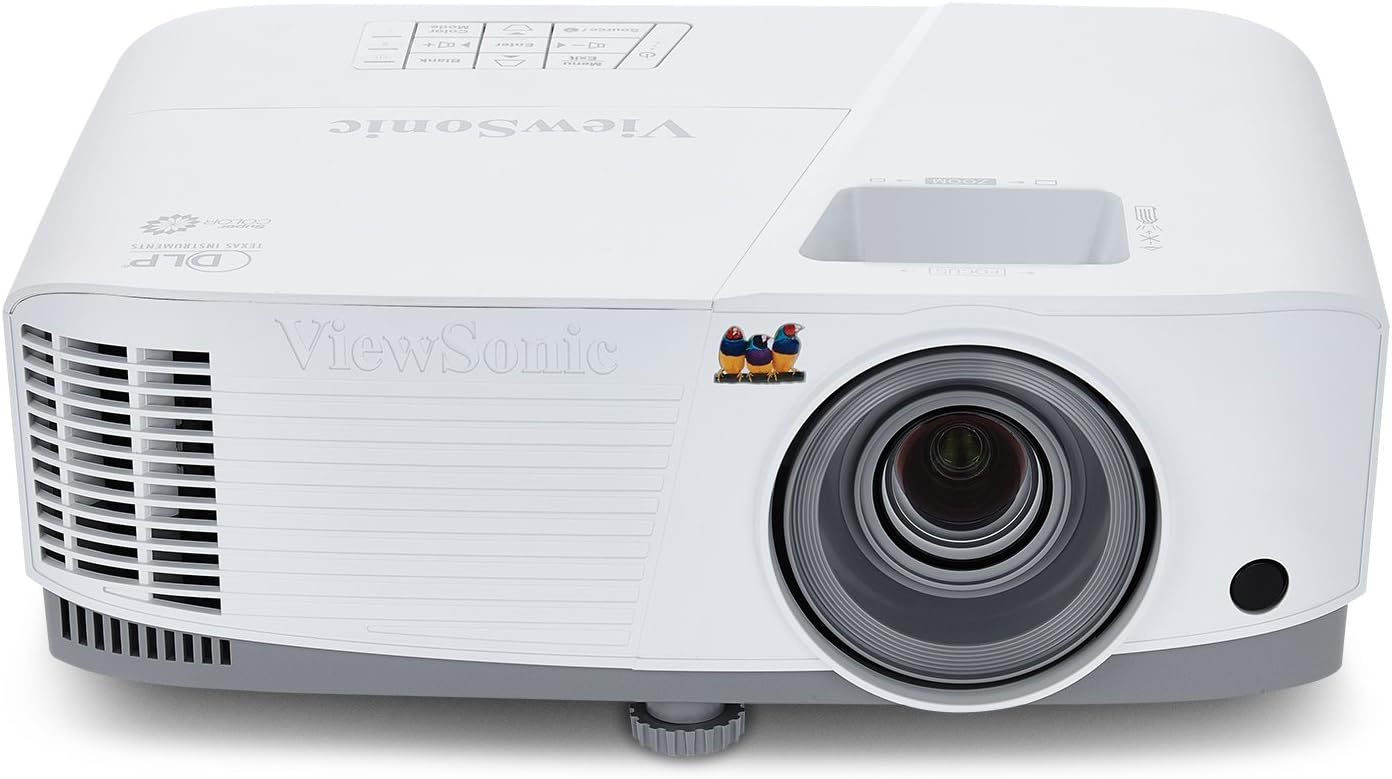
 ViewSonic LS901-4K 4K UHD Laser Projector |
9.5/10 | Buy on Amazon |
| Prime |
 ViewSonic PX749-4K 4K Gaming Projector 4000 Lumens |
9.4/10 | Buy on Amazon |
 Formovie Cinema Edge 4K UHD Ultra Short Throw |
N/A | Buy on Amazon |
Pros
- Extremely easy setup thanks to auto focus and keystone correction
- Built-in streaming apps eliminate the need for a separate TV stick
- Sharp, colorful 4K-decoded picture even in outdoor daylight or evening settings
- Surprisingly strong audio quality for a compact projector
- Stable WiFi 6 connection for smooth streaming and mirroring
Cons
- Native resolution is 1080P, so '4K' refers to decoding support rather than true 4K native output
- 1500 ANSI lumens may not be bright enough for well-lit rooms without dimming
- New system updates require careful installation and shouldn't be interrupted
The KOGATA GC357 is a budget-friendly smart projector aimed at casual home theater users and outdoor movie enthusiasts who want a plug-and-play entertainment setup. With Netflix, YouTube, and Prime Video pre-installed, it removes the hassle of connecting a separate streaming stick, making it especially appealing for families and first-time projector buyers.
Where this projector really shines is ease of use. The auto focus and 6D keystone correction adjust the image into a clean rectangle within seconds, and reviewers consistently praise how quickly they got a sharp picture up on the wall or screen. Combined with 4K decoding, AI picture enhancement, and HDR10+ support, the visuals come through vibrant and detailed, even during outdoor evening use where ambient light can be a challenge.
Build quality feels solid for the price point, with a compact 9.37 x 6.97 x 3.46 inch frame that's easy to move between rooms or take outside. The bundled cleaning kit, lens cover, and Bluetooth remote add a nice touch of completeness, and the dual Bluetooth channels let it double as a standalone speaker when paired with external audio gear.
The main tradeoffs are worth noting: the native resolution is 1080P rather than true 4K, and at 1500 ANSI lumens, brightness may fall short in rooms with heavy ambient light. Reviewers also mention the importance of promptly installing system updates when prompted, as skipping this step could affect long-term performance.
Overall, the GC357 delivers strong value for anyone prioritizing convenience, built-in streaming, and simple setup over native 4K resolution or theater-level brightness. It's a great pick for movie nights, backyard screenings, and casual gaming, though dedicated home theater purists chasing native 4K may want to look elsewhere.
Chipset: MTK9660 with 2GB+8GB memory for smooth app performance and 4K decoding.
Resolution: Native 1920x1080, supports up to 3840x2160 (4K) decoded content, 1500 ANSI lumens brightness, 25000:1 contrast ratio.
Connectivity: WiFi 6, Bluetooth (dual channel), HDMI, USB, AV, and 3.5mm audio ports for flexible device pairing.
Image Size: Adjustable from 42 to 300 inches with a throw distance of 4.5 to 16.4 feet, plus 50-100% digital zoom.
Included Accessories: Remote control, power cord, lens cover, cleaning kit, and user manual, backed by a 1-year warranty and lifetime technical support.
Pros
- All-in-one smart projector eliminates the need for extra streaming devices
- Sharp, bright image quality praised consistently in customer reviews
- Fast and reliable auto focus and auto keystone setup
- Quiet operation suitable for bedroom and nighttime use
- Highly portable with flexible mounting and stand options
Cons
- Native resolution is 1080P, with 4K achieved through decoding rather than true native 4K
- Maximum throw distance of 10 feet may limit very large screen sizes in smaller rooms
- Remote does not include batteries, an easy detail to overlook out of the box
The VISSPL RD618 is a smart Google TV projector built for households that want a true all-in-one entertainment hub without juggling extra streaming devices. With 10,000+ apps built right in, it's aimed at families, movie enthusiasts, and casual gamers looking for a simple plug-and-play big-screen setup at home or outdoors.
Where this projector stands out is its combination of 3000 ANSI brightness, 4K decoding, and HDR10 support, which together produce a noticeably vivid and detailed picture, even in rooms with some ambient light. Reviewers consistently highlight the AI Auto Focus feature, noting that the image stays sharp automatically, and the 6D Auto Keystone correction removes the hassle of manual alignment that plagues many budget projectors.
Build quality feels solid for a portable unit, with a 360° adjustable stand that makes ceiling projection from bed or angled outdoor setups genuinely convenient. The 25dB cooling system is a thoughtful touch, keeping noise low enough for late-night viewing in shared bedrooms without a distracting fan hum in the background.
On the downside, the native 1080P resolution means true 4K content is upscaled rather than displayed at full native detail, and the 10-foot maximum throw distance may restrict screen size in larger rooms. These are reasonable trade-offs at this price point, but worth knowing before buying.
Overall, the VISSPL RD618 delivers strong value for anyone wanting a smart, portable, and genuinely easy-to-use projector. It's particularly well suited to bedroom ceiling viewing, backyard movie nights, and casual home theater setups where simplicity and picture quality matter more than native 4K resolution.
The VISSPL RD618 features a native resolution of 1920 x 1080 with support for 4K (4096 x 2160) decoding, HDR10 enhancement, and a 99.8% wide color gamut for rich, accurate colors.
It offers 3000 ANSI lumens of brightness, a high contrast ratio, and an LED light source rated for up to 100,000 hours of operation, ensuring long-term reliability.
Connectivity includes WiFi 6, Bluetooth 5.2, HDMI with ARC/CEC support, USB, and a 3.5mm audio jack, making it compatible with gaming consoles, laptops, smartphones, tablets, and external speakers.
The projector operates at 72 watts, weighs in as a compact desktop/portable unit, and supports tripod, ceiling, wall, tabletop, and floor mounting for flexible placement in any room or outdoor setting.
Pros
- All-in-one smart streaming experience eliminates the need for a separate TV stick
- Strong built-in audio thanks to dual 30W Dolby speakers
- Fast, hands-off setup with AI auto focus and keystone correction
- Gaming-friendly with HDMI 2.1 and low input lag
- Backed by a 3-year warranty and 24/7 customer support
Cons
- Native resolution is 1080P, not true 4K, despite 4K decoding support
- 1450 ANSI lumens is best used in dim to moderately lit rooms rather than bright daylight
- No customer reviews yet, so real-world reliability is still unproven
The WiMiUS K14 is a smart home theater projector designed for families, casual gamers, and outdoor movie enthusiasts who want a plug-and-play entertainment hub. Its built-in VIDAA Smart OS means you can stream Netflix, Disney+, Prime Video, and thousands of other apps directly, without plugging in a separate streaming device.
Where the K14 stands out is its combination of true 1450 ISO ANSI brightness, native 1080P resolution, and HDR10 support, which together produce a noticeably sharper and more vivid image than many budget projectors in this price range. The dual 30W Dolby Audio speakers add genuinely useful volume and clarity, making external speakers optional for most everyday viewing.
Setup is clearly a priority in the design: AI auto focus, 6D keystone correction, and obstacle avoidance all work together to align the picture in seconds, which is a big convenience whether you're mounting it on a ceiling, moving it between rooms, or setting up for a backyard movie night. The rotating stand and portable form factor reinforce this flexibility.
The main tradeoff is that this is a 1080P native display with 4K decoding rather than a true 4K panel, so buyers expecting UHD-level sharpness may be disappointed. Brightness, while strong for its class, is also best suited to evening or low-light use rather than direct daylight outdoor projection.
Overall, the WiMiUS K14 is a well-rounded pick for anyone who wants an easy, all-in-one smart projector for movie nights, sports, and casual gaming, rather than a dedicated cinema-grade 4K unit. Its combination of smart TV features, solid audio, and fast setup make it a compelling value at its price point.
The K14 features a native resolution of 1920 x 1080 with 4K decoding support and HDR10 enhancement, backed by a 30000:1 contrast ratio and a 4-glass optical lens for sharper detail and color accuracy.
Brightness is rated at a true 1450 ISO ANSI lumens, with a maximum image size of 200 inches and a throw distance range of 3.6 to 16.4 feet, making it adaptable to a variety of room sizes and outdoor setups.
Connectivity includes WiFi 6, Bluetooth 5.4, HDMI 2.1 with ARC and CEC, USB, and a 3.5mm audio jack, along with official AirPlay support for seamless wireless casting from Apple devices.
Audio is handled by dual 30W Dolby Audio speakers, and the light source is rated for up to 30,000 hours of use, with a 3-year warranty and lifetime technical support backing the purchase.
Pros
- Exceptional picture quality and brightness for the price point compared to rivals like Epson
- Easy setup with auto keystone, auto focus, and flexible throw ratio for various room sizes
- Smooth, responsive gaming performance with 240Hz/4ms input lag on ultra-wide aspect ratios
- Well-built, compact laser design that looks premium despite its portability
- Strong app performance and multitasking thanks to upgraded RAM/storage chipset
Cons
- No manual laser convergence adjustment, which can cause slight softness at very close range
- Noticeable high-pitched noise from the RBE (rainbow effect) reduction feature for noise-sensitive users
- At 15.4 lbs, it's heavier than expected for a 'portable' unit, which may complicate mounting
The Valerion VisionMaster Pro is a 4K laser projector built for home theater fans and gamers who want a massive, cinema-quality picture without the cost of a high-end flagship model. Its combination of 2500 ISO Lumens, 15,000:1 contrast, and IMAX Enhanced certification puts it in direct competition with well-known brands at a noticeably lower price.
In real-world use, reviewers consistently highlight the picture quality as the standout feature, praising deep blacks, accurate color from the ISF-certified calibration, and sharp 4K clarity aided by AI Super Resolution. The 240Hz/4ms gaming mode is a rare inclusion at this price tier, giving competitive gamers a responsive, lag-free experience on ultra-wide screens.
Build quality impresses buyers upgrading from older lamp-based projectors like the Epson 5040 or 6040, with a compact, understated chassis that mounts easily via a single ceiling point. Setup is simplified through the OpticFlex zoom lens and automatic focus/keystone correction, making it accessible even for less experienced installers.
The few drawbacks are minor but worth noting: there's no manual laser convergence adjustment, which can slightly affect sharpness up close, and the rainbow effect reduction technology introduces a faint high-pitched sound that sensitive users may notice. Neither issue significantly detracts from the overall experience based on buyer feedback.
Overall, the VisionMaster Pro delivers a genuinely premium home theater and gaming experience at a price that undercuts many comparable projectors. It's an excellent choice for anyone wanting a large-screen, laser-quality upgrade from traditional TVs or older projector models.
Pros
- Exceptional brightness and color accuracy that hold up in rooms with ambient light
- Strong gaming performance with low latency, VRR, and multiple HDMI 2.1a plus DisplayPort inputs
- Simple ultra-short-throw setup with auto-focus, no ceiling mount needed
- Noticeably better dark scene detail and contrast compared to typical UST projectors
- Reviewers consistently praise picture clarity and color even without a dedicated screen
Cons
- Premium price puts it well above entry-level UST projectors and most flat-panel TVs
- Best image quality still benefits from pairing with an ALR or matte white screen, adding to overall cost
- 3D playback requires manual toggling, which some users find inconvenient
The AWOL VISION Aetherion Max is a 4K triple-laser ultra-short-throw projector positioned as a full laser TV replacement for the living room. It targets buyers who want a screen far larger than any flat-panel TV can offer, without sacrificing usability in rooms that get regular daylight or lamp light.
What stands out most is its 3300 ISO lumen output paired with a 110% Rec.2020 color gamut, which lets it hold color accuracy and contrast even with the lights on. Combined with 6,000:1 native contrast and a 7-level IRIS system, dark scenes retain shadow detail rather than washing out, a common weak point for UST projectors in bright settings.
Build quality reflects its premium positioning, with a compact desktop form factor, a 0.2:1 throw ratio that lets it sit just inches from the wall, and auto-focus that simplifies setup considerably. Gamers benefit from 1ms-class latency, 240Hz support, VRR, ALLM, and triple HDMI 2.1a plus DisplayPort inputs, allowing multiple consoles and a PC to stay connected without swapping cables.
The main drawbacks are cost-related: getting the absolute best image often means adding an ALR or matte white screen, and the projector itself sits at a premium price point compared to standard projectors or TVs. Minor quirks like manual 3D toggling also show up in user feedback.
Overall, the Aetherion Max earns its strong reviews by delivering genuinely bright, color-accurate, low-latency 4K performance in a UST form factor that fits real living rooms. It's a strong pick for home theater enthusiasts and gamers who want big-screen impact without a dedicated blackout room.
Pros
- Excellent color accuracy and brightness for a portable projector
- All-in-one setup with Google TV and built-in Harman Kardon speakers
- Lossless optical zoom simplifies screen sizing in different spaces
- Low-latency gaming support with VRR and ALLM for consoles and PC
- Compact, book-sized form factor for true portability
Cons
- 1600 ISO Lumens may still struggle in fully lit rooms compared to pricier flagship models
- No mention of battery power, so it likely needs to stay plugged in for outdoor use
- Premium price point places it above many entry-level home projectors
The XGIMI Elfin Flip is a 4K UHD portable projector built for people who want cinema-quality visuals without committing to a bulky, permanent home theater setup. It suits movie lovers, casual gamers, and anyone who wants a single device that can move from the living room to the backyard.
Its standout feature is the RGB Triple Laser light source, which produces SGS-certified color accuracy and 1600 ISO Lumens of brightness, backed by a 20,000:1 contrast ratio. In real-world use, this should translate to vivid, punchy images that hold up reasonably well even with some ambient light in the room, a common weak spot for portable projectors.
Build quality leans into portability, with a book-sized chassis that houses dual Harman Kardon speakers and a lossless 0.98-1.3:1 optical zoom. The zoom is a nice touch since it lets you resize the picture without the pixelation you'd get from digital zoom, making setup in tight apartments or larger rooms much easier.
On the software side, built-in Google TV means you're streaming Netflix, Prime Video, and YouTube right out of the box, no extra streaming stick required. Gamers will also appreciate the 1ms latency, VRR, and ALLM support, which puts this projector in relatively rare territory for smooth, tear-free console and PC gaming. The main tradeoffs are the price tag and the lack of any stated battery option, so this isn't a grab-and-go outdoor unit unless you have power nearby.
Overall, the XGIMI Elfin Flip earns its 4.3-star rating by combining accurate color, solid brightness, and genuine all-in-one convenience in a portable package. It's a strong pick for anyone wanting a premium, flexible home theater projector that also doubles as a capable gaming display.
Pros
- Exceptional brightness and color accuracy praised across multiple verified reviews
- Versatile placement with 360 degree rotation and strong all-metal build quality
- Smooth 4K upscaling and 240Hz support make it great for both movies and gaming
- Auto focus and keystone correction simplify setup
- Strong built-in audio reduces need for a separate sound system
Cons
- Only a 1 year warranty compared to some competitors offering 3 years
- Requires more throw distance than some smaller projectors, which may limit setups in tight spaces
- Some users note black levels can weaken in daylight conditions
The Hisense C2 Ultra is a 4K triple-laser smart projector designed for home theater fans and gamers who want a big-screen experience without a permanent installation. With support for Dolby Vision, IMAX Enhanced, and up to 300 inch projection, it's built for those who take picture quality seriously.
In real-world use, reviewers consistently highlight the projector's brightness and color precision. The 3000 ANSI lumen output combined with the triple laser light source produces vivid, true-to-life images even in moderately lit rooms, while HDR content and dark scenes retain strong detail thanks to the 2000:1 contrast ratio.
Build quality is solid, with an all-metal body and a flexible angle adjuster offering 360 degree rotation plus wide vertical tilt, making it easy to mount on a wall, ceiling, or simply place on a table. Setup is aided by auto focus and keystone correction, which reviewers describe as fast and reliable.
The main tradeoffs are a shorter one year warranty compared to some premium competitors, a throw distance that may not suit very small rooms, and slightly reduced black levels in daylight. Gamers will appreciate the 240Hz refresh rate and Designed for Xbox optimization for smooth, low-latency play.
Overall, the C2 Ultra delivers a genuinely premium projection experience with excellent brightness, color, and gaming performance. It's a strong choice for anyone wanting a portable, high-end home cinema and gaming projector, provided they have adequate room for throw distance.
Pros
- Exceptional brightness that holds up well in normal room lighting
- Low input lag and high refresh rate ideal for gaming
- Sharp 4K image quality with strong HDR performance
- Flexible setup options including 360-degree projection and ceiling mount compatibility
- Strong value compared to pricier competitors in similar performance tiers
Cons
- Limited third-party reviews and testing data available online
- Requires more effort to set up and calibrate than plug-and-play projectors
- Color accuracy dips slightly when using the brightest picture mode
The ViewSonic LS901-4K is a 4K UHD laser projector aimed at home theater enthusiasts, gamers, and even golf simulator setups that need serious brightness and clarity. With 5,500 ANSI lumens, it's designed to perform well in larger rooms or spaces with some ambient light, making it more versatile than typical home theater projectors that require full darkness.
Performance-wise, the standout features are its 240Hz refresh rate and 4.2ms input lag, which reviewers confirm translate into smooth, responsive visuals for fast-paced gaming. The native 21:9 aspect ratio and HDR/HLG support also give movies a distinctly cinematic feel, with one reviewer comparing its image quality favorably to a $3,500 Epson model.
Setup flexibility is another strong point, thanks to 1.7x optical zoom, horizontal and vertical keystone correction, and support for 360-degree projection. This makes it easier to fit into rooms with unconventional layouts, and its compatibility with ViewSonic's ceiling mount adds to its installation versatility.
On the downside, buyers note that calibration takes more effort than simpler projectors, and the brightest picture mode sacrifices some color accuracy for maximum lumens. Independent testing and long-term reliability data are also still fairly limited online, which may give cautious buyers pause.
Overall, the LS901-4K earns its reputation as a high-value pick for anyone wanting a bright, 4K-capable laser projector that can double as a gaming display or golf simulator screen. It's best suited to users willing to spend a bit more time dialing in settings in exchange for excellent brightness, low lag, and long-term laser reliability.
Pros
- Console-first design makes it the best choice for Xbox Series X/S and Nintendo Switch gaming
- Exceptional brightness and contrast ratio perform well in rooms with ambient lighting
- Versatile connectivity includes HDMI, USB-C, and Ethernet for all gaming devices
- Advanced keystone and corner adjustment tools simplify installation on any surface
- True 4K resolution with 8.3 million pixels delivers pixel-perfect image clarity
Cons
- Premium price point may be steep for casual users seeking basic projection
- No built-in streaming apps, requiring external devices for Netflix or other services
- Limited review data available to assess long-term reliability and user satisfaction
The ViewSonic PX749-4K is a premium 4K gaming projector engineered specifically for console gamers, particularly Xbox Series X/S owners. This projector bridges the gap between high-end gaming performance and home theater versatility, making it ideal for dedicated gaming rooms and entertainment spaces where large-screen immersion matters most.
Performance-wise, the PX749-4K excels with its Xbox-optimized specs: native 1440p resolution at 120Hz refresh rate, scalable to 240Hz, paired with an ultra-responsive 4.2ms input lag. Combined with 4,000 ANSI lumens and HDR10 support, gameplay appears crisp, fluid, and vibrant even during fast-paced action sequences. The Harman-tuned speaker system adds meaningful audio depth without requiring separate sound equipment, though serious audiophiles may still prefer external speakers.
Setup flexibility stands out as a major strength. The 1.3x optical zoom, H/V keystone correction, auto V-keystone, and 4-corner adjustment tools make installation straightforward in most rooms. The ability to project screens from 30 inches to 300 inches means this projector adapts to various space constraints. USB-C connectivity enables direct streaming from laptops and Nintendo Switch devices while simultaneously charging connected equipment, a practical feature for modern gaming setups.
The main drawback is the lack of built-in streaming apps, requiring external devices for services like Netflix or Disney Plus. Additionally, while the feature set is impressive, the premium price places it above entry-level projectors, making it an investment decision rather than an impulse purchase. The absence of user reviews limits third-party validation of long-term durability.
Verdict: The ViewSonic PX749-4K deserves strong consideration for gamers prioritizing console performance, brightness, and setup flexibility. It delivers genuine value for dedicated gaming spaces and home theaters where large-screen, high-refresh-rate gaming justifies the investment.
Display Technology: 4K UHD (3840x2160p) native resolution with 8.3 million pixels
Brightness: 4,000 ANSI lumens with high contrast ratio
Gaming Performance: 1440p at 120Hz, scalable to 240Hz refresh rate, 4.2ms input lag
Projection Range: 1.1-1.5 throw ratio, 3.9 ft to 43 ft throw distance, 100-inch display from 13 feet, up to 300-inch screens
Zoom: 1.3x optical zoom, 0.8x-2.0x digital zoom
Image Adjustment: H/V keystone, auto V-keystone, 4-corner adjustment, curved surface projection, warping configuration
Color Technology: SuperColor technology with HDR10 and HLG support
Audio: Harman-tuned speaker system
Connectivity: Dual HDMI, USB-C with power delivery, RJ45 Ethernet
Smart Features: LAN control, 12V trigger output, Xbox CEC compatibility
Who Should Buy This: Serious console gamers with Xbox Series X/S or Nintendo Switch, home theater enthusiasts with dedicated gaming rooms, and buyers prioritizing large-screen performance over budget constraints.
Who Should Skip This: Casual users seeking basic projection, buyers needing built-in streaming apps, budget-conscious shoppers, or those with small rooms where 300-inch projection capability is unnecessary.
Key Considerations: Verify your room's throw distance matches the 1.1-1.5 ratio for optimal image sizing. Confirm your gaming devices support HDMI 2.1 for full 4K benefits. Plan for adequate ventilation as projectors generate heat during extended use. Consider ambient lighting control since even 4,000 lumens performs best in dimmed environments for gaming.
Setup Tips: Use the 1.3x optical zoom to fine-tune image size before relying on keystone correction. Test the USB-C charging feature with your devices to ensure compatibility. Position the projector centrally relative to your seating for optimal keystone adjustment results.
Pros
- Native Google TV with licensed Netflix eliminates the need for an external streaming stick
- Ultra short throw design saves space while still delivering a huge 150-inch picture
- Bright 2100 lumen ALPD laser performs well even in ambient light
- Built-in Dolby Audio and DTS-HD speakers reduce the need for extra audio equipment
- Generous connectivity with three HDMI 2.1 ports for gaming consoles and other devices
Cons
- No user reviews yet, so real-world reliability and long-term performance are unproven
- 2100 lumens and 3000:1 contrast are modest compared to pricier UST laser projectors
- At 15.4 pounds and requiring precise short throw placement, setup flexibility is more limited than standard projectors
The Formovie Cinema Edge is a 4K UHD ultra short throw laser projector built for buyers who want a true all-in-one home theater centerpiece. With Google TV baked in and Netflix officially licensed, it functions as both a giant-screen display and a smart streaming hub, making it well suited to households replacing a traditional TV and media player combo.
The standout feature is its ALPD laser engine, which pushes 2100 ISO lumens and HDR10 support to produce a bright, colorful, speckle-free image even in rooms with ambient light. Combined with its 0.23:1 throw ratio, the projector can throw a 150-inch image from a mere 19 inches away, a huge space advantage over long throw projectors that need distance from the wall.
Build quality appears solid for a desktop UST unit, weighing just over 15 pounds with a compact footprint of roughly 18 by 12 inches. Auto focus and auto screen alignment help simplify setup, while human presence detection adds a smart safety touch for households with kids or pets near the projector.
On the downside, its 3000:1 contrast ratio and 2100 lumen brightness sit in the mid-range for UST laser projectors, so it may not match the deepest blacks or peak brightness of flagship models costing significantly more. It also lacks any user reviews so far, meaning long-term durability and software performance are still unverified in real-world use.
Overall, the Formovie Cinema Edge is a compelling choice for anyone wanting a space-saving, feature-rich 4K laser TV with genuine Netflix support and strong built-in audio. It's best suited for home theater enthusiasts and casual streamers alike who prioritize convenience and screen size over ultimate picture performance.
How to Choose a 4K Projector for Edge Blending
Image Uniformity and Color Consistency
Edge blending relies on a perfect marriage between two or more projected images. The most critical factor is uniformity across the entire screen. Look for projectors with high color accuracy ratings, like the Delta E values mentioned for the premium models in this category. Consistent brightness from corner to corner is also vital. Lamps or lasers that maintain stable output prevent one side of your blended image from appearing dimmer, which can ruin immersion.
Projectors with ISF certification or factory-calibrated color modes are excellent choices. These ensure the colors you see are true to the source material, making it easier to match multiple units. Brands like Valerion and XGIMI often highlight this level of precision. Without this consistency, you’ll face a frustrating battle trying to calibrate the overlap zone to look seamless.
Lens Flexibility and Placement Options
Physical placement is everything in a multi-projector array. You need lenses that offer keystone correction, lens shift, and optical zoom without degrading image quality. Digital keystone can cause artifacts in the overlap area, so optical lens shift, as seen in models like the ViewSonic LS901-4K, is superior for blending setups. A flexible throw ratio, like the 0.9–1.5:1 on the Hisense C2 Ultra, gives you more freedom to position projectors for the perfect blend.
Consider the space you have available. Ultra-short throw models, such as the Formovie Cinema Edge, must sit very close to the screen, which can complicate multi-unit arrangements. Standard-throw projectors with generous lens shift often provide more installation flexibility. This is a key consideration explored in our guide to projectors with advanced geometric correction.
Low Latency and High Refresh Rates
A stunning, seamless image means nothing if your gameplay feels sluggish. For edge blending in gaming, each projector must contribute to a responsive experience. Prioritize models with a dedicated gaming mode, input lag under 20ms, and high refresh rates. The Valerion VisionMaster Pro boasts a 4ms response and 240Hz refresh rate, which is ideal for competitive gaming across a vast blended canvas.
Features like Variable Refresh Rate (VRR) and Auto Low Latency Mode (ALLM), found in the AWOL VISION Aetherion Max and XGIMI Elfin Flip, are highly beneficial. They ensure smooth frame delivery from your console or PC, eliminating screen tearing and stutter that becomes more noticeable on a giant, combined display. This performance aspect is crucial, as detailed in our resource on low input lag projectors.
Connectivity and Calibration Support
The technical setup for edge blending goes beyond the projector’s out-of-the-box features. You will need robust connectivity to feed identical signals to each unit. Look for multiple HDMI ports, preferably HDMI 2.1 for high-bandwidth 4K gaming signals. USB ports for firmware updates and service menus are also important, as you may need to access advanced settings for fine-tuning gamma and color tables.
Some high-end projectors offer professional calibration software or detailed picture-in-picture adjustments that are invaluable for blending. While consumer models like the KOGATA or VISSPL smart projectors are user-friendly, they may lack these deep-level controls. For a serious blended setup, consider projectors designed with installers in mind, which offer more granular control over every aspect of the image.
Final Thoughts
Building a seamless, multi-projector gaming display is an ambitious project that rewards you with unparalleled immersion. The key is starting with the right hardware foundation. For a premium, feature-packed solution designed for performance, the Valerion VisionMaster Pro 4K Laser Projector stands out with its exceptional color accuracy and blazing-fast response times. If your priority is a more accessible, smart-ready option that still delivers great image quality for blending experiments, the Google TV & 3000ANSI & 4K Smart Projector provides a compelling starting point. Whichever path you choose, careful selection based on uniformity, flexibility, and performance will transform your gaming space into a truly panoramic arena.
Frequently Asked Questions
What is the primary benefit of edge blending for gaming?
Edge blending allows you to create a single, ultra-wide image that exceeds the size and aspect ratio limitations of any single projector. This eliminates bezels or gaps, providing a continuous, enveloping field of view that is perfect for racing sims, flight simulators, and expansive open-world games, pulling you deeper into the virtual environment.
Do I need identical projector models for edge blending?
While not absolutely mandatory, using identical models is strongly recommended. It ensures the lenses, light engines, and color processing are perfectly matched, drastically simplifying calibration. Mixing different models can lead to a permanent struggle with color, brightness, and contrast mismatches in the blended zone.
What extra equipment do I need besides the projectors?
You will need a video processor or a PC with multi-display output capable of edge blending, which handles the overlap and soft-edge masking. A sturdy, precise mounting system is essential to align the projectors perfectly. You may also require a dedicated calibration tool or software, as discussed in our guide on advanced setup features, to fine-tune the image.
Is edge blending worth the effort and cost for a home setup?
For enthusiasts seeking the ultimate immersive experience that surpasses even the largest consumer televisions, it is absolutely worth it. The sense of scale and presence is transformative. However, it is a complex technical undertaking. For many gamers, a single high-quality, large-screen projector from our top overall picks may offer a more straightforward and still spectacular solution.


Write Your Review
No reviews yet. Be the first to share your experience!